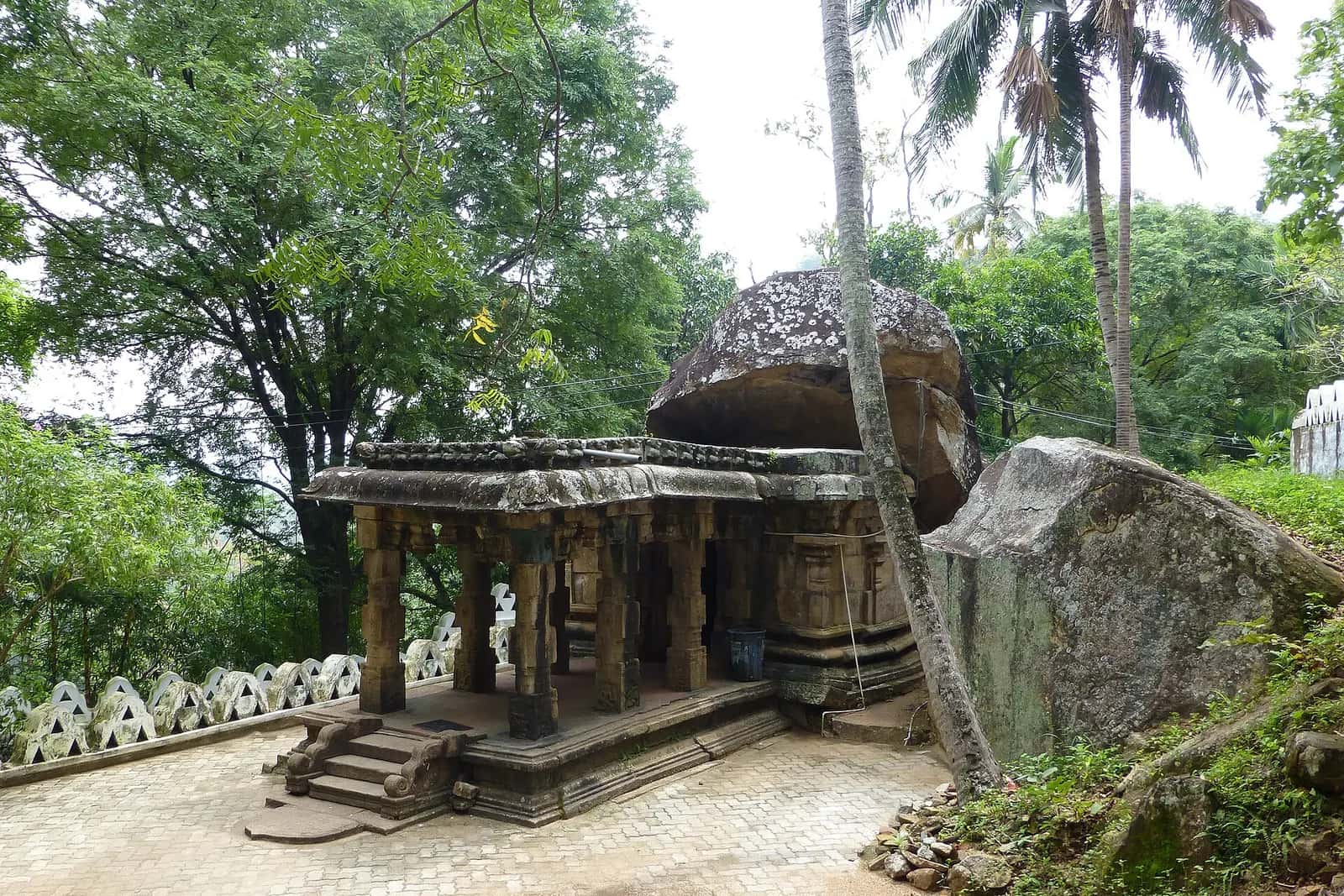
Ridi Viharaya, Sri Lanka
The 'Silver Temple' near Kurunegala, built where silver was found to pay for the great stupa at Anuradhapura. Its cave shrine has Kandyan paintings and an altar set with Dutch tiles.
Region
The Cultural Triangle
Best time
February to September
Time needed
1 hour
From the airport
≈ 3 h by road
Ridi Viharaya, the "Silver Temple", lies in the village of Ridigama, about 20 km north-east of Kurunegala. It's well off the usual tourist routes, and that's a pity, because it is one of the most interesting cave temples in the country. Its art spans many centuries, and it includes some real surprises.
The legend
In the 2nd century BC, King Dutugemunu was building the great stupa of Ruwanwelisaya at Anuradhapura, and he was short of funds to pay for it. According to the chronicle, merchants travelling through this area discovered a vein of silver ore in a cave. The silver paid for the stupa, and in gratitude the king founded a temple on the spot. Ridi means silver in Sinhala.
What to see
- The Maha Viharaya (main cave temple). Beneath a huge overhanging rock is a shrine with a nine-metre reclining Buddha and other statues. At the foot of the reclining image is the temple's most curious feature: a platform faced with blue-and-white Dutch tiles showing scenes from the Bible, among them Adam and Eve and the burning bush. They're thought to have been a gift to the Kandyan king from a Dutch envoy in the 18th century.
- The ivory doorway. The entrance to the shrine has a fine frame with carved ivory panels showing dancers and lions.
- The Uda Viharaya (upper temple). Built in the Kandyan period, it has vivid 18th-century murals and a seated Buddha on a decorated throne.
- Varakha Valandu Viharaya. Near the entrance stands a small stone building that looks like a South Indian Hindu shrine, later converted for Buddhist use. Its name means "the temple where jackfruit was eaten".
- The stupa on the rock. A path climbs to a stupa with views over the wooded hills.
Monks still live and study here, and the temple has a peaceful, lived-in feel.
Visiting
A donation or small entrance fee is expected. Dress modestly, remove your shoes and hat, and ask before taking photographs inside the shrines, where flash should never be used on old paintings. A monk or caretaker may open the shrines for you and explain them. Allow about an hour.
Getting there
From Kurunegala, it takes about 40 minutes by car. From Kandy or Dambulla, allow around 1.5 hours. Public buses reach Ridigama, but connections are slow, so a private vehicle is much easier. Combine it with Arankele or Yapahuwa for a day of quiet, crowd-free history. Our hidden gems guide lists more places like this.
Ridi Viharaya: frequently asked questions
Why is it called the Silver Temple?
Because silver ore found here is said to have paid for the Ruwanwelisaya stupa in Anuradhapura.
What are the Dutch tiles at Ridi Viharaya?
Blue-and-white tiles with Biblical scenes set into the altar below the reclining Buddha, probably an 18th-century diplomatic gift.
How do I get to Ridi Viharaya?
By car or tuk-tuk from Kurunegala in about 40 minutes.
Map and getting there
Approximate road times (Sri Lanka’s roads are slow — allow extra time for traffic and stops): Colombo airport (CMB) ≈ 3 h · Kandy ≈ 1 h · Galle ≈ 6.5 h. For flexible door-to-door travel, consider a local driver.
More places near Ridi Viharaya
The Cultural Triangle
Arankele Forest Monastery
The ruins of an ancient forest hermitage north of Kurunegala, with a long stone-paved meditation path through the trees. Monks still live here, and it is rarely visited.
Best: February to September
 religious
The Cultural Triangle
Kurunegala & Ethagala Rock
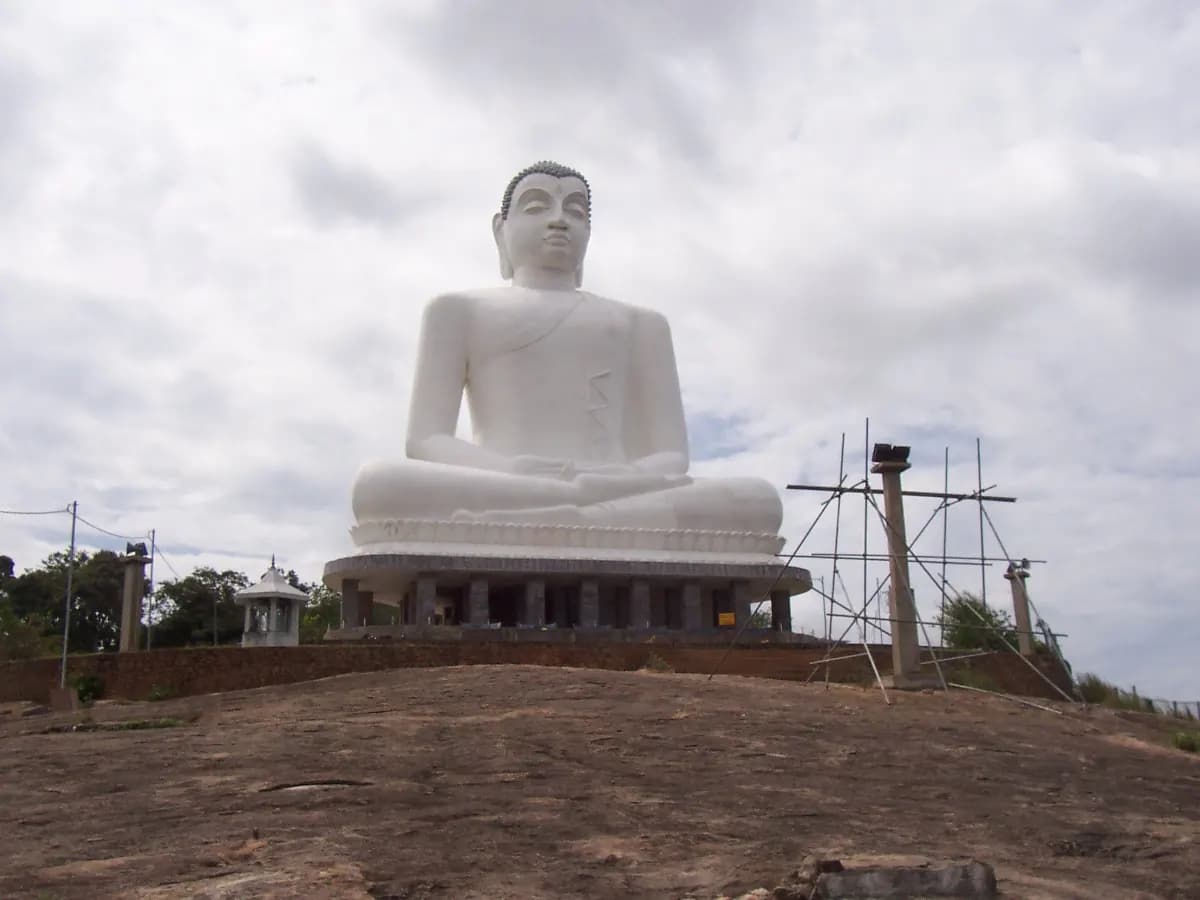
Kurunegala's 'Elephant Rock', topped by a large white Buddha statue overlooking the city and its lake. Drive or climb up in the late afternoon for the view.
Best: February to September
 religious
The Cultural Triangle
Aluvihare Rock Temple
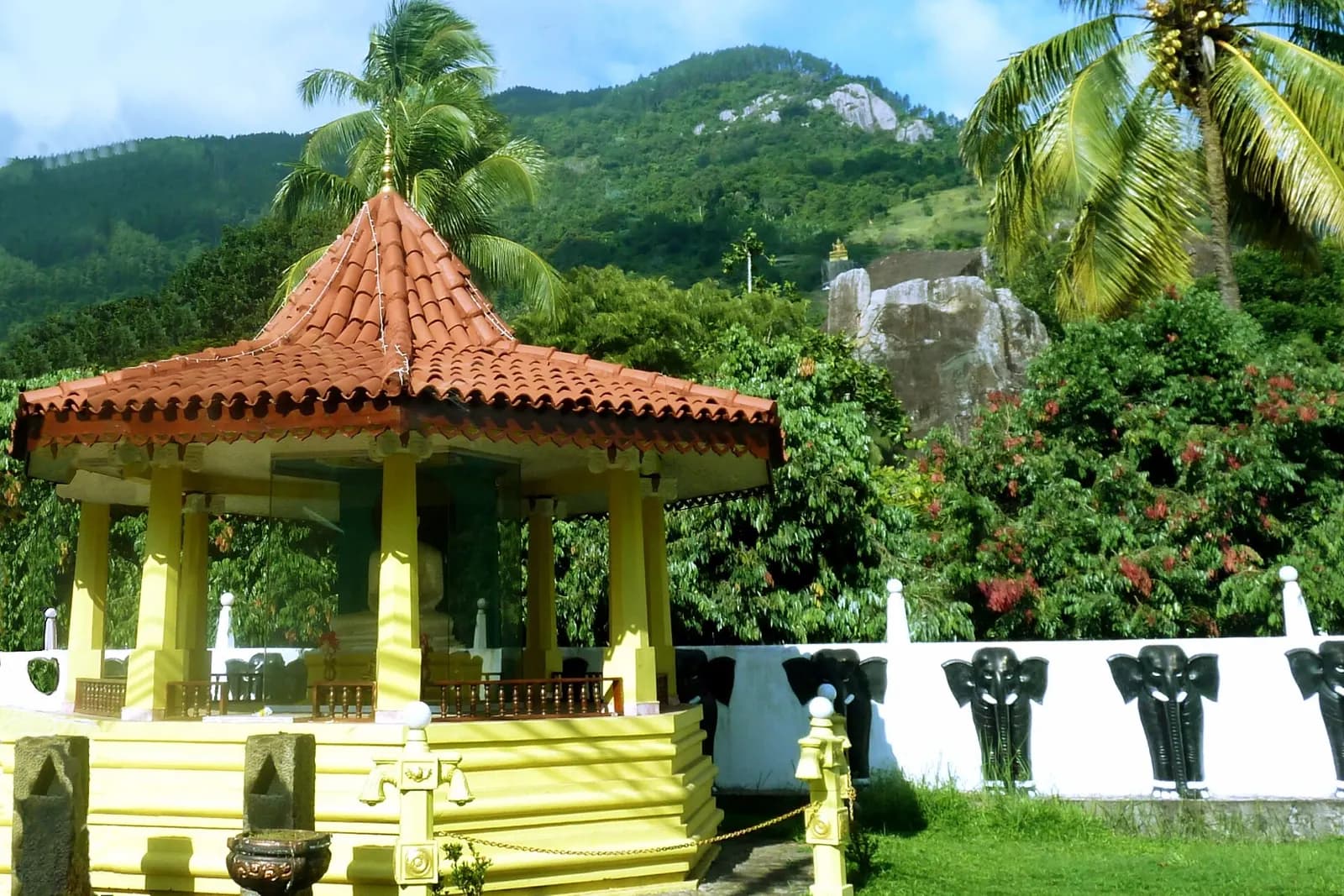
A cave monastery just north of Matale where the Buddhist scriptures were first written down, on palm leaves, in the 1st century BC. An easy stop between Kandy and Dambulla.
Best: February to September
Last updated November 2026. February to September is driest; the Minneriya elephant gathering peaks in August and September.