Arankele Forest Monastery, Sri Lanka
The ruins of an ancient forest hermitage north of Kurunegala, with a long stone-paved meditation path through the trees. Monks still live here, and it is rarely visited.
Region
The Cultural Triangle
Best time
February to September
Time needed
1–1.5 hours
From the airport
≈ 3 h by road
Arankele is the site of an ancient forest monastery, hidden among tall trees about 24 km north of Kurunegala. There are no ticket queues or souvenir stalls here. You're more likely to hear birdsong and the sweep of a monk's broom than another visitor. If you enjoyed Ritigala, or if you simply like quiet places, Arankele is a wonderful detour.
History
The ruins date mainly from about the 6th to the 10th centuries. Arankele was home to forest-dwelling monks who chose a strict life of meditation, away from the wealthy monasteries of the cities. They were known as pansukulikas, "rag-robe wearers". Their buildings were plain, with almost no decoration and no grand images, but they were engineered with great skill.
What to see
- The meditation walkway. The highlight is a long, perfectly straight path paved with stone slabs, running for several hundred metres beneath a canopy of ironwood and other old trees. Monks walked here in meditation. Small stone circles mark resting points along the way.
- The double platforms. Raised stone terraces, joined by a small bridge and surrounded by a dry moat, were used for meditation and gatherings.
- The bathhouse. The remains of a jantaghara, a hot-water bath house with a sunken pool, grinding stones for preparing herbal medicines, and stone drains.
- Ponds, caves and a chapter house, scattered through the forest.
A community of monks still lives in the forest today, in simple dwellings beyond the ruins, and their daily routine continues much as it did a thousand years ago.
Visiting respectfully
This is a working hermitage, and silence matters.
- Speak quietly, and don't play music.
- Dress modestly. Remove shoes and hats where signs ask you to.
- Don't photograph the monks without permission, and don't enter the living quarters.
- Take nothing but photographs, and leave no litter.
There's usually no formal ticket, though a donation is welcome. Facilities are almost non-existent, so bring water.
When to go
Early morning is the best time, when the forest is cool and full of birds. The region is driest from January to March and from June to September. After heavy rain, paths can be muddy, and mosquitoes are more of a nuisance, so bring repellent.
Getting there
Arankele is near the village of Hiripitiya, off the road between Kurunegala and Ibbagamuwa. It takes about 45 minutes by car from Kurunegala, and around 1.5 hours from Dambulla or Kandy. Public transport won't get you close. Combine it with Ridi Viharaya for a rewarding day away from the crowds. See also our hidden gems guide.
Arankele Forest Monastery: frequently asked questions
What is Arankele known for?
Its long stone meditation walkway through the forest, and the ruins of an ancient hermitage.
Is there an entrance fee at Arankele?
There is usually no fixed fee, but a donation is appreciated.
How long do you need at Arankele?
About an hour to an hour and a half for an unhurried walk.
Map and getting there
Approximate road times (Sri Lanka’s roads are slow — allow extra time for traffic and stops): Colombo airport (CMB) ≈ 3 h · Kandy ≈ 1.5 h · Galle ≈ 6.5 h. For flexible door-to-door travel, consider a local driver.
More places near Arankele Forest Monastery
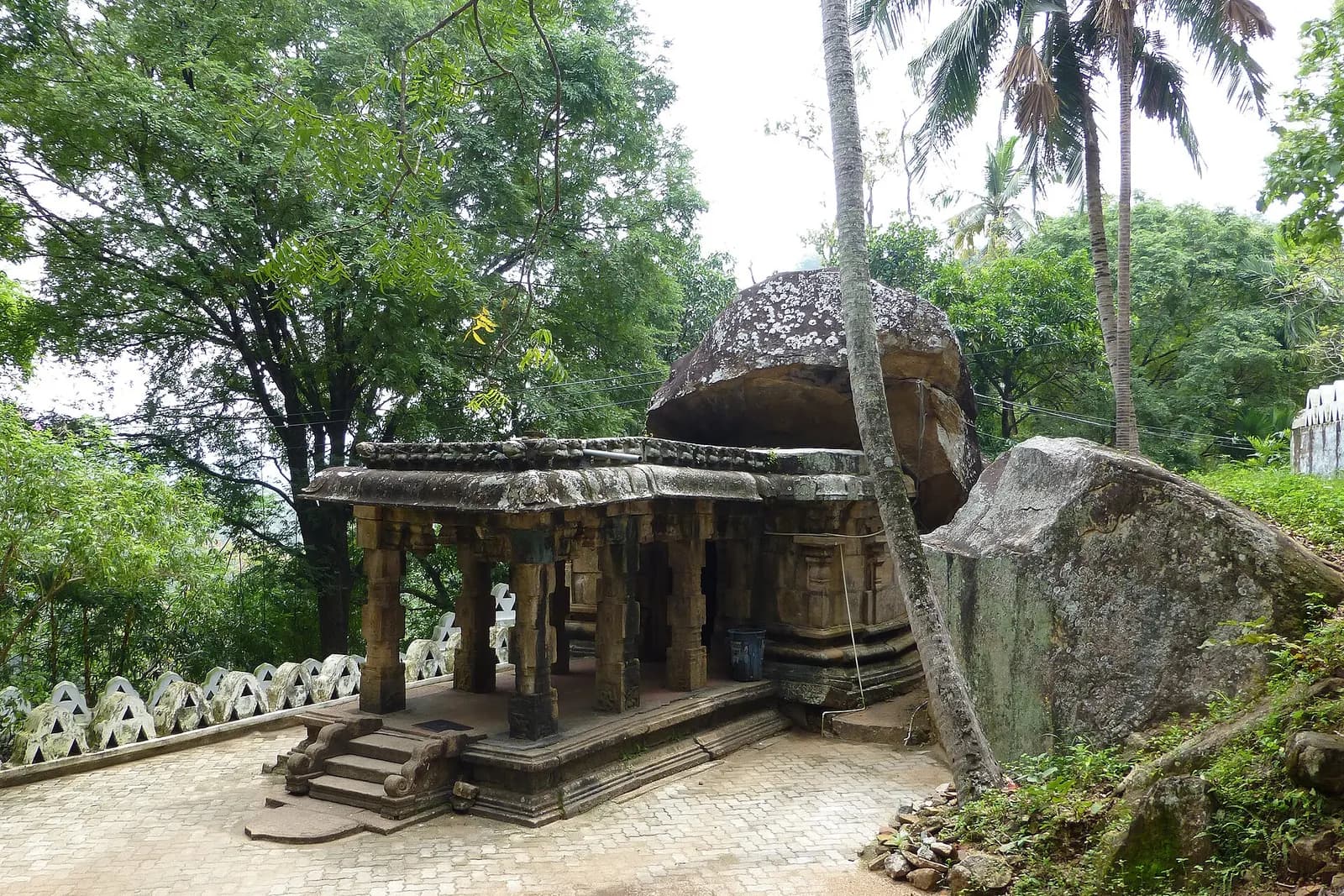 religious
The Cultural Triangle
Ridi Viharaya
The 'Silver Temple' near Kurunegala, built where silver was found to pay for the great stupa at Anuradhapura. Its cave shrine has Kandyan paintings and an altar set with Dutch tiles.
Best: February to September
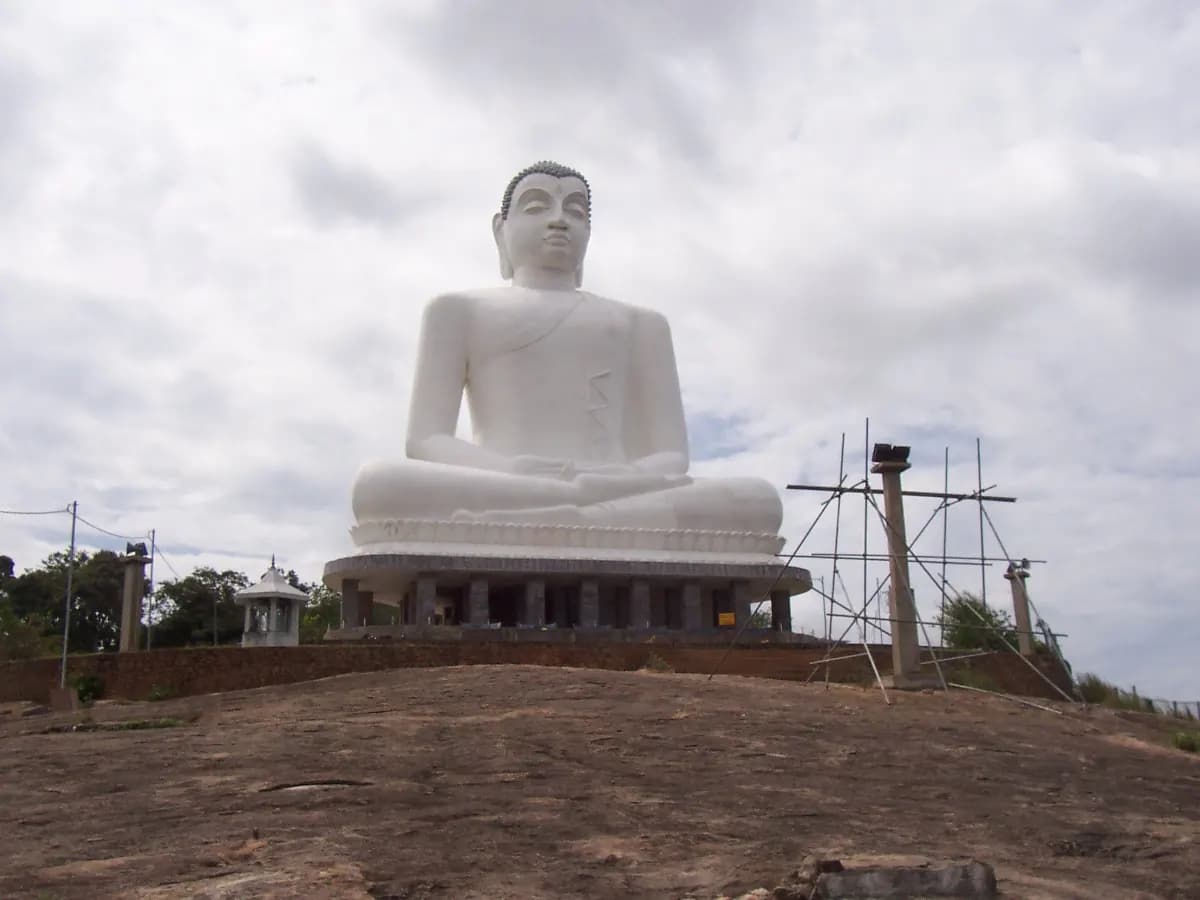 religious
The Cultural Triangle
Kurunegala & Ethagala Rock
Kurunegala's 'Elephant Rock', topped by a large white Buddha statue overlooking the city and its lake. Drive or climb up in the late afternoon for the view.
Best: February to September
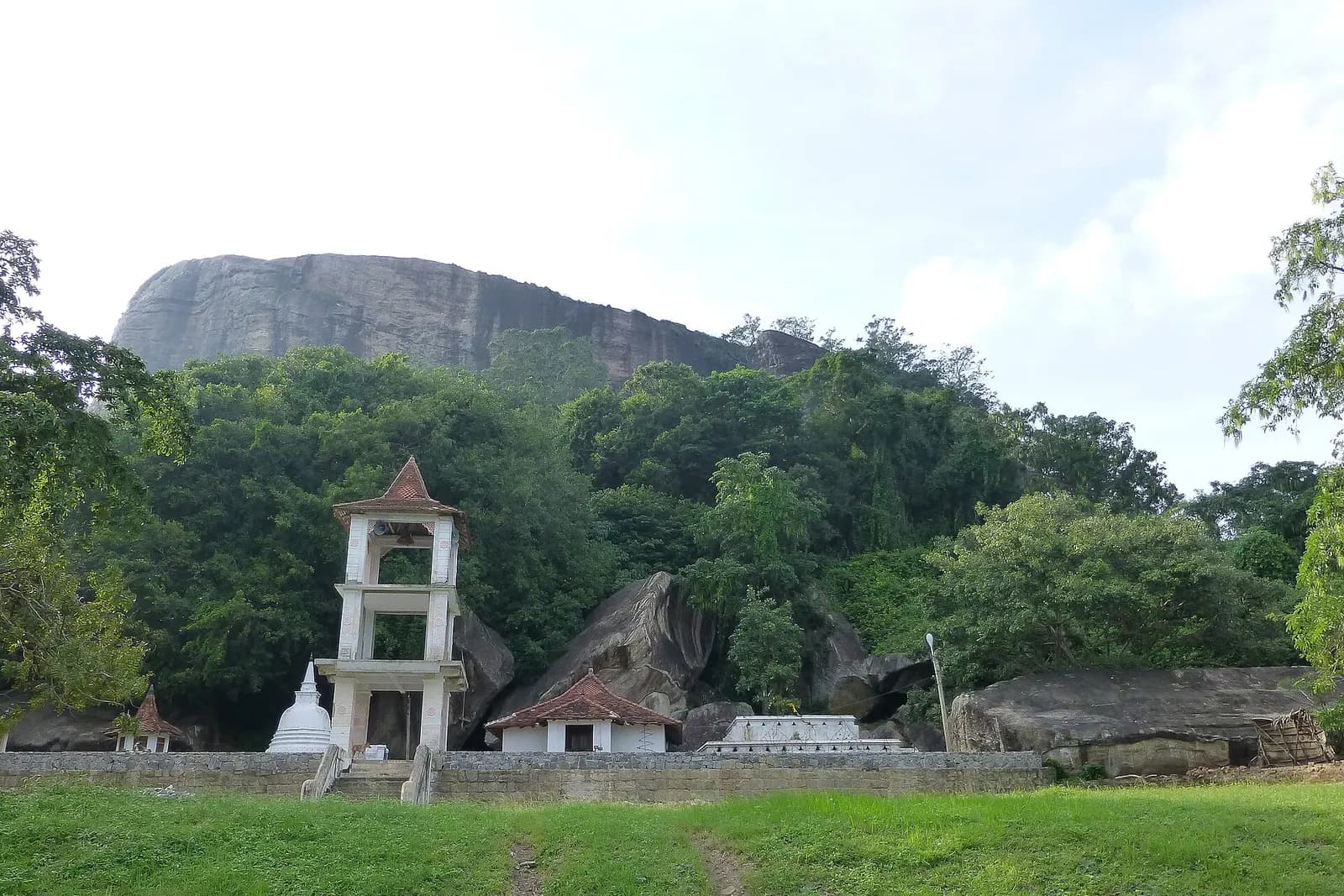 heritage
The Cultural Triangle
Yapahuwa Rock Fortress
A 13th-century rock capital with a steep, ornately carved stone staircase — a smaller, quieter alternative to Sigiriya. It once briefly housed the Tooth Relic.
Best: February to September
Last updated November 2026. February to September is driest; the Minneriya elephant gathering peaks in August and September.