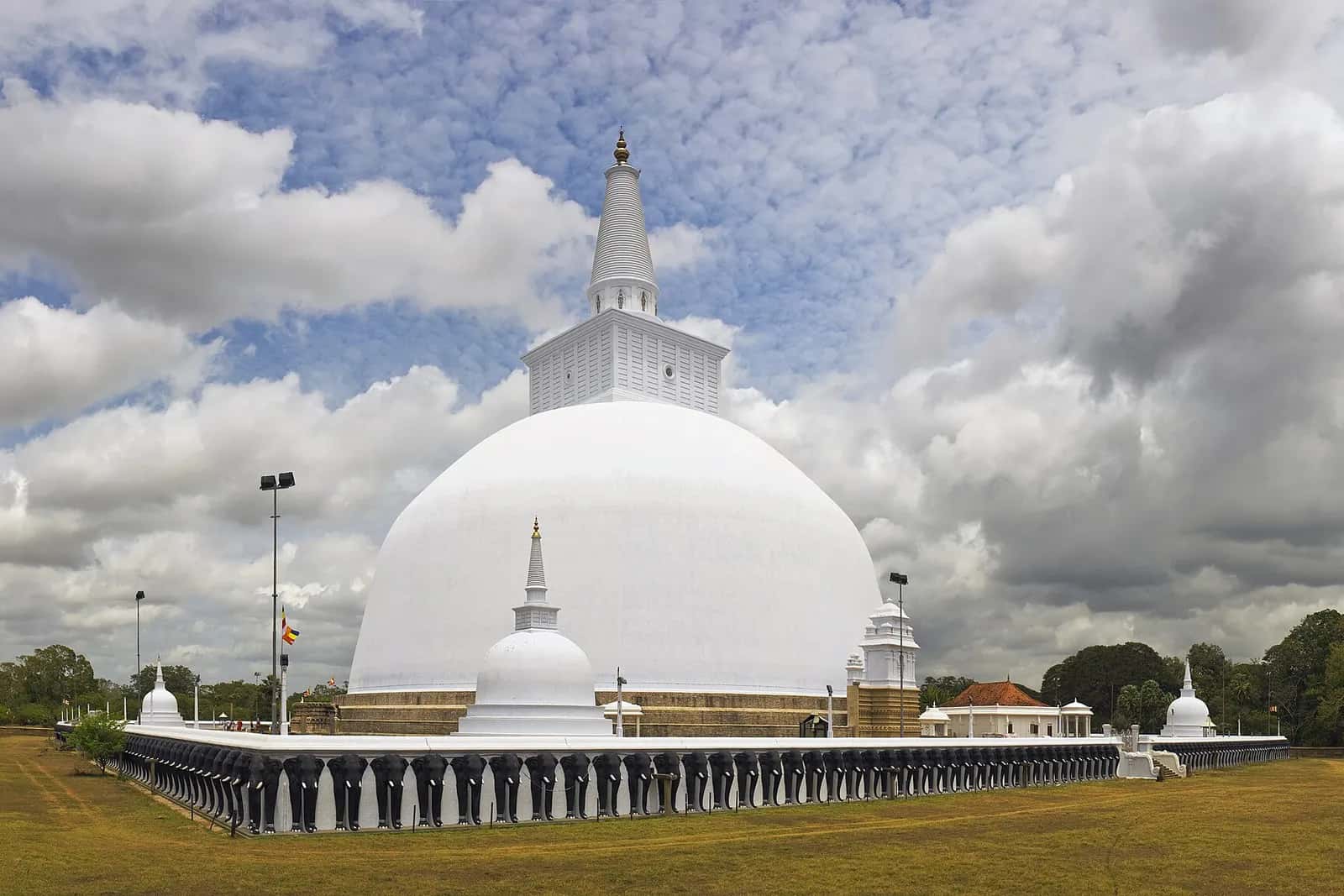
Ruwanwelisaya, Sri Lanka
The great white stupa of Anuradhapura, begun by King Dutugemunu in the 2nd century BC and ringed by a wall of stone elephants. One of the most revered monuments in the Buddhist world.
Region
The Cultural Triangle
Best time
February to September
Time needed
45 minutes
From the airport
≈ 5.5 h by road
Ruwanwelisaya, also called the Maha Thupa or Great Stupa, is the most revered monument in Anuradhapura. Its brilliant white dome rises about 100 metres above the sacred city, and it can be seen from far across the plain. Pilgrims have been coming here for more than two thousand years, and the stupa is as busy with worshippers today as it has ever been.
History
King Dutugemunu began building the stupa in the 2nd century BC, after uniting the island under his rule. The chronicles describe in loving detail how the foundations were laid, how relics of the Buddha were enshrined, and how the king, dying before the work was finished, was carried to see it draped in white cloth so that he could imagine it complete. His brother Saddhatissa finished the building.
Over the centuries, the stupa was damaged by invaders and left to decay after Anuradhapura was abandoned. By the 19th century it was a grassy mound. It was restored through decades of work by monks and volunteers, and it was crowned again in 1940.
What to see
- The elephant wall. The stupa stands on a broad terrace whose outer wall is lined with hundreds of stone elephants, shoulder to shoulder, as if holding up the platform. Most are modern replacements, with a few ancient ones remaining.
- The dome and spire. The perfect "bubble" shape is the classic form of the Sri Lankan stupa. Walk around it clockwise, as pilgrims do.
- The shrines. Four ornate altars, called vahalkadas, face the cardinal points. A shrine room holds Buddha statues and a figure said to represent King Dutugemunu.
- The offerings. Devotees sometimes wrap the whole stupa in a long band of coloured cloth, a ceremony known as the kapruka puja. Watching it being carried around the dome is unforgettable.
When to go
Evening is the best time. The stone has cooled, the stupa is floodlit against the dark sky, and families come to light lamps and chant. Early morning is also beautiful and quiet. Avoid the middle of the day, when the white terrace reflects fierce heat and glare.
Poya days are very crowded, and Poson Poya in June brings huge numbers of pilgrims.
Visiting
Cover your shoulders and knees, and wear white if you can. Shoes and hats come off before you step onto the terrace. Don't pose with your back to the stupa or the statues, and move quietly around people at prayer. Our etiquette guide has more.
The stupa is a few minutes' walk from the Sri Maha Bodhi. Most visitors explore the sacred city by bicycle or tuk-tuk, taking in Jetavanaramaya, Abhayagiri and Isurumuniya as well. See our Buddhist pilgrimage guide and the comparison of Anuradhapura and Polonnaruwa.
Ruwanwelisaya: frequently asked questions
Who built Ruwanwelisaya?
King Dutugemunu began it in the 2nd century BC, and his brother Saddhatissa completed it.
How tall is Ruwanwelisaya?
About 100 metres today, with a circumference of nearly 300 metres.
When is the best time to visit Ruwanwelisaya?
In the evening, when it's cooler and the stupa is lit up, or early in the morning.
Map and getting there
Approximate road times (Sri Lanka’s roads are slow — allow extra time for traffic and stops): Colombo airport (CMB) ≈ 5.5 h · Kandy ≈ 4.5 h · Galle ≈ 9.5 h. For flexible door-to-door travel, consider a local driver.
Related travel guides
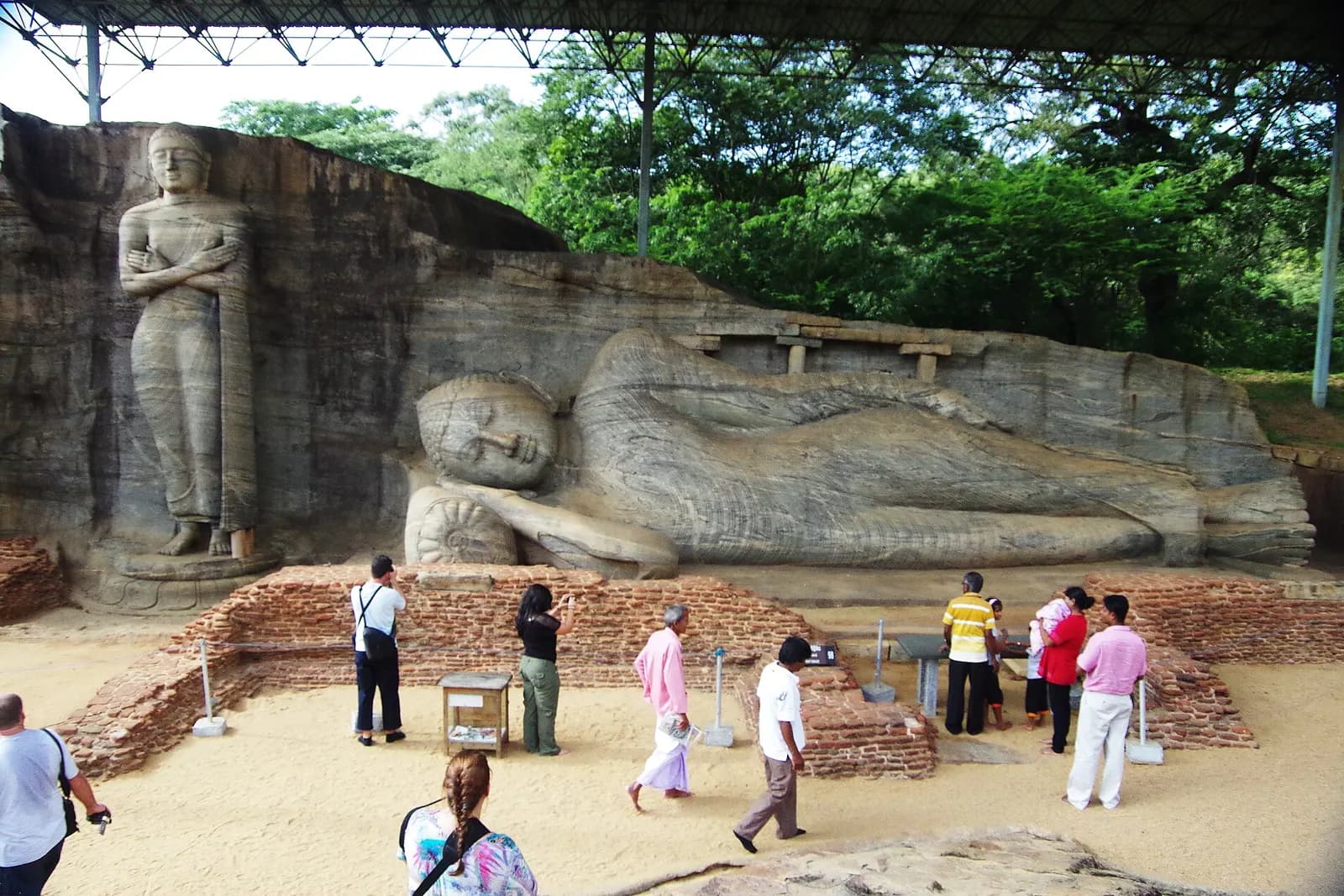
More places near Ruwanwelisaya
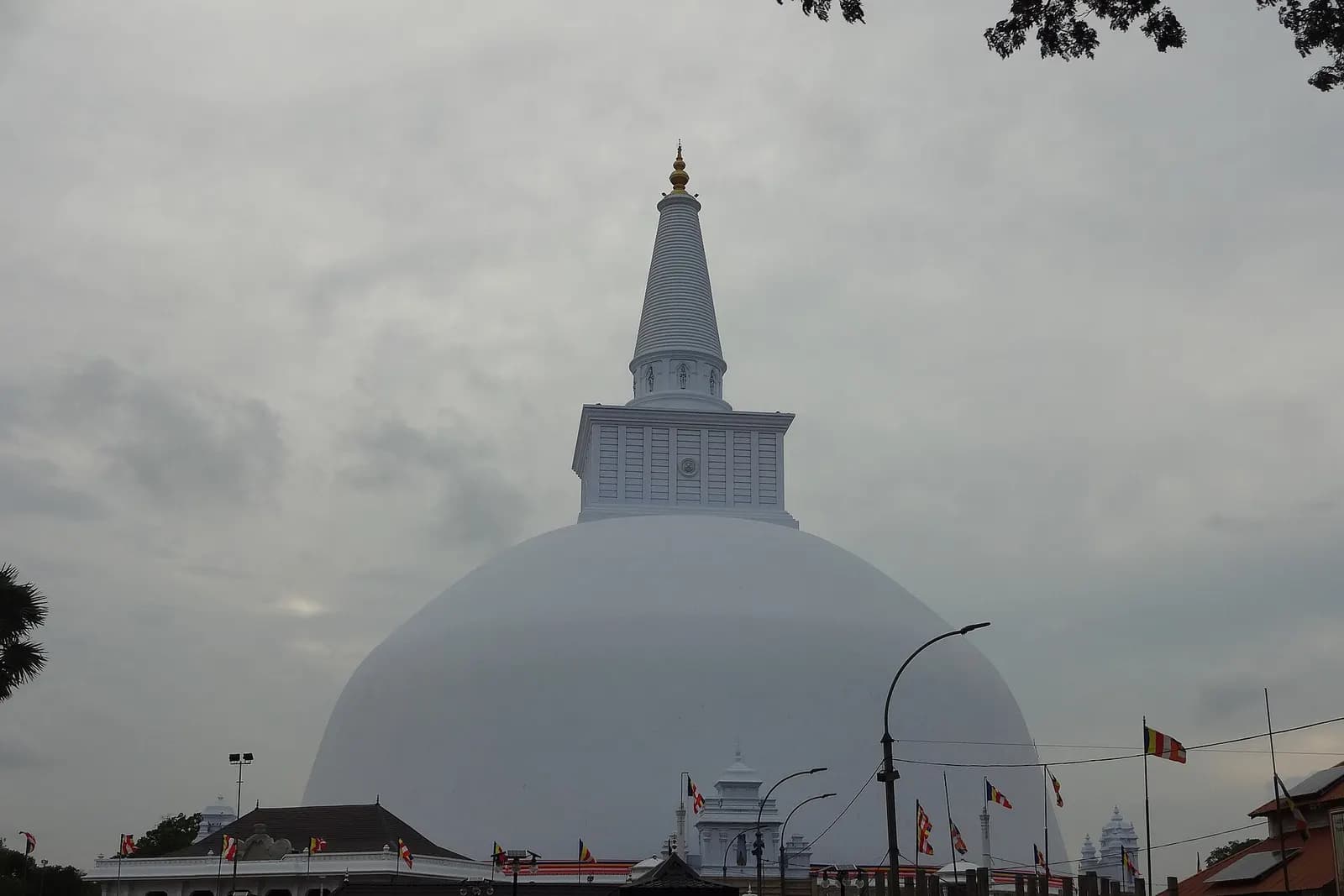 heritage
The Cultural Triangle
Anuradhapura Sacred City
Sri Lanka's first great capital, ruling for over a thousand years, with colossal stupas and the Sri Maha Bodhi — grown from a cutting of the tree under which the Buddha was enlightened. Still an active pilgrimage city.
Best: February to September
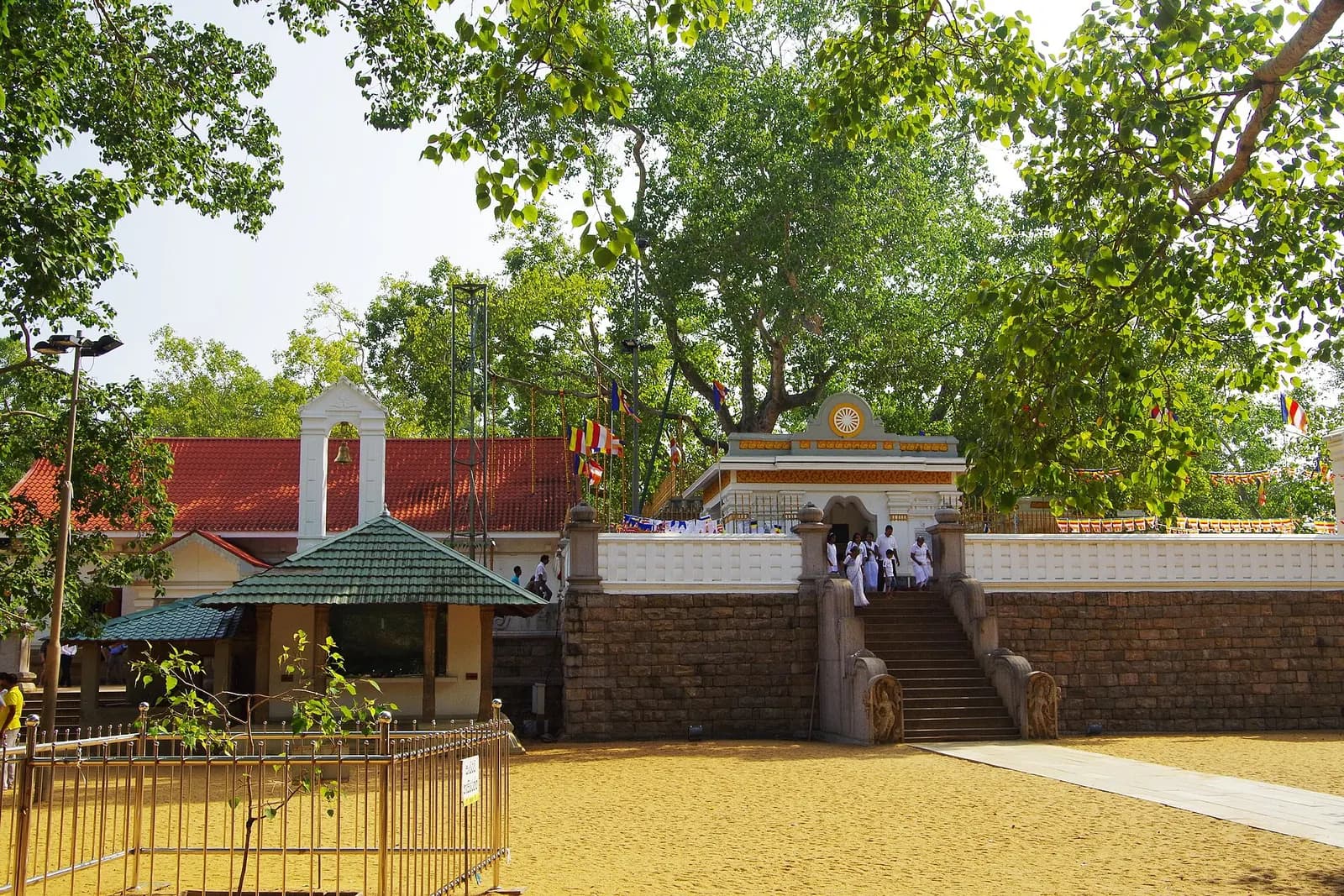 religious
The Cultural Triangle
Sri Maha Bodhi
The sacred fig tree in Anuradhapura grown from a cutting of the tree under which the Buddha attained enlightenment. Planted in the 3rd century BC, and tended ever since.
Best: February to September
 heritage
The Cultural Triangle
Isurumuniya Temple
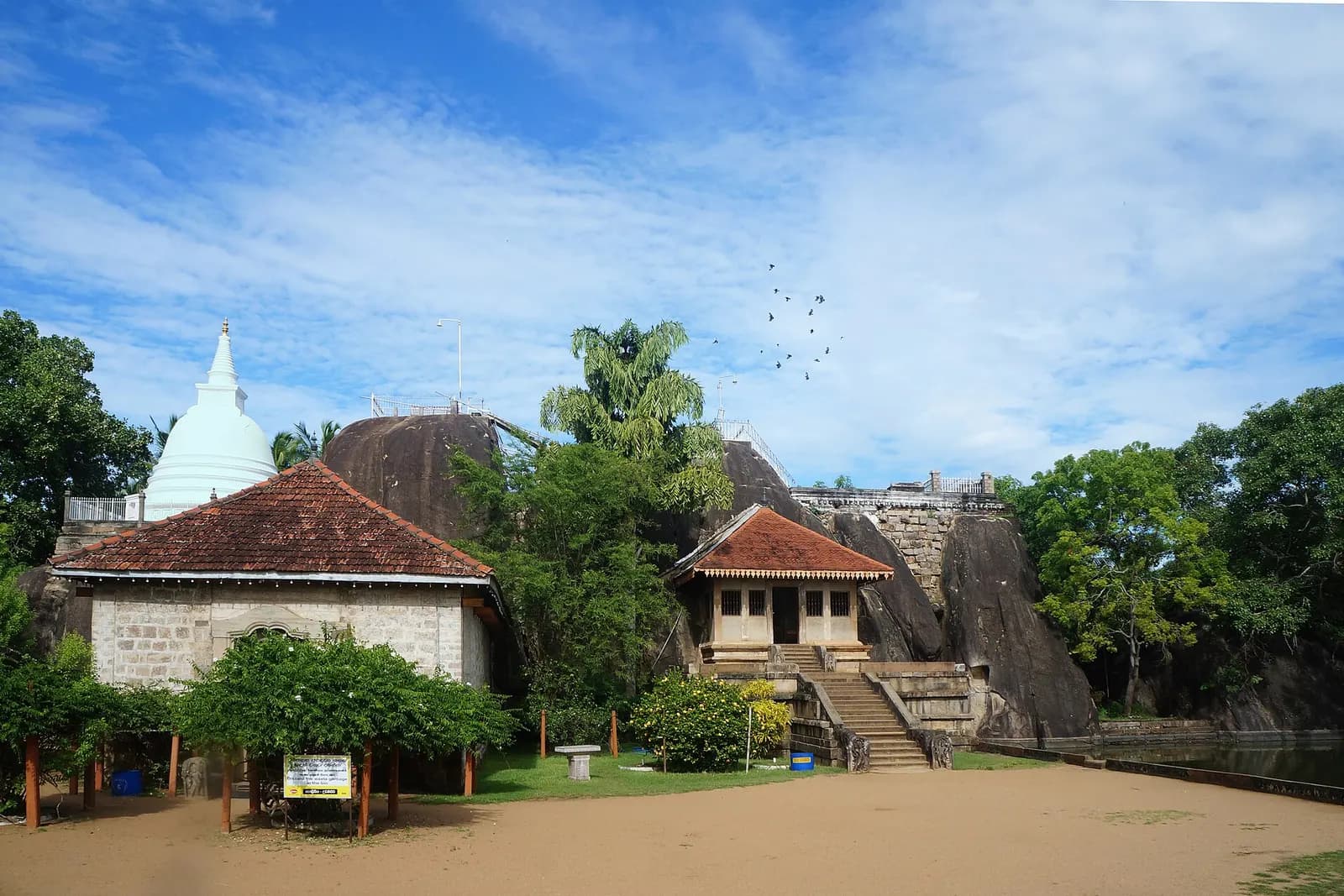
A rock temple beside the Tissa Wewa in Anuradhapura, famous for its carvings: the Isurumuniya Lovers, the bathing elephants and the man with a horse's head.
Best: February to September
Last updated November 2026. February to September is driest; the Minneriya elephant gathering peaks in August and September.