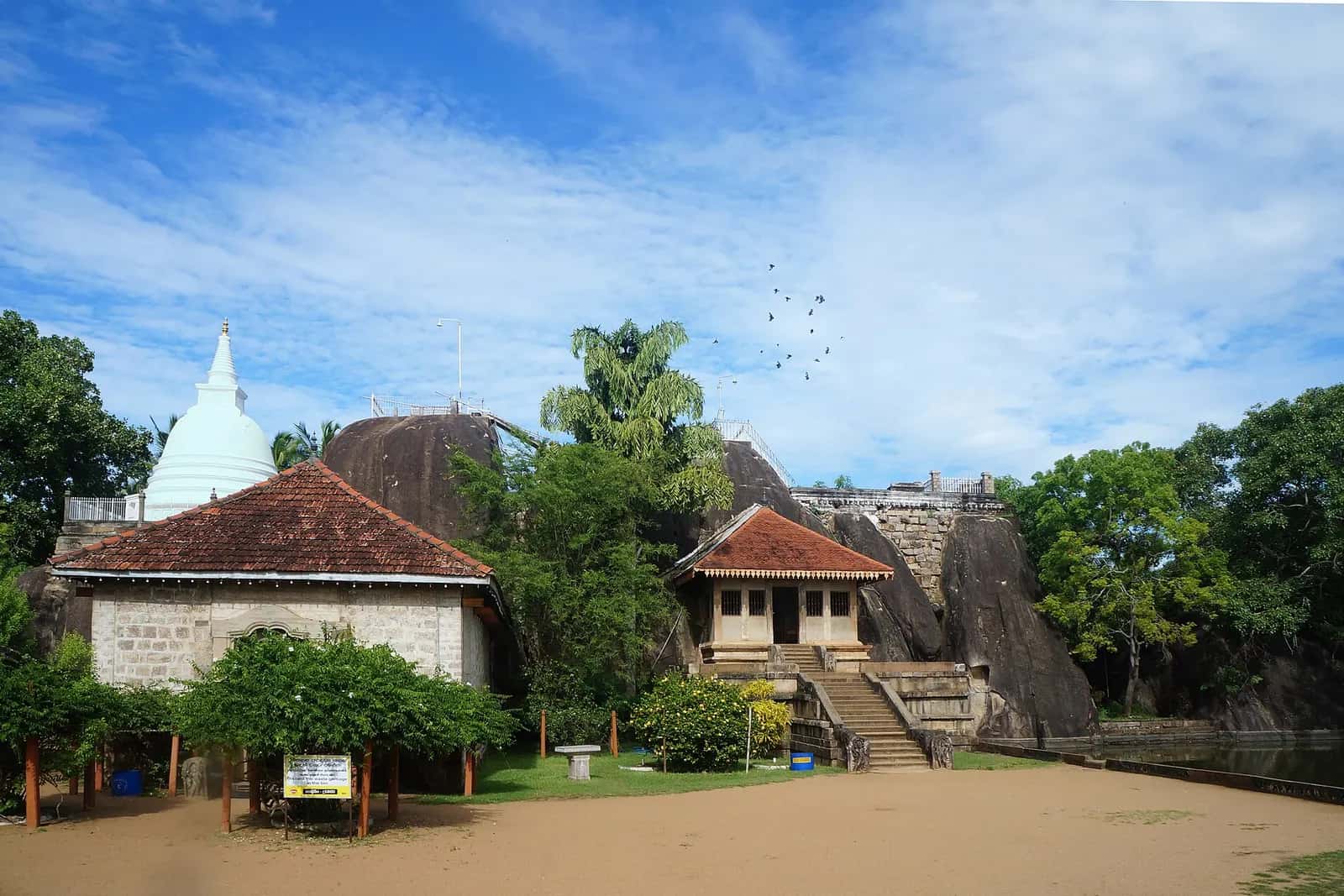
Isurumuniya Temple, Sri Lanka
A rock temple beside the Tissa Wewa in Anuradhapura, famous for its carvings: the Isurumuniya Lovers, the bathing elephants and the man with a horse's head.
Region
The Cultural Triangle
Best time
February to September
Time needed
45 minutes
From the airport
≈ 5 h by road
Isurumuniya is a small rock temple beside the Tissa Wewa reservoir, on the southern edge of Anuradhapura. It was founded in the 3rd century BC, in the earliest days of Buddhism on the island. People come here today for its stone carvings, which are among the finest and best loved in Sri Lanka.
The carvings
- The Isurumuniya Lovers. This small slab, now kept in the temple museum, shows a man and a woman seated close together, her hand raised shyly. It's usually dated to around the 6th century, and its style recalls the Gupta art of India. Popular tradition says that the figures are Prince Saliya, son of King Dutugemunu, and Asokamala, the low-caste girl for whom he gave up the throne. Others believe they are gods.
- The elephant pond. On the rock face beside the temple pool, elephants are carved as if splashing in the water, with trunks raised. They are wonderfully lifelike.
- The man and the horse. Above the pool, a seated man with a horse's head beside him is carved into a niche in the rock. Scholars have suggested that he represents a rain god, a sage or a figure from Indian mythology.
- The royal family. Another slab in the museum shows a group of courtly figures.
The temple
The shrine itself is built into the rock, with a painted seated Buddha inside. Steps lead up and over the boulders to a small stupa and a viewpoint, from where you can see across the reservoir and the treetops to the great stupas of the city. Sunset from here is lovely. A cleft in the rock is home to a colony of bats.
The royal gardens
Next door is Ranmasu Uyana, the Royal Pleasure Gardens, with ancient stone bathing pools fed by the reservoir. On a rock face here is the Sakwala Chakraya, a mysterious circular diagram carved with symbols. It has been explained as an early map of the universe, and it has attracted all kinds of theories online, where it's nicknamed the "stargate". The gardens are free to walk through and usually empty.
Visiting
Isurumuniya charges its own entrance fee for foreign visitors, separate from the main archaeological ticket. Dress modestly, and remove your shoes and hat. Allow 45 minutes, or longer with the gardens.
Late afternoon is the best time, for softer light on the carvings and for the view at dusk. From the Sri Maha Bodhi, it's about 2 km, an easy ride by bicycle or tuk-tuk. Many visitors end their day in Anuradhapura here, after Ruwanwelisaya and the other great stupas. For background, read our short history of Sri Lanka.
Isurumuniya Temple: frequently asked questions
What is Isurumuniya famous for?
Its stone carvings, especially the Isurumuniya Lovers and the elephants at the pond.
Is Isurumuniya included in the Anuradhapura ticket?
No, it has usually had its own separate entrance fee.
What is the Sakwala Chakraya?
A circular rock carving in the gardens beside Isurumuniya, thought by some to be an ancient diagram of the universe.
Map and getting there
Approximate road times (Sri Lanka’s roads are slow — allow extra time for traffic and stops): Colombo airport (CMB) ≈ 5 h · Kandy ≈ 4.5 h · Galle ≈ 9.5 h. For flexible door-to-door travel, consider a local driver.
Related travel guides
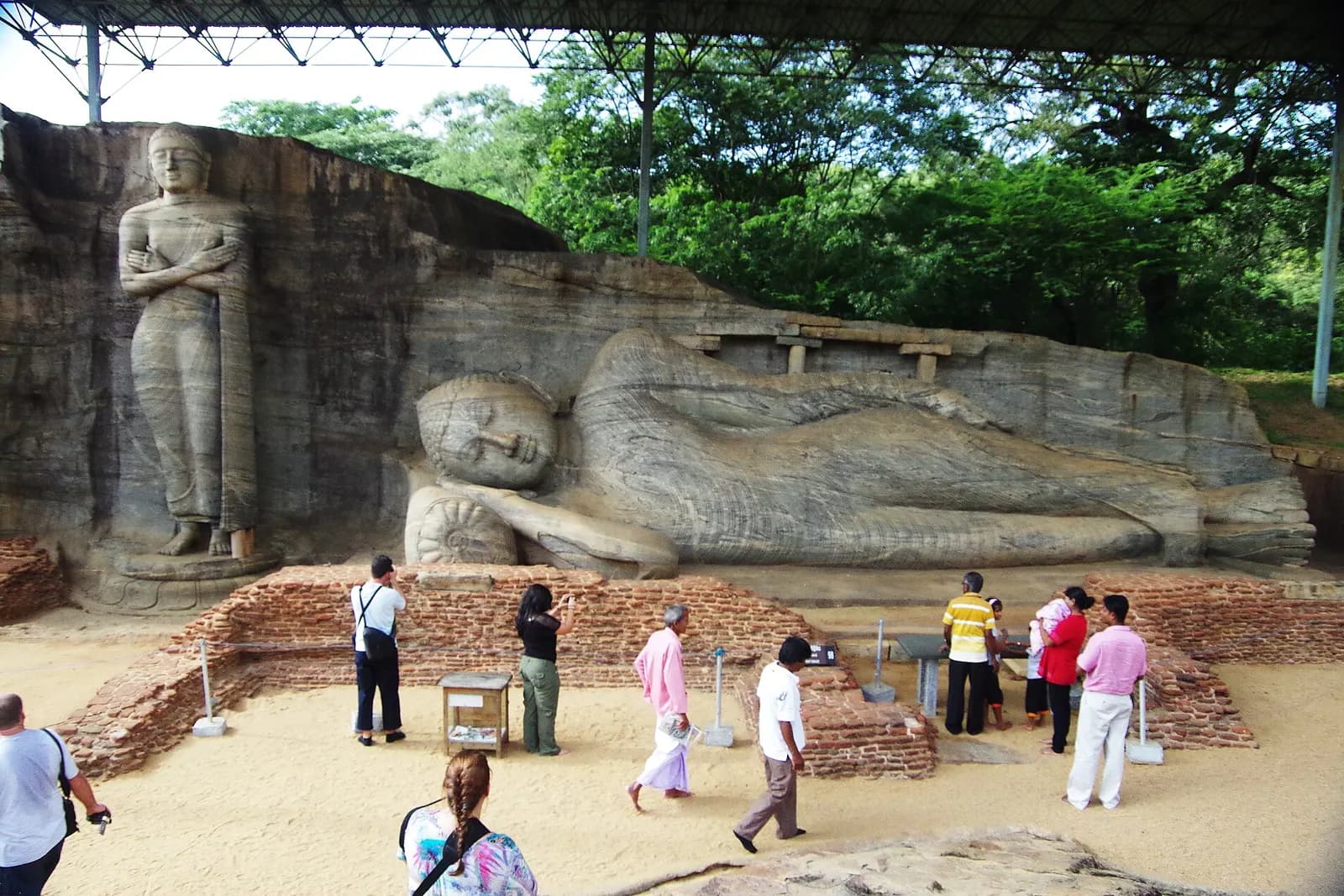
Anuradhapura vs Polonnaruwa: Which Ancient City Should You Visit?
Both are UNESCO World Heritage Sites and former royal capitals, but they feel very different. Here's how to choose between Anuradhapura and Polonnaruwa — or see both.
12 Nov 2026· 3 min read
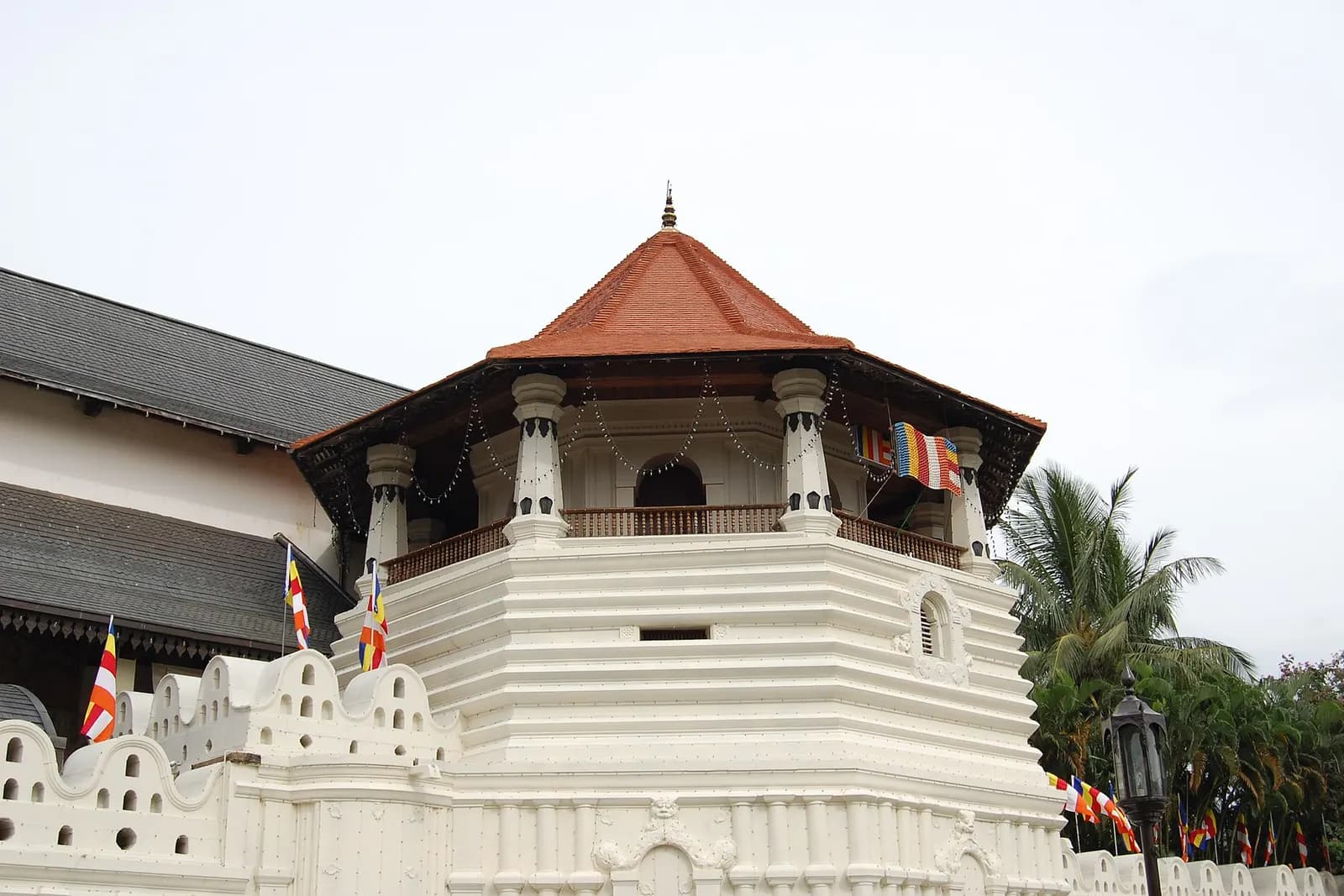
Sri Lanka Culture & Etiquette: Temple Rules and Local Customs
A few simple customs go a long way in Sri Lanka. Here's how to dress and behave at temples, why Buddha images are treated so seriously, and everyday etiquette that locals appreciate.
6 Nov 2026· 2 min read
More places near Isurumuniya Temple
 religious
The Cultural Triangle
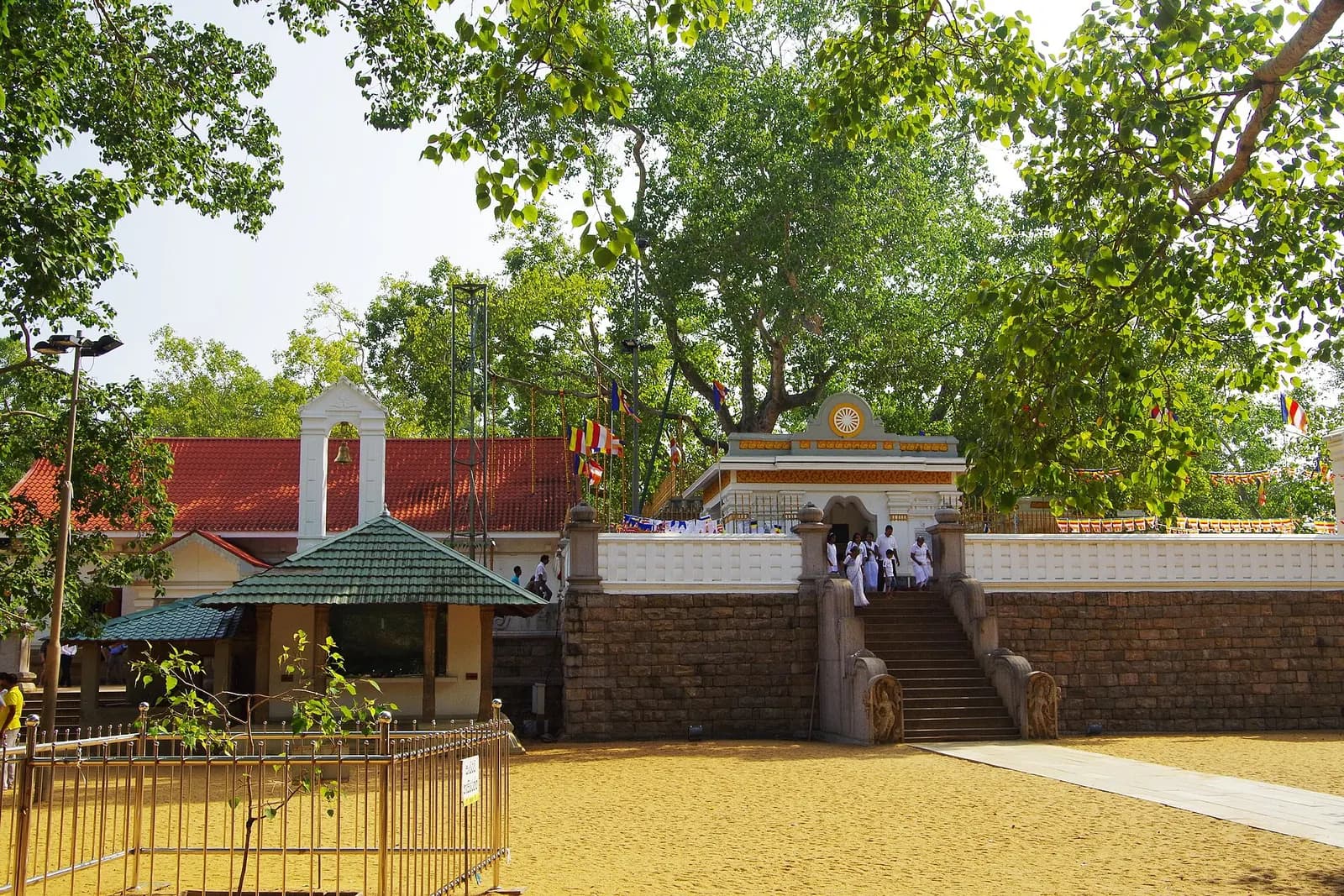
Sri Maha Bodhi
The sacred fig tree in Anuradhapura grown from a cutting of the tree under which the Buddha attained enlightenment. Planted in the 3rd century BC, and tended ever since.
Best: February to September
 heritage
The Cultural Triangle
Anuradhapura Sacred City
Sri Lanka's first great capital, ruling for over a thousand years, with colossal stupas and the Sri Maha Bodhi — grown from a cutting of the tree under which the Buddha was enlightened. Still an active pilgrimage city.
Best: February to September
 religious
The Cultural Triangle
Ruwanwelisaya
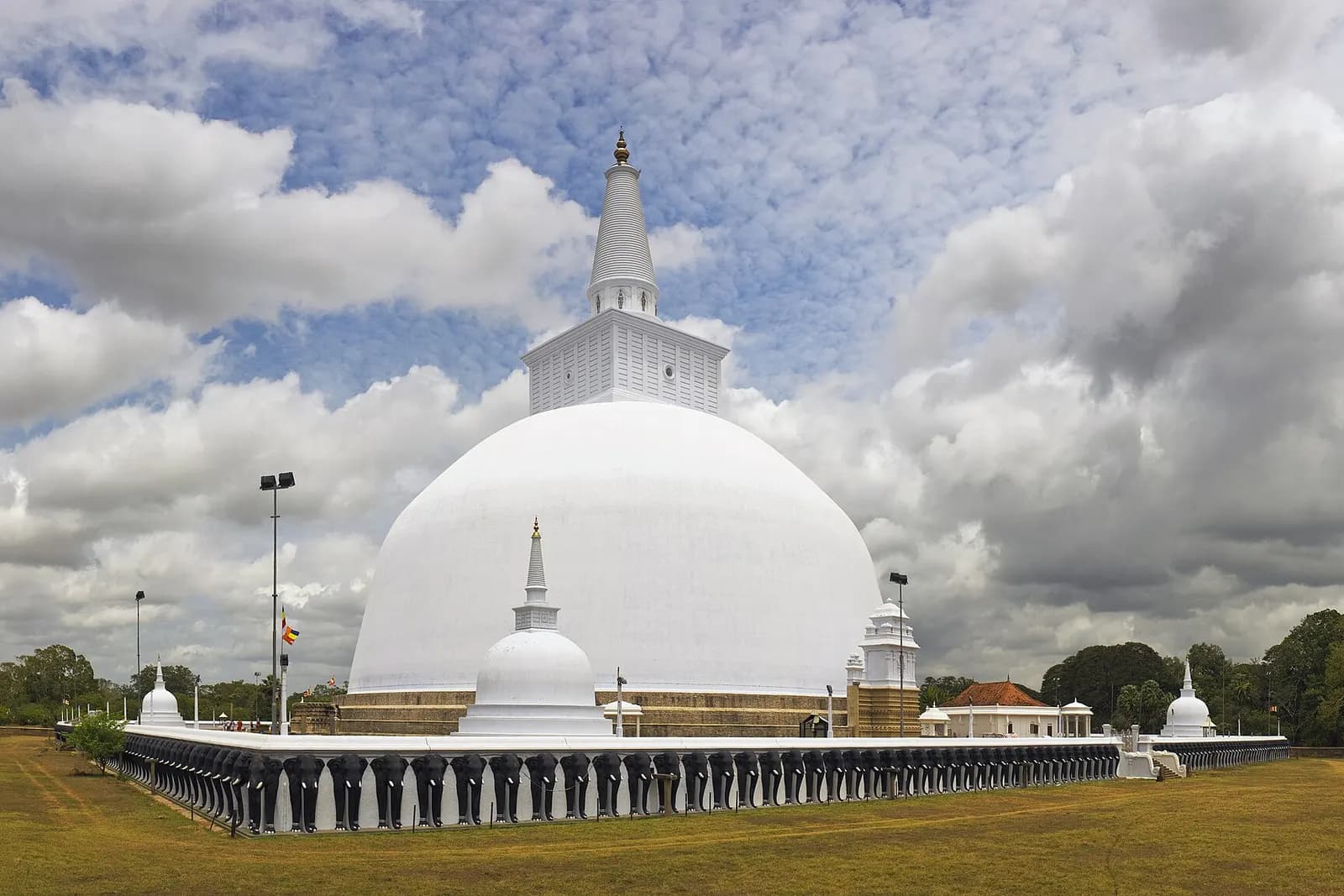
The great white stupa of Anuradhapura, begun by King Dutugemunu in the 2nd century BC and ringed by a wall of stone elephants. One of the most revered monuments in the Buddhist world.
Best: February to September
Last updated November 2026. February to September is driest; the Minneriya elephant gathering peaks in August and September.