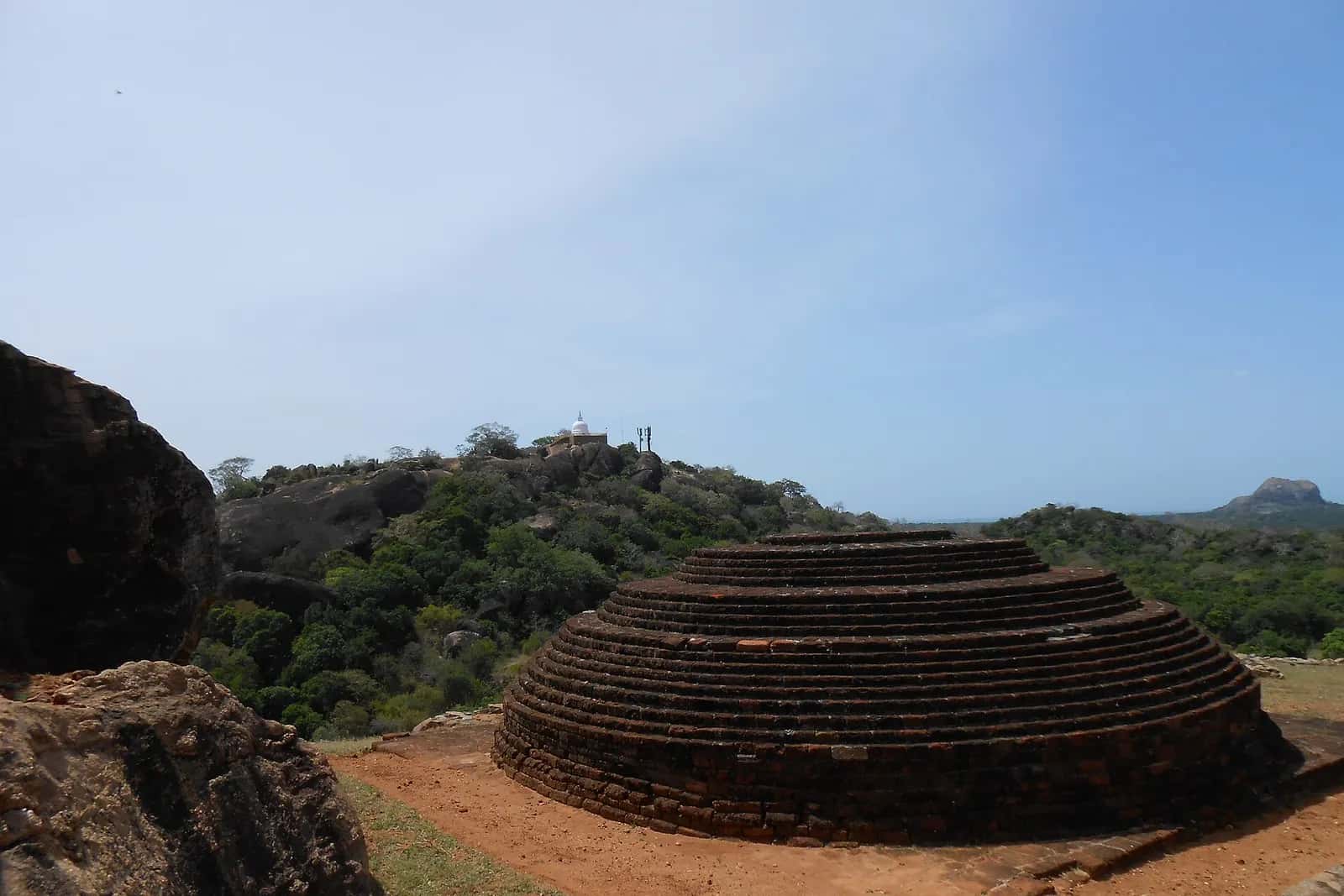
Sithulpawwa Rock Temple, Sri Lanka
An ancient rock monastery deep inside the Yala wilderness, with stupas on bare granite, cave shrines and views across the jungle. More than 2,000 years old and still a place of pilgrimage.
Region
Yala, Udawalawe & the Deep South
Best time
February to July
Time needed
1.5 hours
From the airport
≈ 7 h by road
Sithulpawwa is an ancient Buddhist monastery built on and around a group of granite outcrops deep in the wilderness of Yala. It is more than 2,000 years old, and the chronicles say that thousands of monks once lived and meditated in its caves. White stupas still crown the rocks, and the view from the top takes in an unbroken sea of jungle. It's one of the most atmospheric religious sites in the south.
History
The monastery is credited to King Kavantissa of Ruhuna, in the 2nd century BC, the father of the hero-king Dutugemunu. Its name comes from Chittalapabbata, "the hill of the quiet mind". Stone inscriptions in early Brahmi script record gifts made to the monks by kings and villagers. At its height, the complex spread across a wide area, and ruins lie scattered through the surrounding forest.
What to see
- The main rock and stupa. Steps cut into the granite lead to a stupa on the summit, about 120 metres up. The climb takes 10 to 15 minutes, and the view is superb.
- The cave temple. A large cave shelters a reclining Buddha, with fragments of very old paintings on the rock, among the earliest surviving in the country.
- The smaller rock. A second outcrop, Kuda Sithulpawwa, has another stupa and wide views.
- Ponds, inscriptions and ruins around the base, including carved stone pillars and Buddha images.
Wildlife and safety
The temple lies inside the Yala protected area. Elephants, wild boar, deer and monkeys are regularly seen around the car park and along the road, and leopards and bears live in the surrounding forest. Don't wander away from the temple area, and don't feed or approach the animals. Elephants here are used to people, but they are still wild.
Access
Sithulpawwa is reached by road from Tissamaharama via Kirinda and the Palatupana side of Yala, or by a second road through Kataragama. The drive takes about an hour from Tissa. Pilgrims travel these roads to reach the temple, but they pass through the park zone, so stopping, getting out of the vehicle and driving off the road are not allowed. Rules on entry times, permits and vehicles change, and the route may be closed when the park is shut or in very wet weather, so ask your driver or hotel beforehand. A 4WD or high-clearance vehicle is best.
Many safari drivers can add the temple to a Yala game drive.
Visiting tips
Go early in the morning or late in the afternoon, as the bare rock is very hot at midday, and you must go barefoot in the sacred areas. Dress modestly, and bring water and socks. Poya days draw large numbers of pilgrims. Our guide to the ancient sites of the deep south puts Sithulpawwa in context with Kataragama and the old kingdom of Ruhuna.
Sithulpawwa Rock Temple: frequently asked questions
Do you need a Yala ticket to visit Sithulpawwa?
Access arrangements for pilgrims and visitors change, so check with your driver or hotel before you travel.
How old is Sithulpawwa?
More than 2,000 years. It is credited to King Kavantissa in the 2nd century BC.
Can you see animals at Sithulpawwa?
Often. Elephants, boar and deer are common around the temple, so stay close to the main area.
Map and getting there
Approximate road times (Sri Lanka’s roads are slow — allow extra time for traffic and stops): Colombo airport (CMB) ≈ 7 h · Kandy ≈ 5 h · Galle ≈ 5.5 h. For flexible door-to-door travel, consider a local driver.
Related travel guides
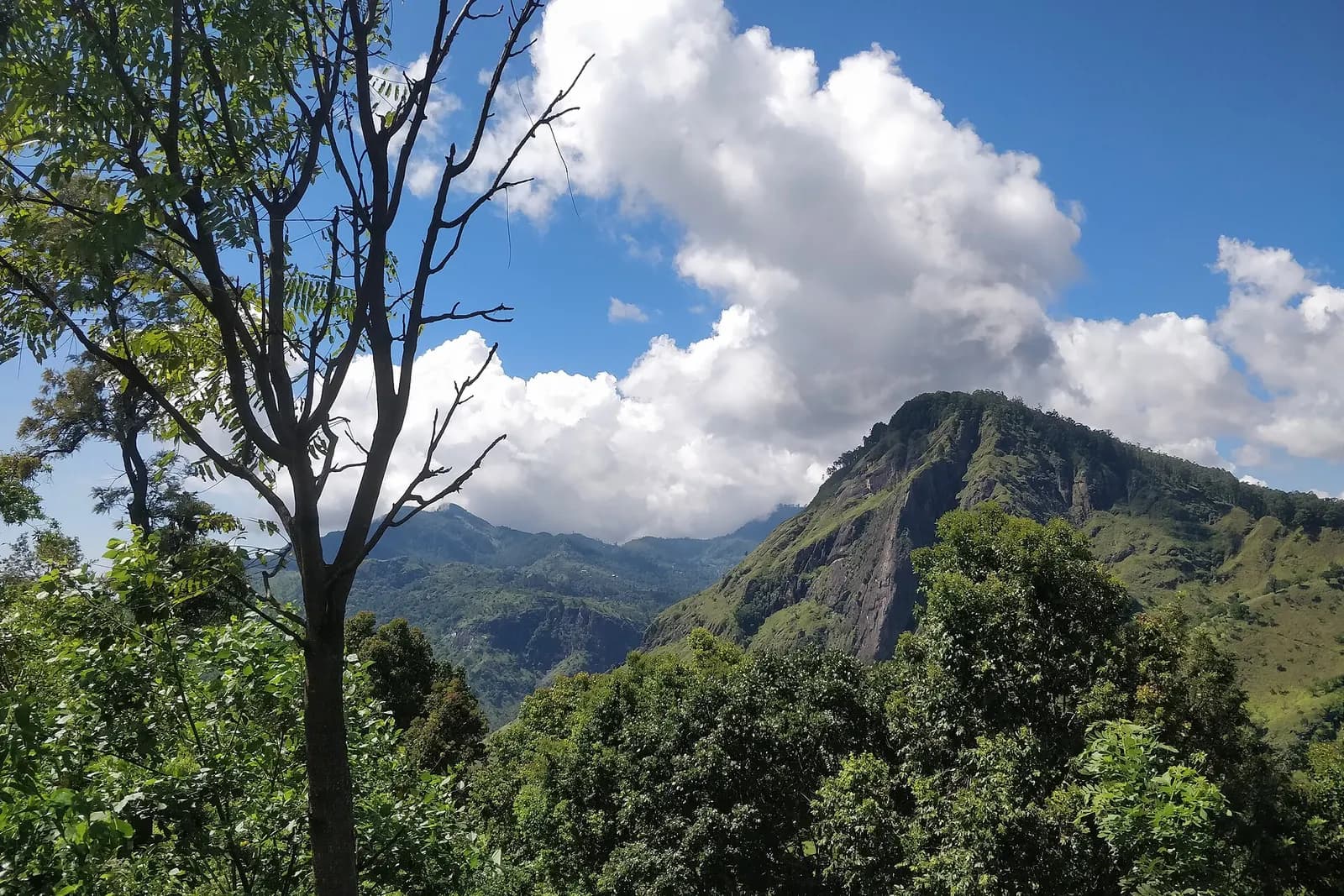
Ella Hiking Guide: Ella Rock, Little Adam's Peak and More
Ella is Sri Lanka's best small town for walking — tea estates, viewpoints and a famous bridge all within reach on foot. Here's how to tackle each hike.
5 Nov 2026· 2 min read
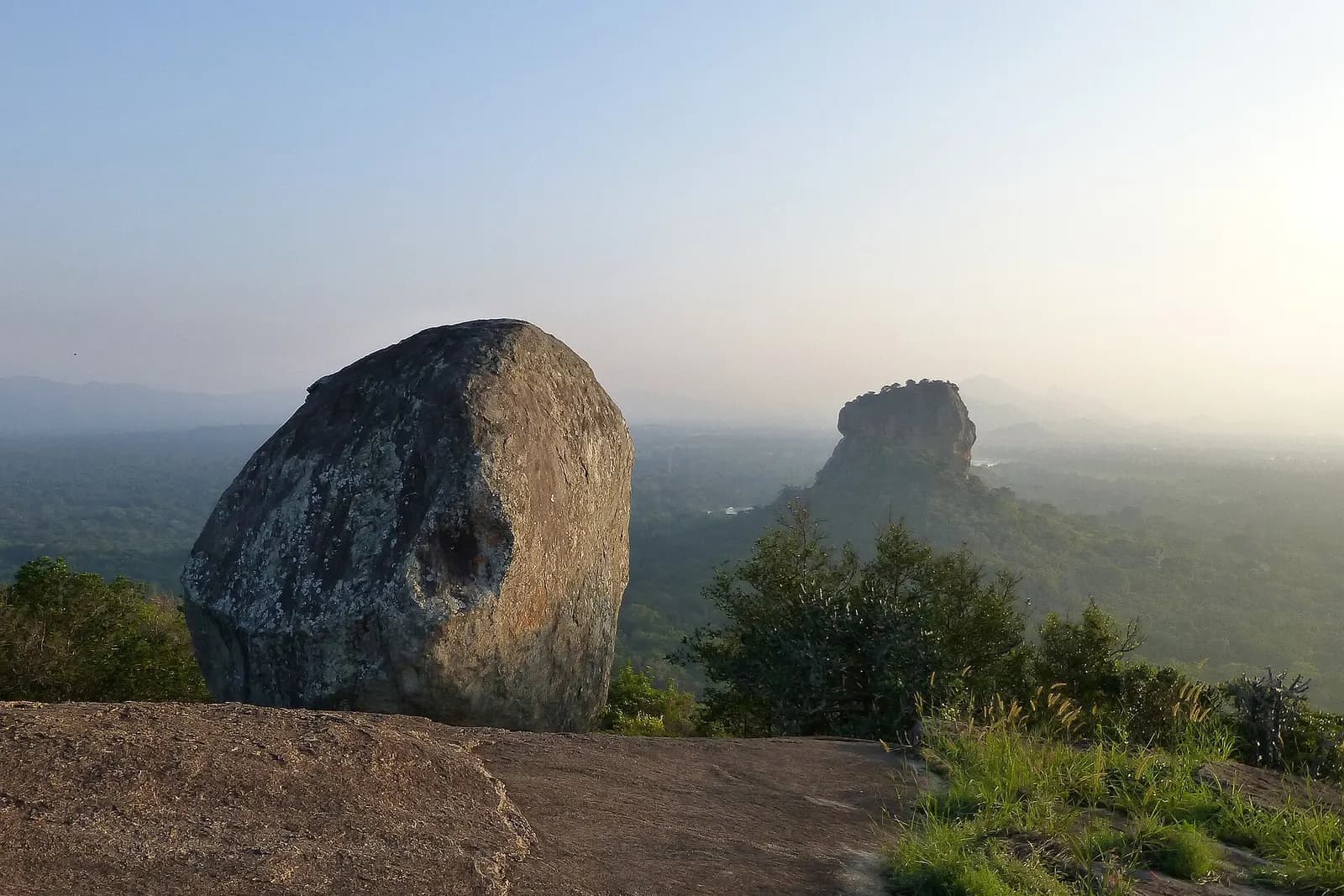
Sigiriya vs Pidurangala: Which Rock Should You Climb?
Sigiriya is the famous fortress; Pidurangala is the rock with the best view of it. Here's how they compare, and how to fit both into one day.
5 Nov 2026· 2 min read
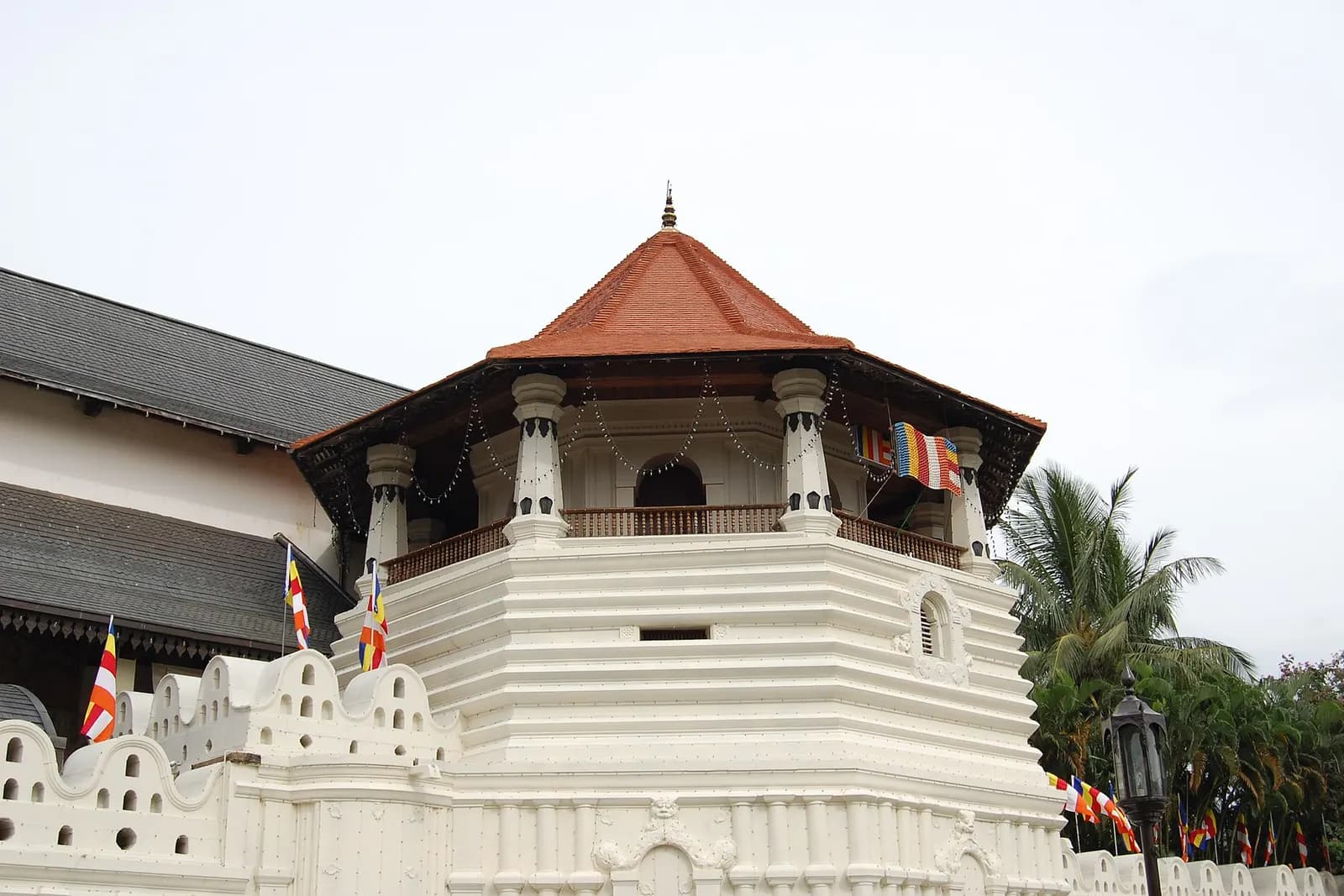
Sri Lanka Culture & Etiquette: Temple Rules and Local Customs
A few simple customs go a long way in Sri Lanka. Here's how to dress and behave at temples, why Buddha images are treated so seriously, and everyday etiquette that locals appreciate.
6 Nov 2026· 2 min read
More places near Sithulpawwa Rock Temple
 wildlife
Yala, Udawalawe & the Deep South
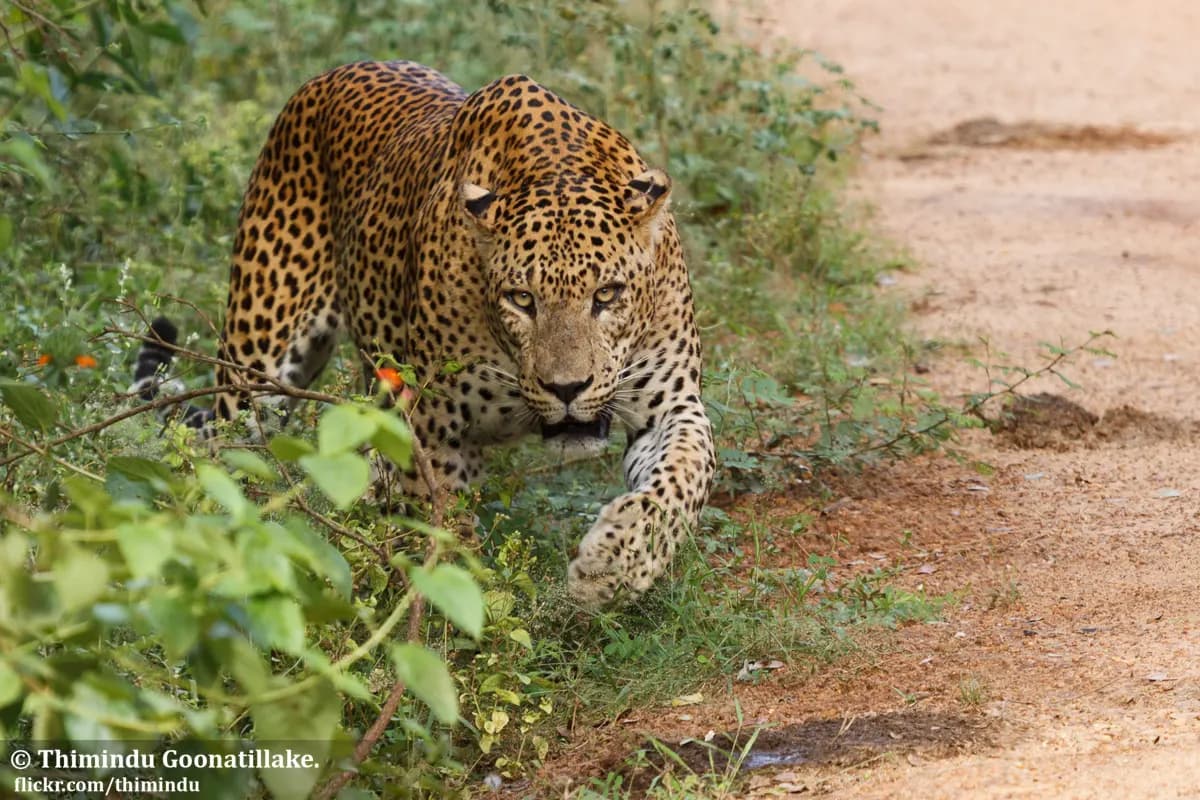
Yala National Park
Sri Lanka's most famous national park and one of the best places in the world to see leopards, along with elephants, sloth bears, crocodiles and abundant birdlife. Block 1 usually closes for around six weeks between September and October.
Best: February to July
 religious
Yala, Udawalawe & the Deep South
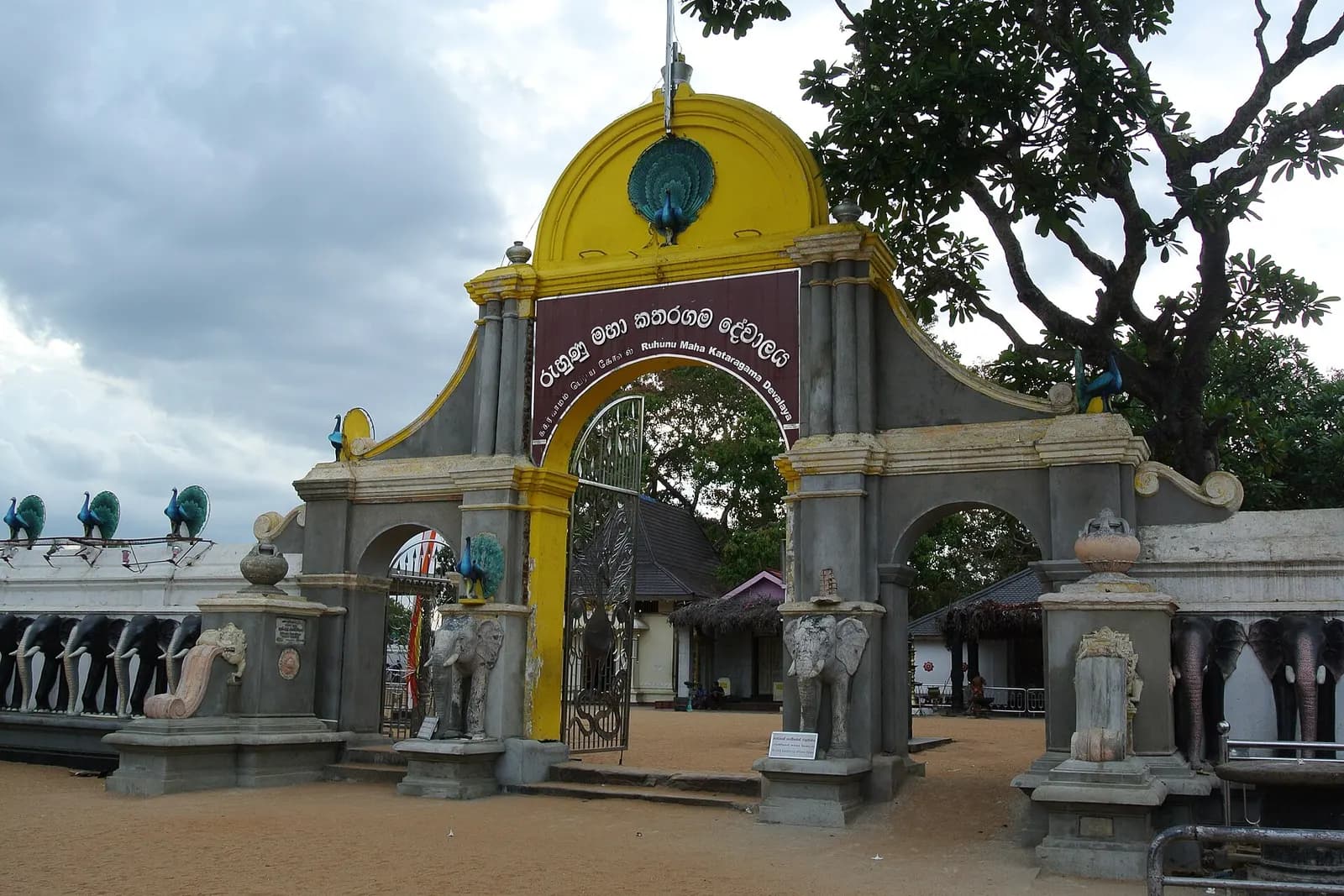
Kataragama
A sacred town revered by Buddhists, Hindus, Muslims and the indigenous Vedda people. The evening puja at the Maha Devale is unforgettable, and the July–August festival draws pilgrims from across the island.
Best: Year-round; festival in July/August
 heritage
Yala, Udawalawe & the Deep South
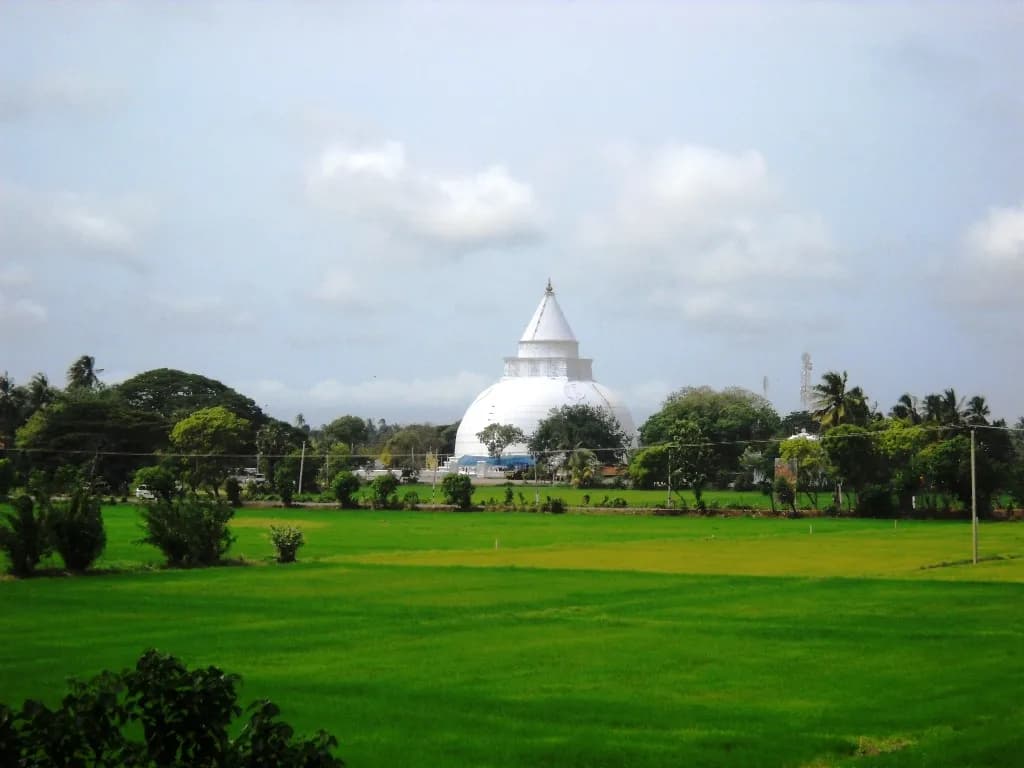
Tissamaharama
The main base for Yala safaris and the old heart of the Ruhuna kingdom, with a giant white dagoba and the peaceful Tissa Wewa reservoir, lovely at sunset.
Best: February to September
Last updated November 2026. February to July for safaris; Yala Block 1 usually closes for about six weeks around September–October.