Beaches
Swimming Safely in Sri Lanka: Beach Safety Guide
Sri Lanka's beaches are beautiful, but the sea is more powerful than it looks. Here's how to choose safe places to swim and what to do if you're caught in a current.
By Sri Lanka Travel Guides Editorial TeamUpdated 5 November 20262 min read
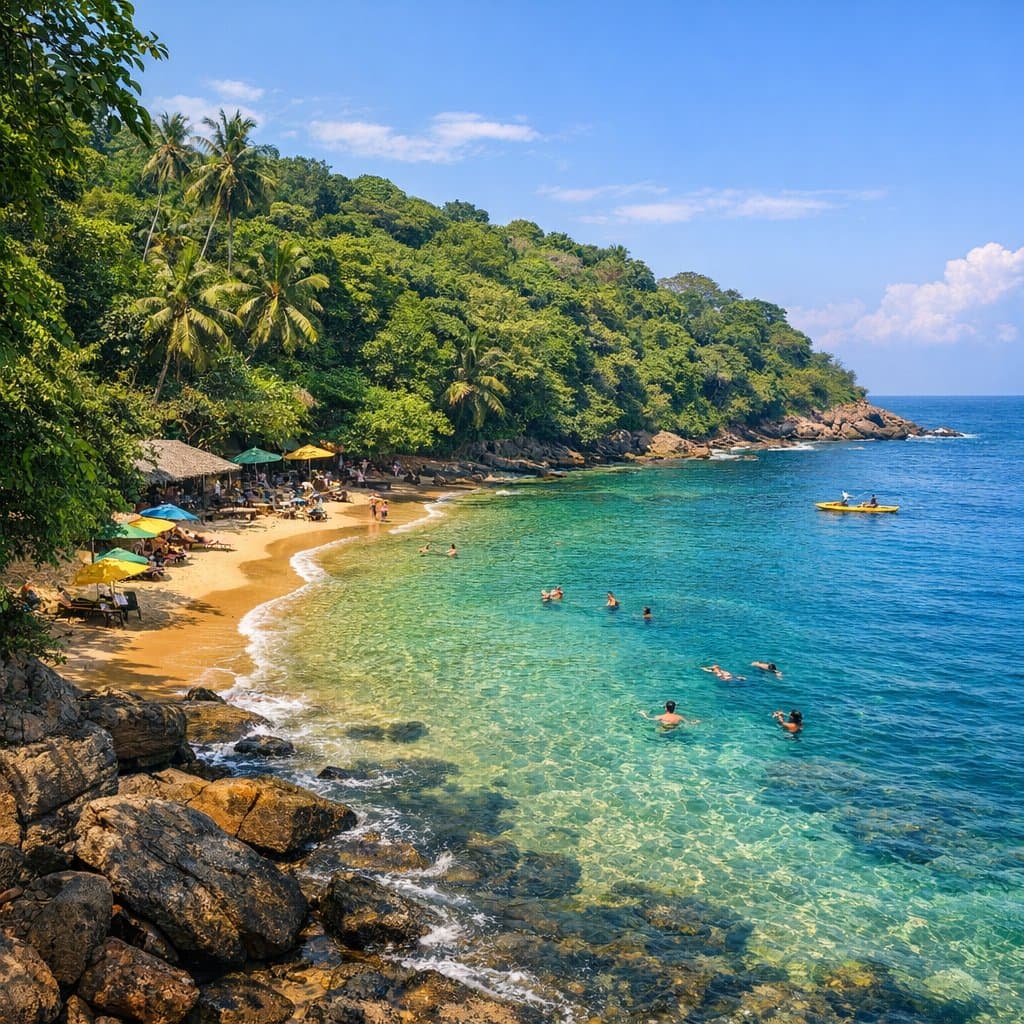
Every year, visitors drown off Sri Lanka's beaches — often strong swimmers who underestimated the sea. Rip currents are common, lifeguards are rare, and conditions change dramatically with the monsoons. A few simple rules will keep you safe. For the best beaches overall, see our best beaches guide.
Know the seasons
The sea on each coast is calm in its dry season and rough during its monsoon:
| Coast | Calm, safer sea | Rough sea |
|---|---|---|
| West and south (Negombo to Tangalle) | December – April | May – October |
| East (Trincomalee to Arugam Bay) | May – September | November – February |
During the rough season, many beaches have big waves and strong currents even on sunny days. Swim only in sheltered spots, or stick to the pool.
The safest places to swim
These bays are naturally sheltered by reefs or headlands and are among the calmer places to swim in season:
- Unawatuna — a protected bay near Galle.
- Jungle Beach — a small cove near Unawatuna.
- Hiriketiya — a horseshoe bay; the centre is calmer than the surf break on the side.
- Polhena — a reef-protected lagoon near Matara.
- Bentota — the lagoon side is very calm; the ocean side can be rough.
- Pasikudah — shallow water extends far from shore (east-coast season).
- Nilaveli and Uppuveli — usually calm from May to September.
Even "safe" beaches can be dangerous on a rough day. Always check conditions.
Beaches to be careful at
Long, open, steeply shelving beaches often have strong rips and dumping waves. Take great care at places such as parts of Mirissa (away from the sheltered centre), Tangalle's open beaches, Hikkaduwa and the long beaches of the west coast, especially outside the dry season.
Rip currents
A rip current is a narrow channel of water flowing quickly away from the shore. You can often spot one as:
- a gap in the breaking waves,
- darker, deeper-looking water,
- foam, sand or debris moving out to sea.
If you're caught in a rip
- Don't panic and don't swim against it. Even strong swimmers tire quickly.
- Float and let the current carry you — rips usually weaken beyond the breaking waves.
- Swim parallel to the shore to get out of the current, then swim back at an angle.
- Raise your arm and shout for help.
If you see someone in trouble, call for help and throw something that floats. Don't swim out yourself unless you're trained.
Golden rules
- Respect red flags and local advice — if locals aren't swimming, don't.
- Never swim alone, at night or after drinking.
- Swim near others and, where possible, near a lifeguard.
- Watch children constantly in and near the water.
- Ask your hotel about conditions each day.
- Wear reef shoes where there are rocks, coral or sea urchins.
- Be careful on rocks — waves can sweep people off without warning.
Other hazards
- Sea urchins on rocky reefs — wear shoes.
- Jellyfish occasionally appear, especially in certain seasons.
- Boats and jet skis in busy bays — swim within marked areas.
- Sunburn — reapply sunscreen after swimming. See our health guide.
Frequently asked questions
Is it safe to swim in the sea in Sri Lanka?
Yes, in sheltered bays during the right season. Open beaches often have strong rip currents, especially during the monsoon.
What is the safest beach in Sri Lanka for swimming?
Sheltered bays such as Unawatuna, Jungle Beach, Hiriketiya, Polhena and, from May to September, Pasikudah are among the calmest.
What should I do if I get caught in a rip current?
Don't swim against it. Float, swim parallel to the shore to escape, and signal for help.
Turn this into a plan
Our free AI trip planner builds a day-by-day Sri Lanka itinerary for your dates, with realistic travel times.
Plan my tripQuestions & comments
Share a tip or ask a question. Comments are moderated.
- No comments yet — be the first.
Keep planning
The Best Beaches in Sri Lanka (and When to Visit Each)
Sri Lanka's beaches change with the monsoons. Here are the best beaches on each coast, what they're good for and the months when the sea is calm.
5 Nov 2026· 2 min read
Is Sri Lanka Safe for Tourists? An Honest Safety Guide
Sri Lanka is one of South Asia's most relaxed countries to travel in. The real risks aren't crime — they're the roads, the sea and a handful of well-known scams. Here's what to watch for.
5 Nov 2026· 3 min read
Surfing in Sri Lanka: Best Breaks, Seasons and Surf Towns
Warm water, consistent waves and two surf seasons on opposite coasts — Sri Lanka is one of Asia's best surf destinations for every level. Here's where and when to go.
5 Nov 2026· 2 min read