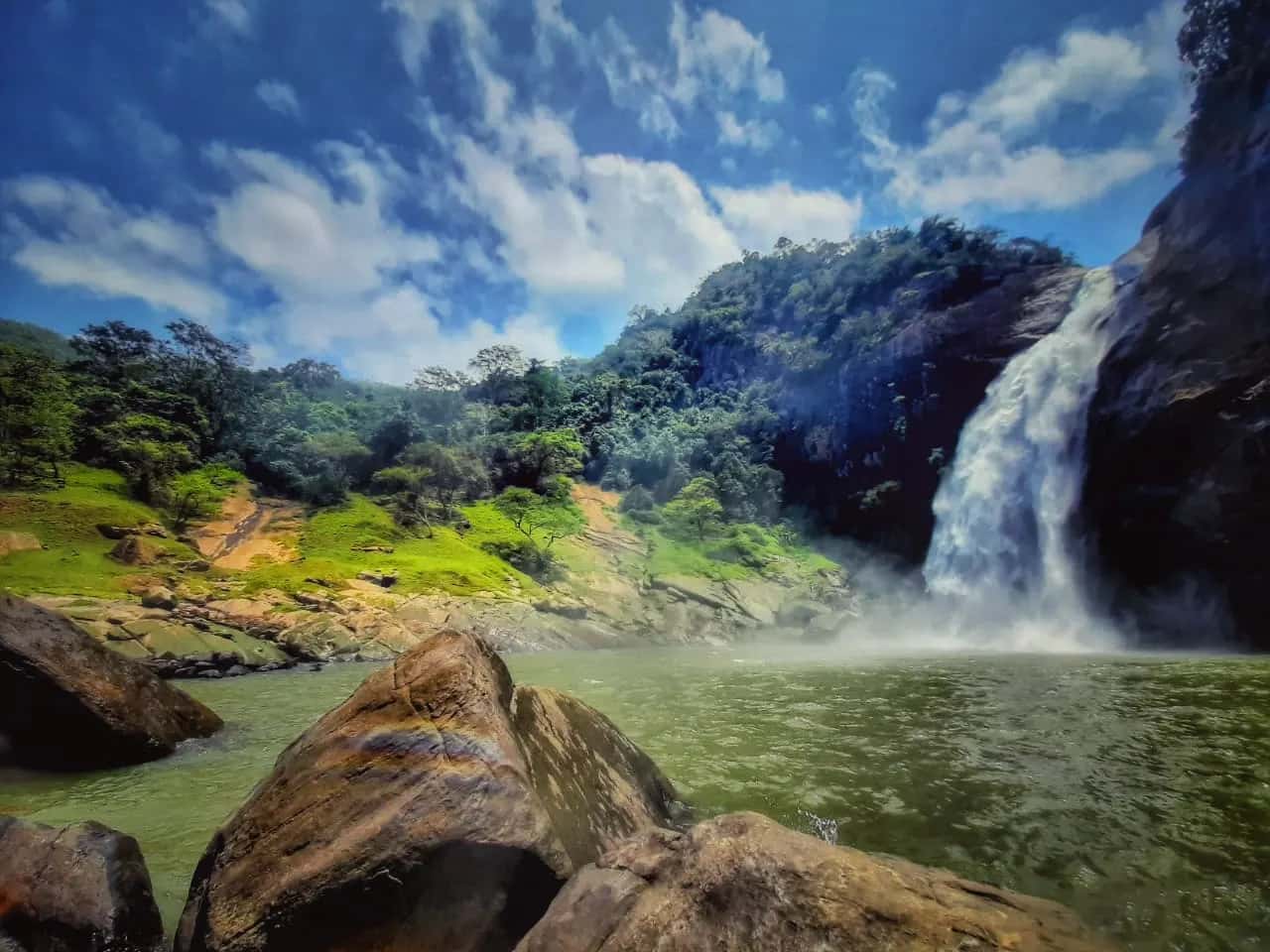
Dunhinda Falls, Sri Lanka
A 64-metre waterfall whose spray creates a smoky mist, reached by a 1 km forest path from the road near Badulla. One of the island's most photogenic falls.
Region
Kandy & the Hill Country
Best time
Year-round (fullest after rain)
Time needed
1.5 hours
From the airport
≈ 5 h by road
Dunhinda Falls is a 64-metre waterfall on the Badulu Oya, a few kilometres north of Badulla. The name comes from dunhinda, a Sinhala word for "smoky", which refers to the fine mist that hangs in the air around the base of the falls. It's one of the most beautiful waterfalls in Sri Lanka, and although it's popular with Sri Lankan families, few foreign tourists make the trip from nearby Ella.
The walk to the falls
The path begins at a small car park on the road north of Badulla, where you'll buy a ticket. It's about 1 km each way through the forest, and it takes around 20 to 30 minutes in each direction. There are steps, and it's uneven and rocky in places, so it's not suitable for wheelchairs or strollers, and it may be hard work for those with limited mobility.
Along the way, you'll pass stalls selling snacks and drinks, as well as a small viewpoint with a view of Little Dunhinda, a smaller fall further down the river. Close to the end you'll reach a viewing platform in front of the falls, with spray drifting across and the sound of rushing water.
Monkeys are common on the path, so don't carry food in your hands.
When to go
Water levels are highest after rain, especially from May to July and October to December, when you'll see the mist at its best. Early in the year, the volume drops, but it's still impressive, and the dry path is much easier to walk on. Visit in the morning for the most comfortable temperature, and try to come on a weekday. Weekends and holidays, especially around Poson in June, can be very crowded.
Safety
- Stay on the viewing platform. Rocks near the base are slippery, and people have drowned or been swept away while trying to get closer.
- Don't swim. The currents are fierce under the falls, and the water can rise fast.
- Wear shoes with grip, as the steps are often wet from the spray.
- Pick up your rubbish. It's a sad fact that these trails can get littered on busy days, and it spoils the forest for everyone.
Other things to do nearby
- Muthiyangana Temple in Badulla is one of the 16 most sacred Buddhist sites on the island.
- Badulla town, with its Dutch fort remains, its St Mark's Church and its bustling market, makes a nice short stop.
- Ravana Falls is on the other side of Ella, and an easy add-on if you're making a day of it.
- Nine Arches Bridge and the other Ella hikes are about an hour's drive away.
Our waterfalls guide compares Dunhinda with the island's other big falls.
Getting there
From Badulla, it's about 5 km by road, or around 15 minutes by tuk-tuk. Local buses going towards Mahiyanganaya can drop you off at the entrance. From Ella, allow about 1 hour by road, through Passara or Demodara. It's a simple half-day trip from Ella by tuk-tuk or with a driver. Badulla is also the last stop on the main hill country railway line, so you can come here by train. See our best train journeys guide.
Dunhinda Falls: frequently asked questions
How long is the walk to Dunhinda Falls?
About 1 km each way, or 20 to 30 minutes on a rocky path with steps.
Is Dunhinda Falls worth visiting from Ella?
Yes, if you've got a spare half-day and you like waterfalls. It's more impressive than many of those closer to Ella, and you'll see fewer tourists.
Can you swim at Dunhinda Falls?
No. The current is dangerous, and rocks are slippery near the base. Stay on the platform.
Map and getting there
Approximate road times (Sri Lanka’s roads are slow — allow extra time for traffic and stops): Colombo airport (CMB) ≈ 5 h · Kandy ≈ 2 h · Galle ≈ 5.5 h. For flexible door-to-door travel, consider a local driver.
Related travel guides
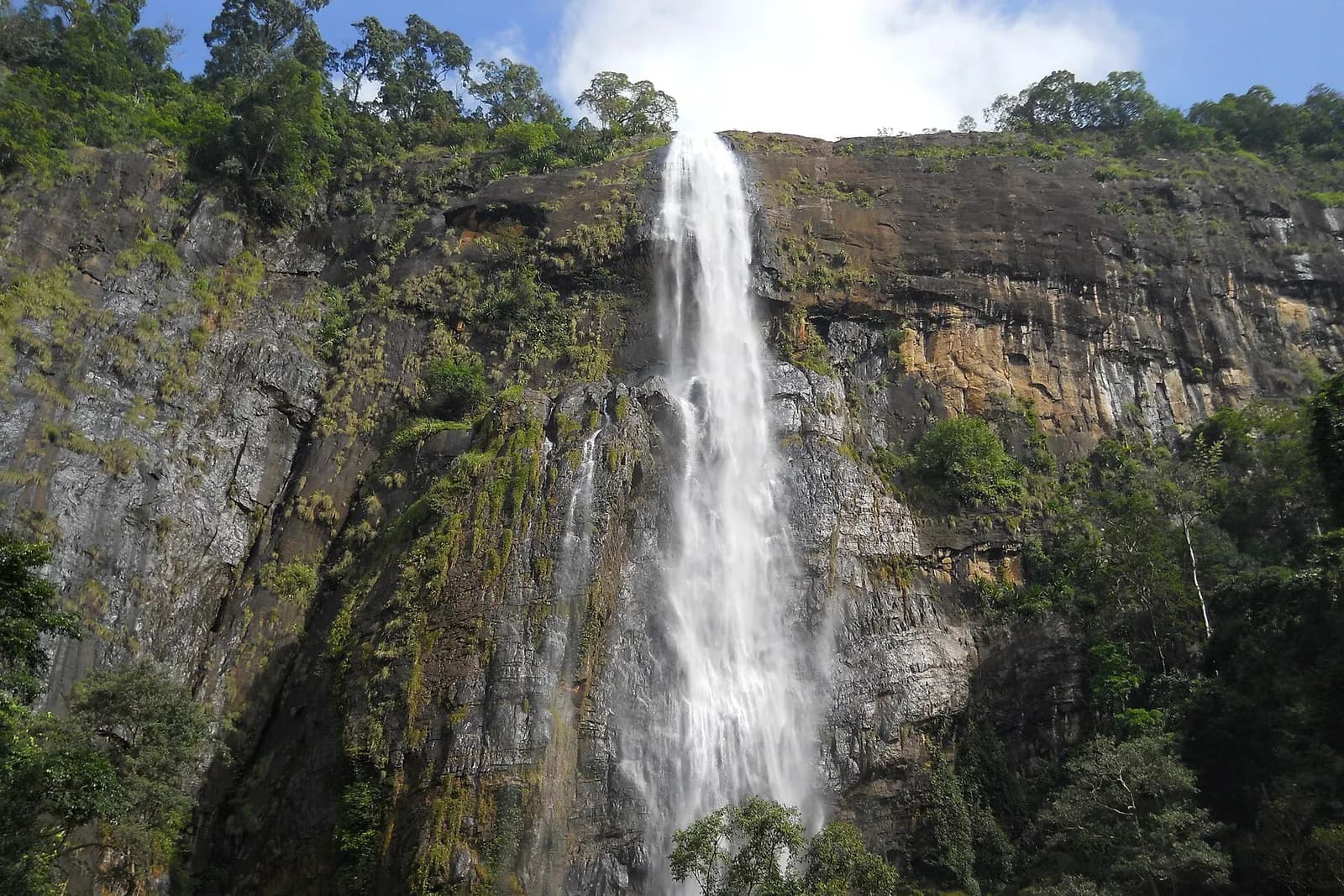
More places near Dunhinda Falls
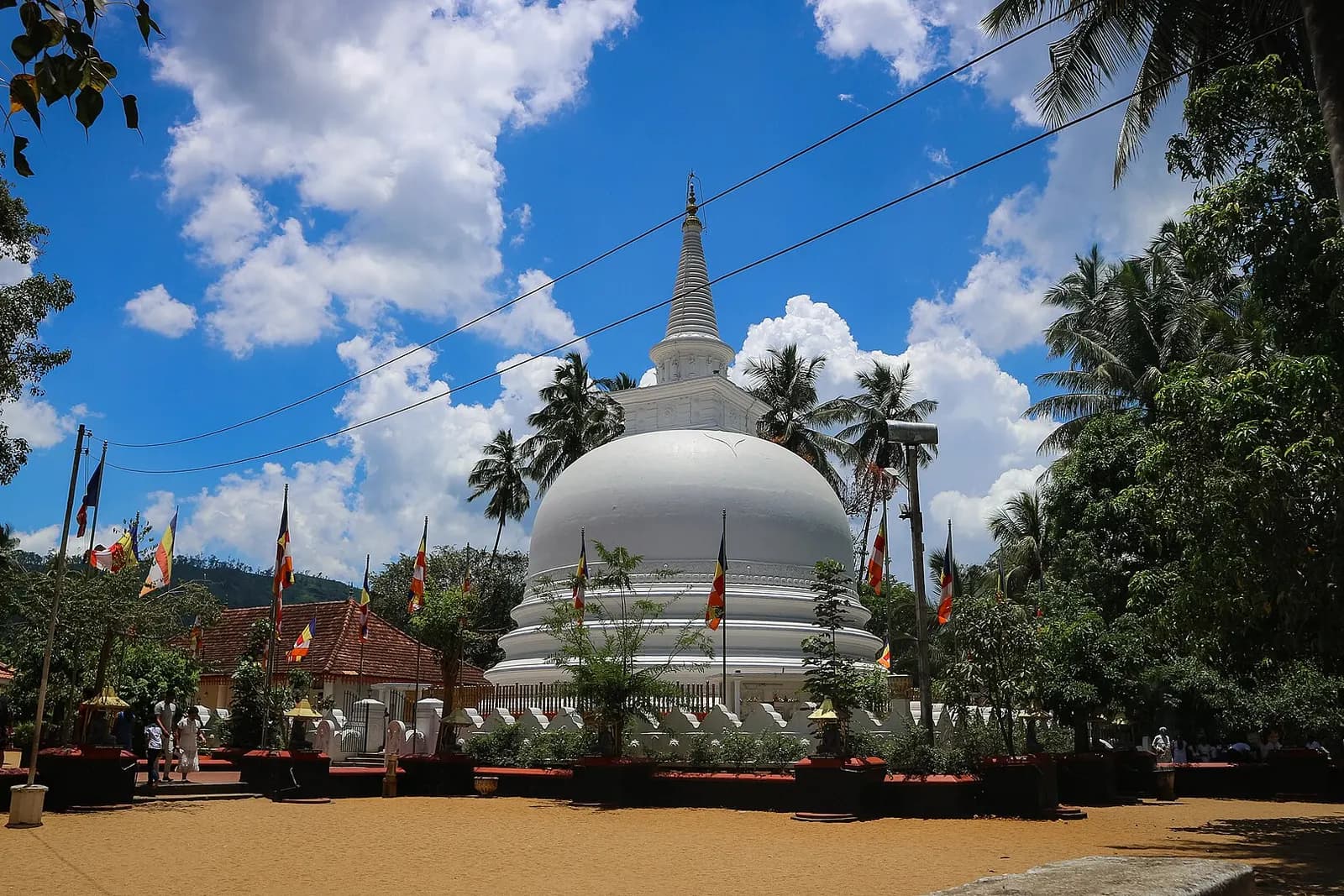 city
Kandy & the Hill Country
Badulla
The provincial capital of Uva and the last stop on the main hill-country railway. Visit the ancient Muthiyangana temple and walk to Dunhinda Falls just outside town.
Best: January to April
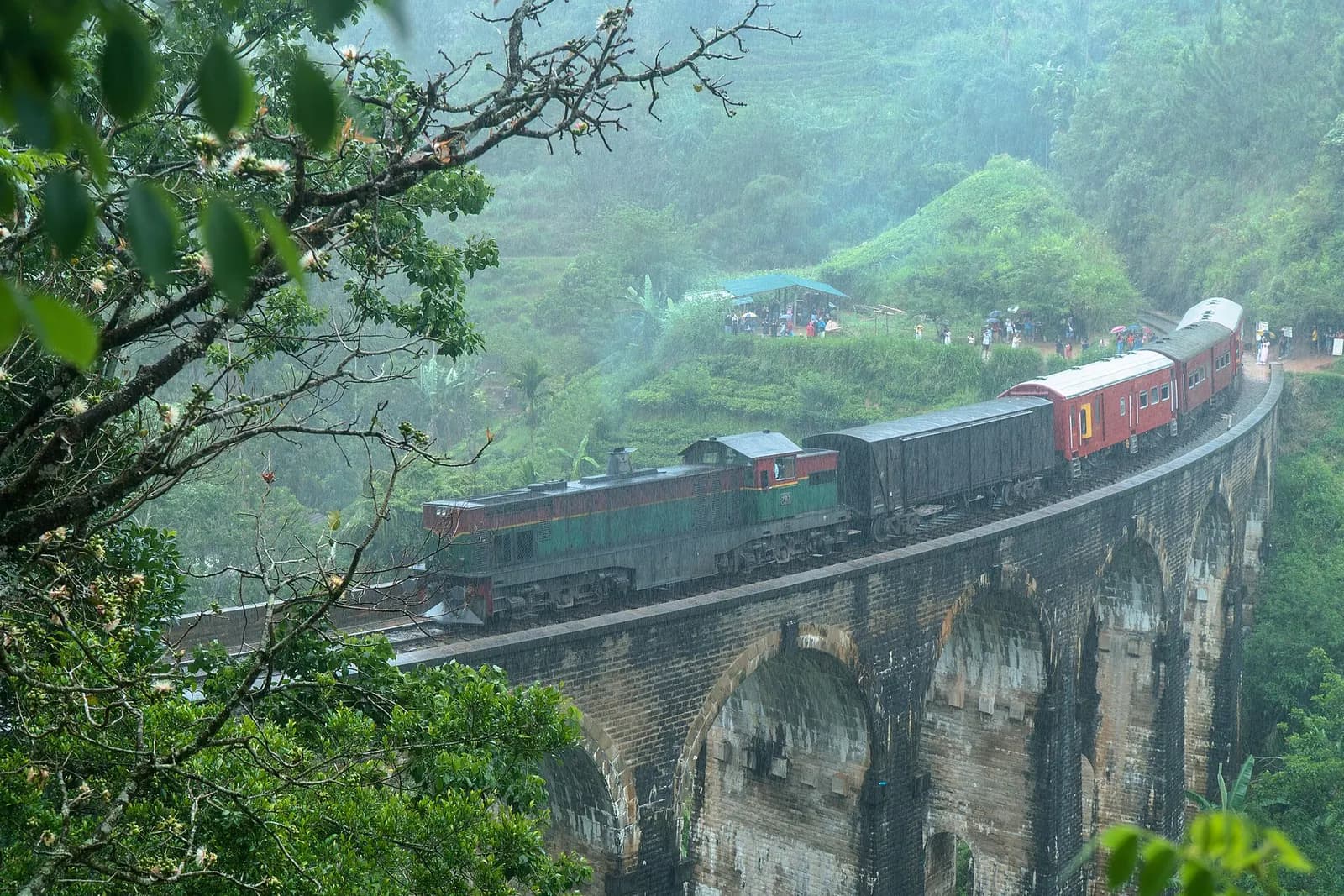 heritage
Kandy & the Hill Country
Nine Arches Bridge
A colonial-era stone railway viaduct curving through jungle and tea outside Ella, completed in 1921. Time your visit to see a train cross; never walk on the tracks as a train approaches.
Best: January to April
 Hill country
Kandy & the Hill Country
Ella Town
A small hill town in a gap between mountains, with easy hikes, viewpoints and a relaxed café scene. It is the end point of the famous train ride from Kandy and a favourite of most first-time visitors.
Best: January to April
Last updated November 2026. January to April for the clearest views; Adam’s Peak pilgrimage season runs December to May.