Food & Culture
Kandy Esala Perahera: A Visitor's Guide to Sri Lanka's Greatest Festival
Ten nights of drummers, fire dancers and caparisoned elephants carrying a sacred relic through Kandy's streets — the Esala Perahera is one of Asia's great festivals. Here's how to see it.
By Sri Lanka Travel Guides Editorial TeamUpdated 5 November 20263 min read
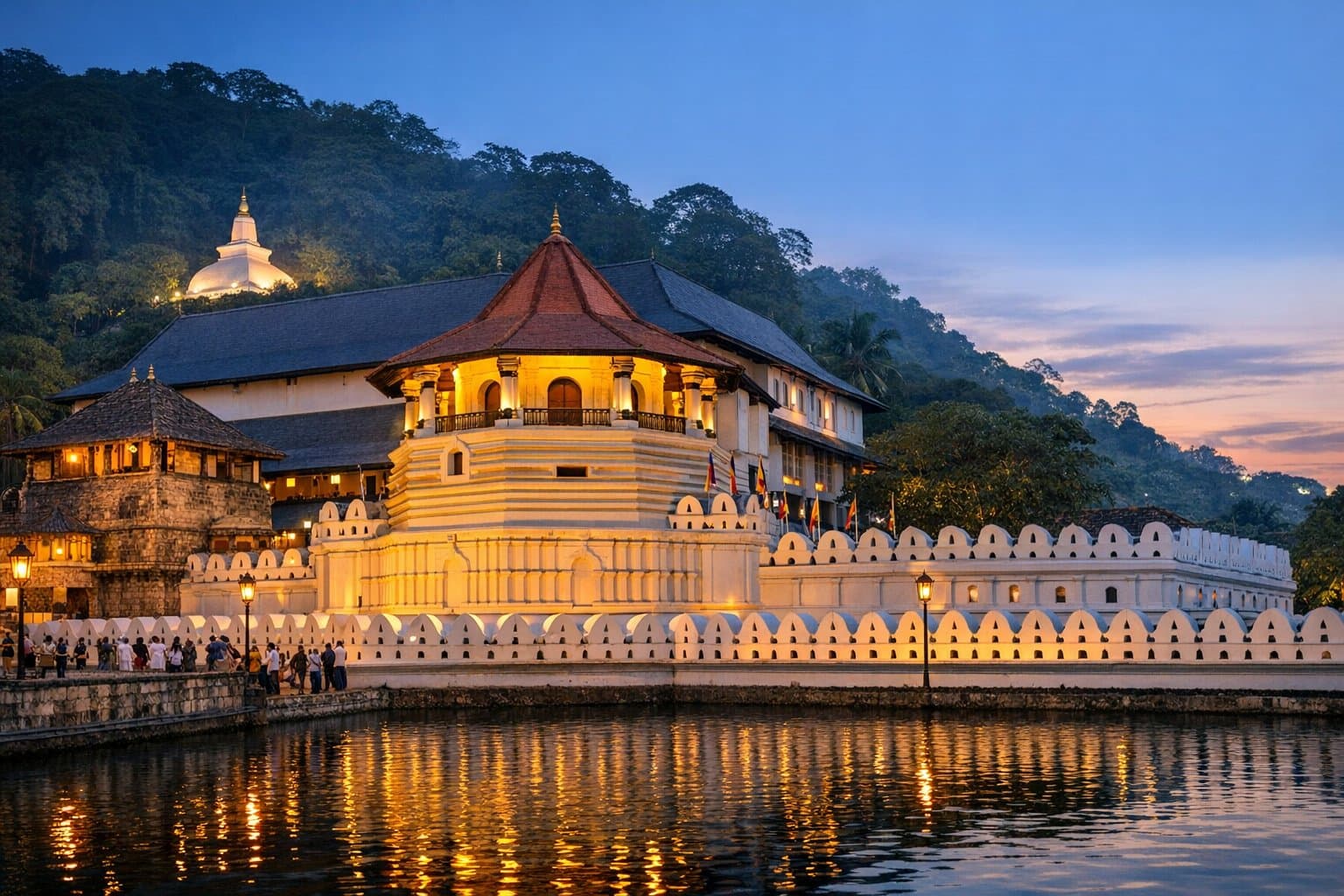
The Esala Perahera in Kandy is Sri Lanka's most spectacular festival. For ten nights, processions of whip-crackers, fire-ball dancers, drummers, Kandyan dancers and dozens of elephants in glittering costumes parade through the city, honouring the Sacred Tooth Relic of the Buddha kept in the Temple of the Tooth.
When is it?
The Perahera takes place in the Sinhala month of Esala — usually in July or August — ending on the Esala full moon (poya). Exact dates are set each year according to the lunar calendar and astrological timings, and announced by the temple. Check the dates for your year before booking.
The processions
The festival combines processions from the Temple of the Tooth and Kandy's four devales (shrines to the guardian gods Natha, Vishnu, Kataragama and Pattini).
- Kumbal Perahera — the first five nights. Processions are smaller but still impressive and less crowded.
- Randoli Perahera — the final five nights. Grander and longer, with more elephants and performers, culminating on the night of the full moon. The last Randoli night is the biggest of all.
- Day Perahera — on the day after the final night, a daytime procession follows the water-cutting ceremony at the Mahaweli River in Getambe.
The festival is preceded by the Kap Situweema, a ritual planting of a sacred young tree.
What you'll see
- Whip-crackers clearing the way with loud cracks.
- Fire-ball and fire dancers spinning flaming torches.
- Kandyan dancers and drummers in traditional costume.
- Elephants dressed in embroidered, illuminated cloaks.
- The Maligawa Tusker, the lead elephant, carrying a replica casket of the relic under a canopy. Spectators often stand or bow in respect as it passes.
- Flag-bearers, musicians, acrobats and officials in traditional Kandyan dress.
Each night's procession lasts several hours.
Getting a good view
- Reserved seats — hotels, shops and agencies sell tiered seats along the route, especially on Dalada Veediya and around the temple. Prices rise sharply for the final nights. Book through your hotel or a reputable agent, and confirm exactly where the seats are.
- Standing — free, but people claim kerbside spots many hours in advance. Bring a mat, water and snacks, and be prepared for tight crowds.
- Balconies — some hotels and buildings along the route offer balcony seats.
Seats on the final Randoli nights are the most sought after; earlier nights are cheaper and more relaxed.
Where to stay
Accommodation in Kandy fills up months in advance and prices rise during the Perahera. Book early, ideally within walking distance of the route, as roads close and traffic is heavy. Alternatives are staying outside town and arriving early by tuk-tuk. See our where to stay guide.
Tips for visitors
- Arrive early — roads into the city centre close before the procession.
- Dress modestly and behave respectfully — this is a religious event.
- No flash photography, especially near the elephants; it can startle them.
- Watch your belongings in the crowds.
- Stand for the relic casket as a mark of respect.
- Bring a cushion for hard seats and patience for a long night.
- Combine the Perahera with the rest of the hill country — see our hill country itinerary.
Elephant welfare
Animal-welfare groups have raised concerns about the elephants used in perahera processions, including long hours, noise, heat and flash photography. If you attend, avoid flash and don't approach or touch the elephants. See our elephant guide.
Other peraheras
If you can't make Kandy in July or August, other processions include the Navam Perahera at Colombo's Gangaramaya Temple (February) and the Duruthu Perahera at Kelaniya (January). See our festivals calendar.
Frequently asked questions
When is the Kandy Esala Perahera?
In July or August each year, ending on the Esala full moon. Exact dates are announced annually.
Do I need tickets for the Kandy Perahera?
No ticket is needed to stand along the route, but reserved seats are sold by hotels and agencies and are recommended for the final nights.
Which night of the Perahera is best?
The final Randoli night is the grandest, but earlier nights are less crowded and cheaper.
Turn this into a plan
Our free AI trip planner builds a day-by-day Sri Lanka itinerary for your dates, with realistic travel times.
Plan my tripQuestions & comments
Share a tip or ask a question. Comments are moderated.
- No comments yet — be the first.
Keep planning
Sri Lanka Festivals and Holidays: A Month-by-Month Calendar
With four major religions and a full-moon holiday every month, Sri Lanka has a festival almost every week. Here's what's on when, and how festivals affect your trip.
5 Nov 2026· 3 min read
Sri Lankan Street Food: 15 Snacks You Have to Try
The clatter of kottu blades, crispy hoppers and prawn fritters by the sea — Sri Lankan street food is cheap, delicious and everywhere. Here are the snacks you can't miss.
5 Nov 2026· 3 min read
Useful Sinhala and Tamil Phrases for Travellers
A few words of Sinhala or Tamil go a long way in Sri Lanka. Here are the phrases that will make people smile — from "Ayubowan" to "Nandri".
5 Nov 2026· 2 min read