Wildlife
Birdwatching in Sri Lanka: Endemic Birds and the Best Sites
Sri Lanka is one of Asia's best birding destinations — more than 30 endemic species, huge flocks of winter migrants and parks full of waterbirds. Here's where to go.
By Sri Lanka Travel Guides Editorial TeamUpdated 5 November 20262 min read
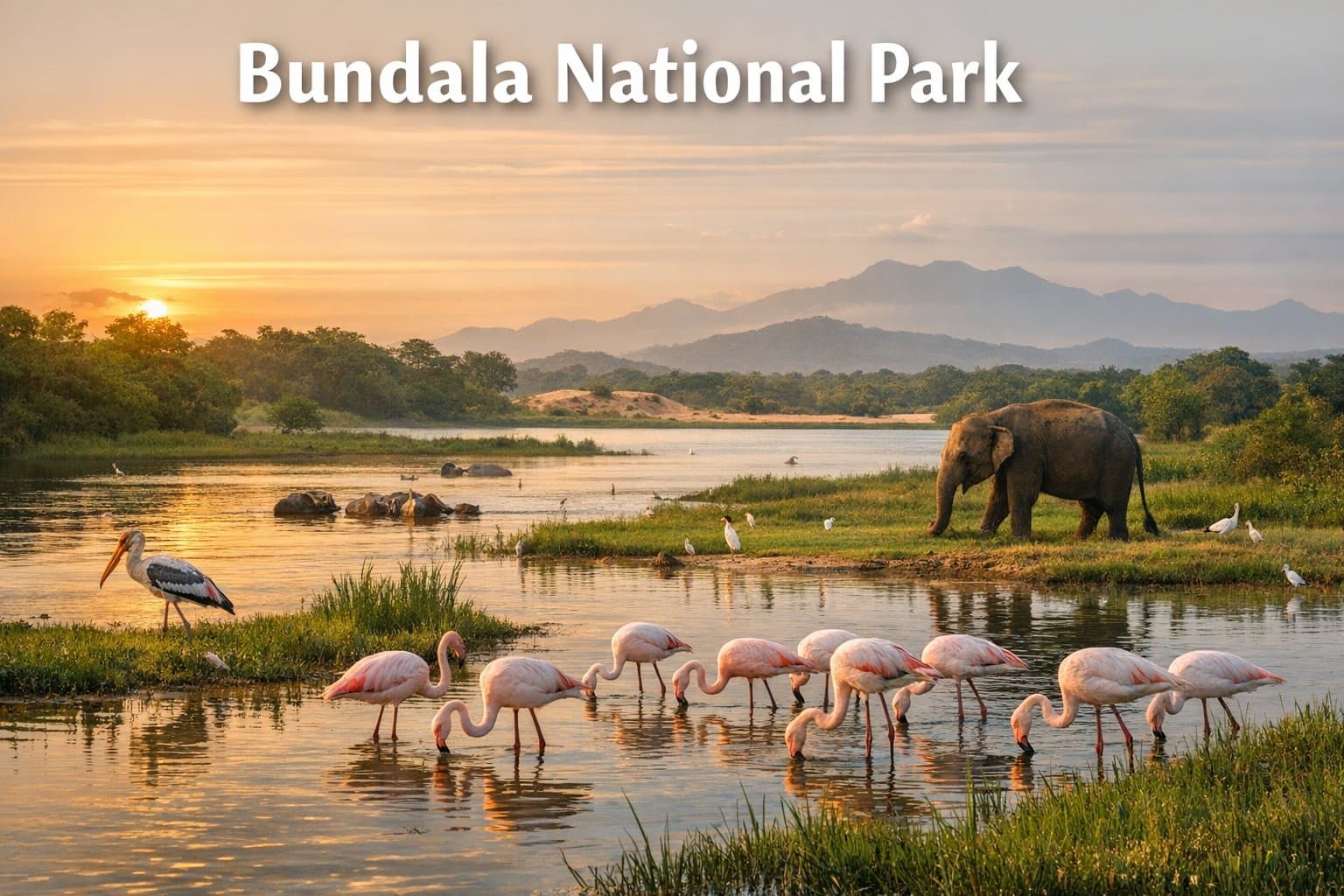
For its size, Sri Lanka is outstanding for birds. More than 400 species have been recorded, including over 30 found nowhere else on Earth. In the northern winter, migrants arrive from as far away as Siberia, and the lagoons of the south-east fill with flamingos, storks and waders. Even if you're not a birder, Sri Lanka's colourful birds — kingfishers, bee-eaters, hornbills and peacocks — are hard to miss.
Endemic birds to look for
Some of the most sought-after endemics include:
- Sri Lanka junglefowl — the national bird, a colourful wild chicken.
- Sri Lanka blue magpie — a striking blue-and-chestnut bird of the rainforest.
- Sri Lanka grey hornbill.
- Sri Lanka hanging parrot and Layard's parakeet.
- Red-faced malkoha — shy and rare, found in lowland rainforest.
- Yellow-eared bulbul and Sri Lanka white-eye — common in the hill country.
- Serendib scops owl — discovered only in 2001.
The best birding sites
Sinharaja Forest Reserve
The essential site for endemics. Sinharaja, a lowland rainforest and UNESCO World Heritage Site, is famous for its mixed-species feeding flocks, which can include a dozen species moving through the trees together. Hire a specialist guide at the entrance.
Bundala National Park
Bundala, a Ramsar wetland near Hambantota, is superb for waterbirds: greater flamingos (in the migrant season), painted storks, spoonbills, pelicans and waders. Combine it with Yala.
Horton Plains
Horton Plains is the best site for hill-country endemics such as the Sri Lanka whistling thrush (elusive) and the dull-blue flycatcher. Nearby, Victoria Park in Nuwara Eliya is famous among birders for migrants such as the Kashmir flycatcher and pied thrush.
Kitulgala
The forest across the river at Kitulgala is good for lowland endemics and is accessible by a short boat crossing.
Kumana National Park
Kumana, on the south-east coast, includes the Kumana Villu wetland, where large numbers of waterbirds nest around May to July.
Other good sites
- Anawilundawa Wetland Sanctuary — a cluster of ancient irrigation tanks full of waterbirds.
- Udawalawe — raptors and grassland birds alongside elephants.
- Mannar Island — flamingos and waders in winter.
- Talangama Wetland near Colombo — a surprisingly rich wetland in the suburbs.
When to go
- November to April — the migrant season, with flamingos, ducks, waders and forest migrants. This is the best time for birding overall and coincides with the dry season on the south and west coasts.
- Endemics can be seen year-round, though the rainforests are wetter in May–July and October–November.
- Early mornings are by far the most productive time.
Tips
- Hire a bird guide. Specialist guides know exactly where to find each endemic and dramatically increase your list.
- Bring binoculars and a field guide or app.
- Leech socks are a must in rainforests.
- Combine birding with safaris — jeep safaris in Yala, Bundala and Udawalawe are excellent for birds as well as mammals. See our safari guide.
Frequently asked questions
How many endemic birds does Sri Lanka have?
More than 30 species are found only in Sri Lanka, depending on the classification used.
Where is the best place for birdwatching in Sri Lanka?
Sinharaja for endemics, Bundala for waterbirds and Horton Plains for hill-country species.
When is the best time for birdwatching in Sri Lanka?
November to April, when winter migrants arrive.
Turn this into a plan
Our free AI trip planner builds a day-by-day Sri Lanka itinerary for your dates, with realistic travel times.
Plan my tripQuestions & comments
Share a tip or ask a question. Comments are moderated.
- No comments yet — be the first.
Keep planning
Where to See Leopards in Sri Lanka
Sri Lanka is one of the best places in the world to see wild leopards. Here's where to go, when, and how to give yourself the best chance of a sighting.
5 Nov 2026· 2 min read
Whale Watching in Sri Lanka: Mirissa vs Trincomalee and How to Choose a Boat
Sri Lanka is one of the best places in the world to see blue whales. Here's when to go, which coast to choose and how to make sure your trip doesn't harm the animals.
5 Nov 2026· 2 min read
Sri Lanka Safari Guide: Which National Park Is Best for You?
Leopards, elephants, sloth bears and hundreds of bird species — Sri Lanka has some of the best wildlife viewing in Asia. Here's how to choose the right park and do it responsibly.
5 Nov 2026· 2 min read