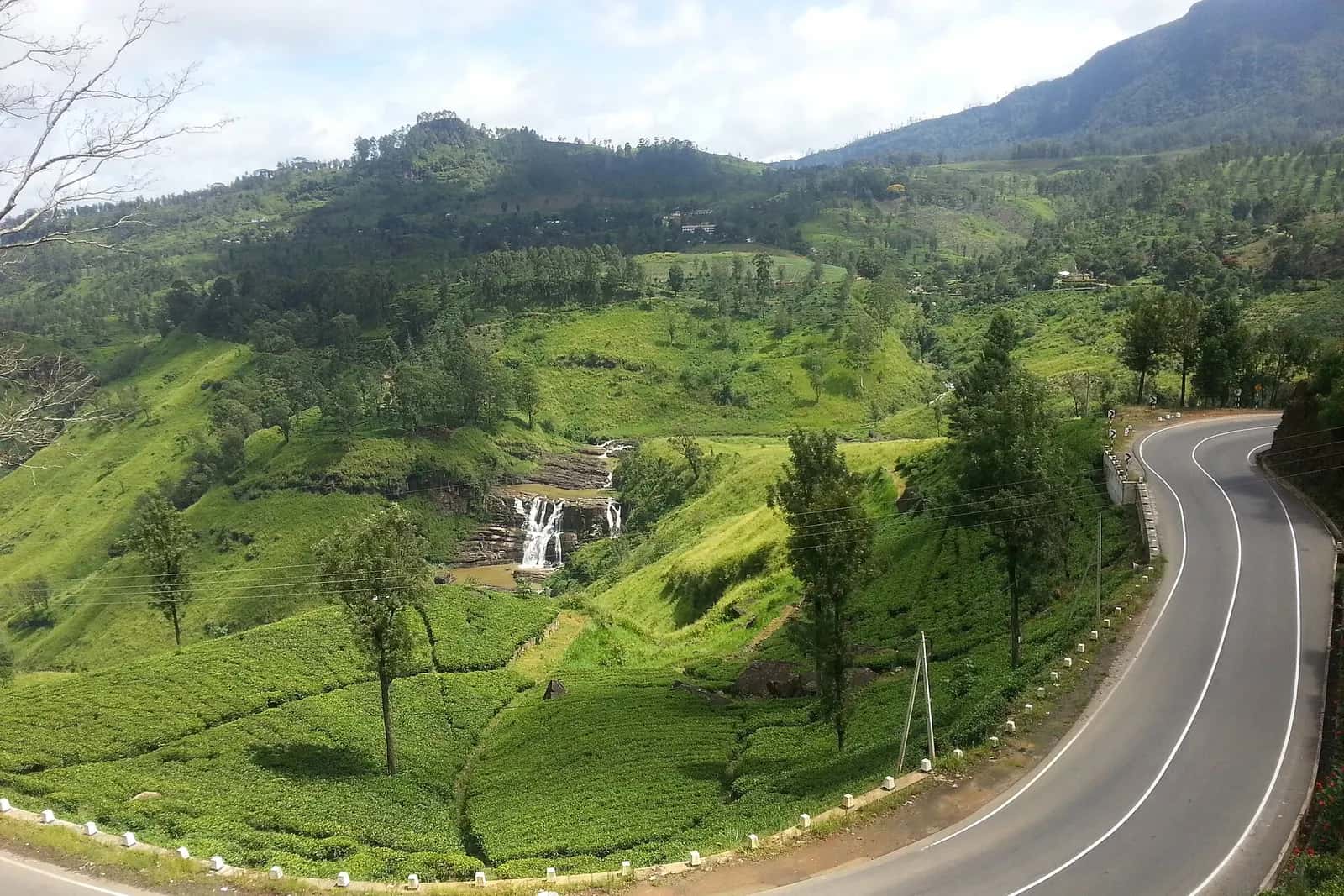
St. Clair's Falls, Sri Lanka
Often called the 'Little Niagara of Sri Lanka', a wide twin waterfall set among tea estates near Talawakele. Combine with Devon Falls and a tea tasting on the same stretch of road.
Region
Kandy & the Hill Country
Best time
Year-round
Time needed
30 minutes
From the airport
≈ 3.5 h by road
St Clair's is one of the widest waterfalls in Sri Lanka, often nicknamed the "Little Niagara". It drops down through tea estates near Talawakele in the heart of the hill country, in two parts known as the Maha Ella (greater fall) and Kuda Ella (lesser fall). Most people see it from the road between Hatton and Nuwara Eliya, and it's one of the best stops on that scenic drive.
The viewpoints
- The roadside viewpoint, on the A7 near the St Clair's tea centre, gives you the classic view across the valley, and you can have a cup of tea at the same time. It's an easy stop that takes about 15 minutes.
- The path to the base goes down from a point near Talawakele, with steps through the tea bushes. It's steep and can be slippery after rain, and you may want to ask a local to show you the start. Allow an hour there and back.
The upper fall is about 80 metres high, and it falls over a series of wide rock ledges rather than in one great drop.
Why the water varies
Upstream, the Kotmale river system has been dammed for hydropower, and the Upper Kotmale project in particular has noticeably reduced the flow at the falls. How much water you'll see depends on the season and on how much is being released. After heavy rain, the falls can look very full, but in dry spells they can be a good deal thinner than older photos suggest. It's still a lovely scene, set against the tea, but keep your expectations in check. Read about other great falls in our waterfalls guide.
When to go
Water levels are usually higher from May to July and from October to December, when rain is heavier. January to April often brings clearer views of the hills, but with less water. In the hills, mornings are usually clearer, and mist tends to come in during the afternoon.
What to do nearby
- Devon Falls is a few kilometres away along the same road, and it has its own easy viewpoint.
- Tea factories and tea centres, including the well-known Mlesna Tea Castle at St Clair's, offer tasting and tea to buy. Read our tea country guide for more.
- Hatton is the base for tea walks and for climbing Adam's Peak.
Safety
Stay well back from the rocks at the base, and don't swim here. The rock is extremely slippery, and there's a risk that water will be released from upstream, causing the river to rise suddenly. Traffic also moves quickly at the roadside viewpoint, where bends limit visibility, so take care when crossing the road.
Getting there
St Clair's is on the A7 road about 30 minutes from Hatton, and about an hour from Nuwara Eliya. The nearest railway station is Talawakele, on the main hill country line, which is about 3 km away by tuk-tuk. Buses between Hatton and Nuwara Eliya pass the viewpoint, and they can stop if you ask. A private vehicle makes it easier to combine stops, and it's handy on our hill country itinerary.
St. Clair's Falls: frequently asked questions
Is St Clair's Falls worth visiting?
Yes, as a stop on the drive through tea country. It doesn't need a special trip, and the flow can be lower than you might expect because of hydropower.
Can you walk to the bottom of St Clair's Falls?
Yes, there's a path down from near Talawakele, but it's steep. Don't attempt it after heavy rain.
Why is it called Little Niagara?
Because of its width, rather than its height. It's a broad fall spreading across wide rock ledges.
Map and getting there
Approximate road times (Sri Lanka’s roads are slow — allow extra time for traffic and stops): Colombo airport (CMB) ≈ 3.5 h · Kandy ≈ 1.5 h · Galle ≈ 4 h. For flexible door-to-door travel, consider a local driver.
Related travel guides
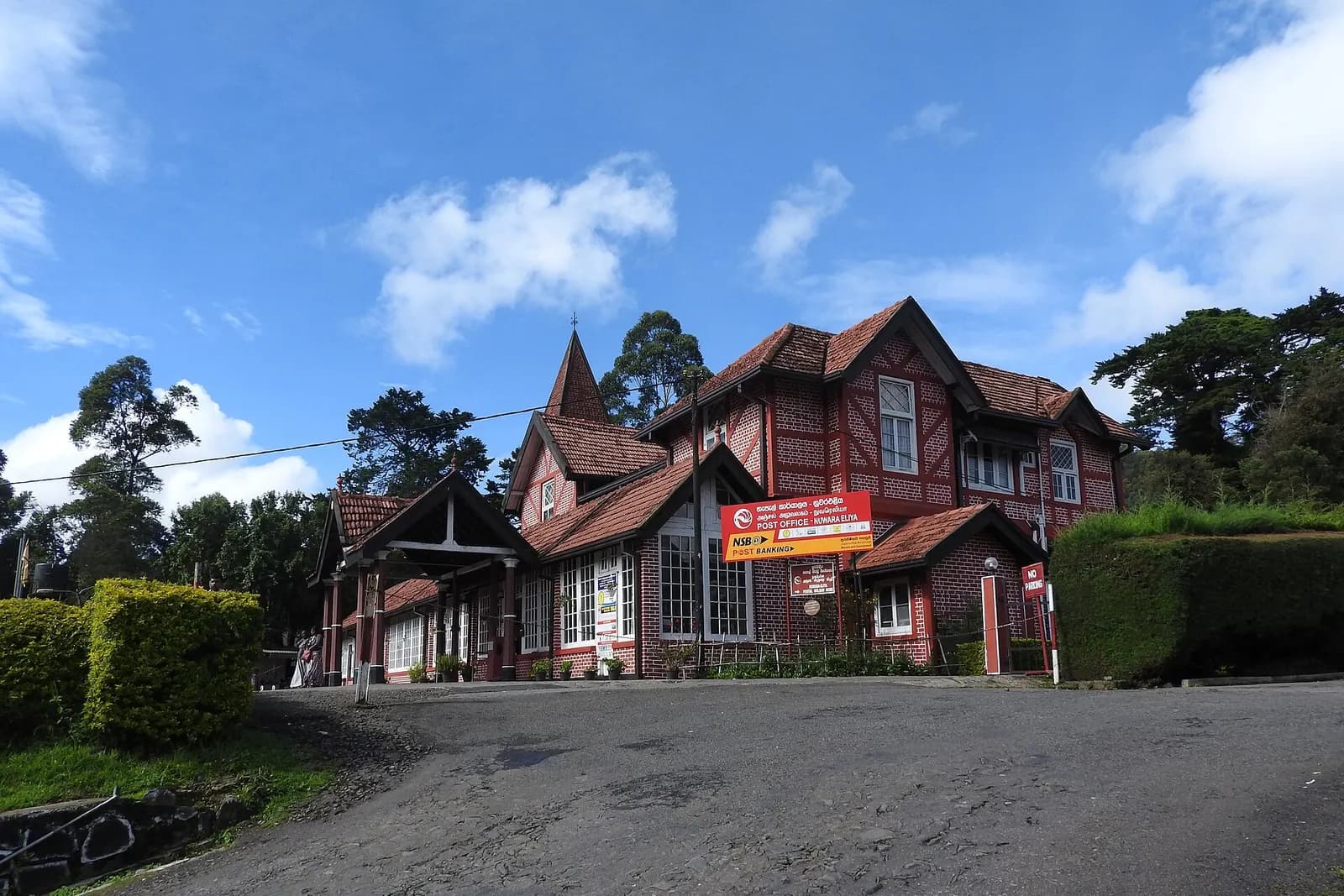
Sri Lanka Hill Country Itinerary: Kandy, Nuwara Eliya, Ella and Haputale
Misty tea estates, waterfalls, colonial hill stations and one of the world's most beautiful train rides. Here's how to plan the perfect few days in Sri Lanka's hill country.
5 Nov 2026· 2 min read
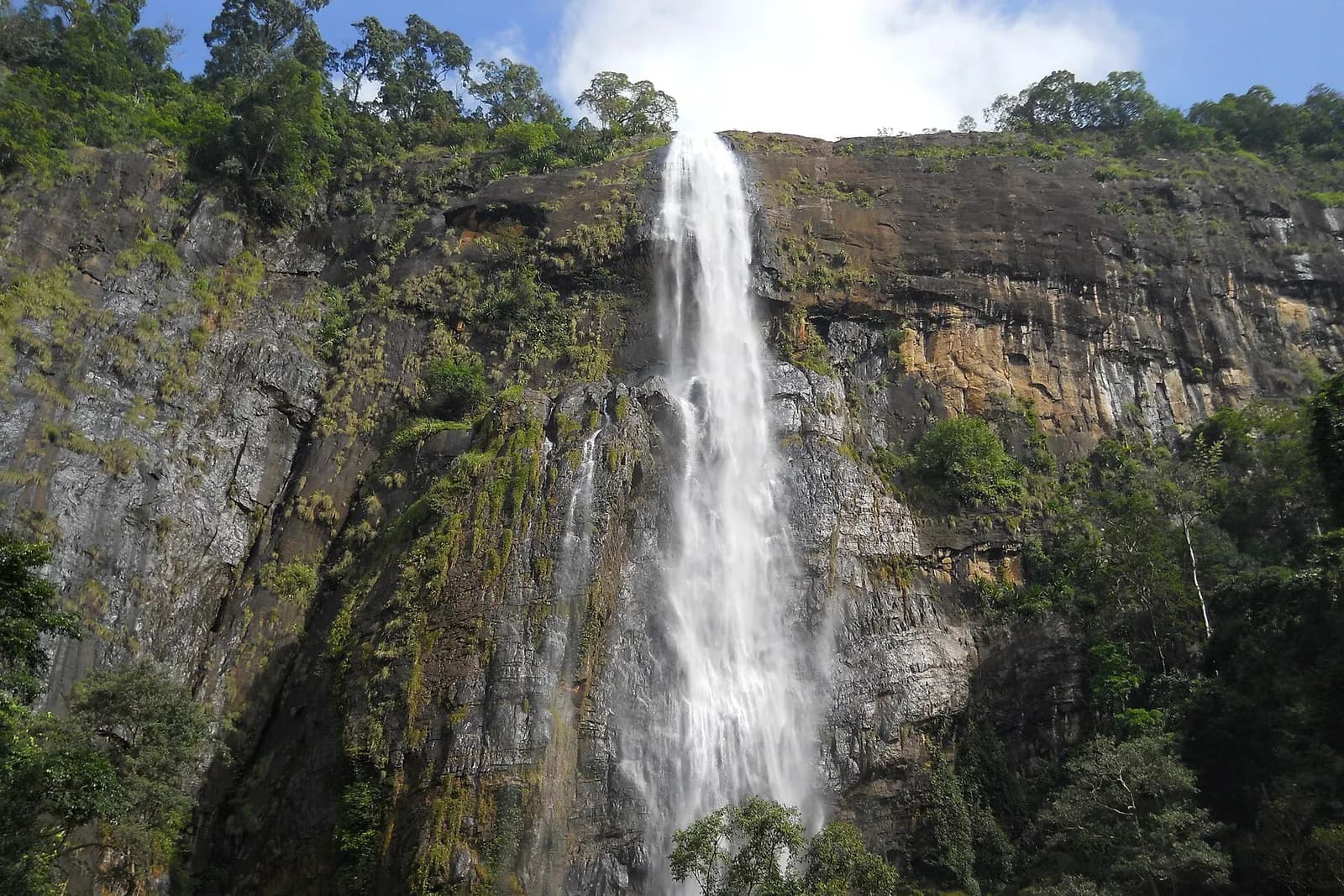
The Most Beautiful Waterfalls in Sri Lanka
The hill country is full of waterfalls — from roadside cascades to the island's tallest drop and natural infinity pools. Here are the best, and how to see them.
5 Nov 2026· 2 min read
More places near St. Clair's Falls
 nature
Kandy & the Hill Country
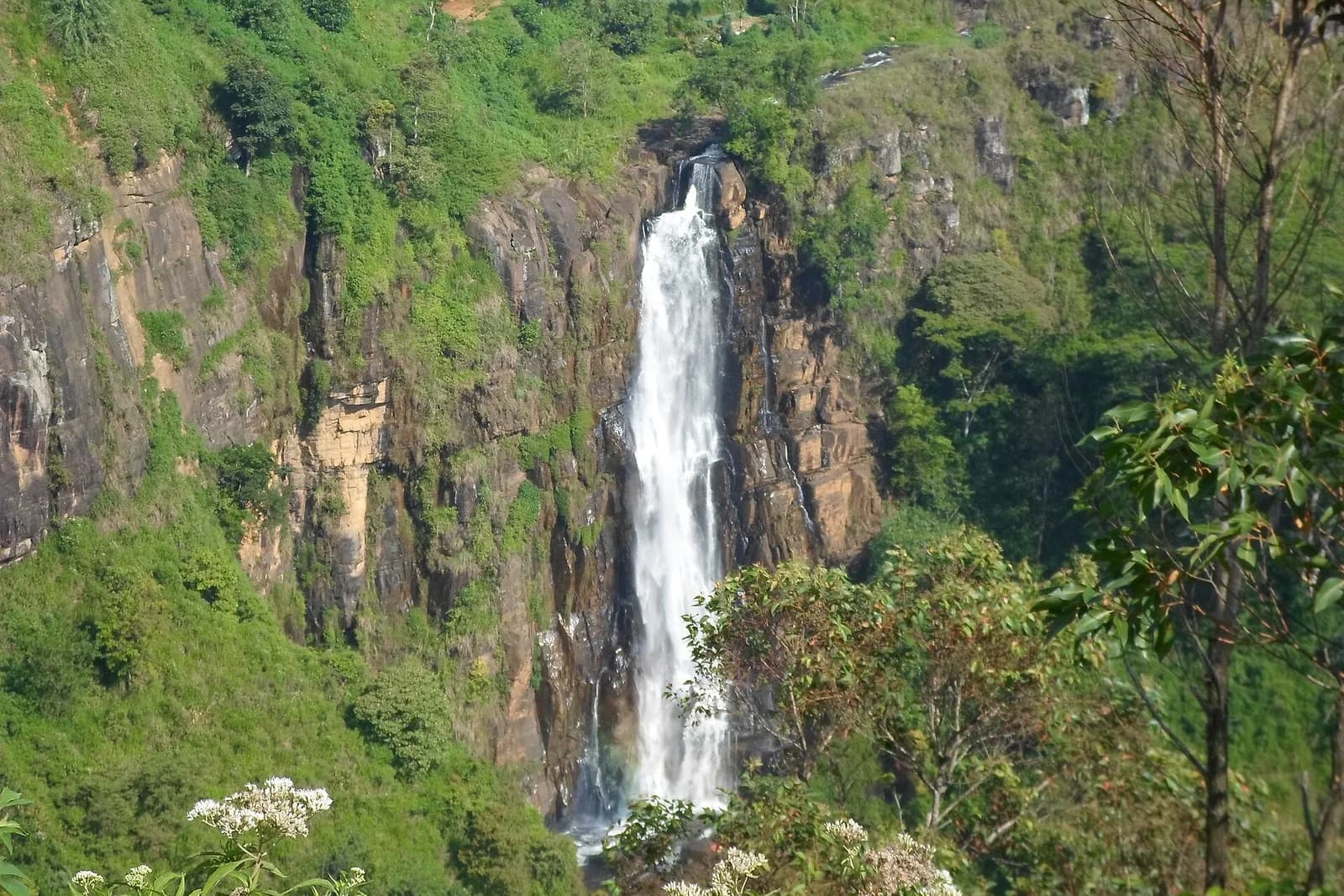
Devon Falls
A slender 97-metre waterfall named after a pioneer coffee planter, best seen from the viewpoint by the St Clair’s tea centre on the Hatton–Talawakele road.
Best: Year-round
 Hill country
Kandy & the Hill Country
Hatton Tea Trails
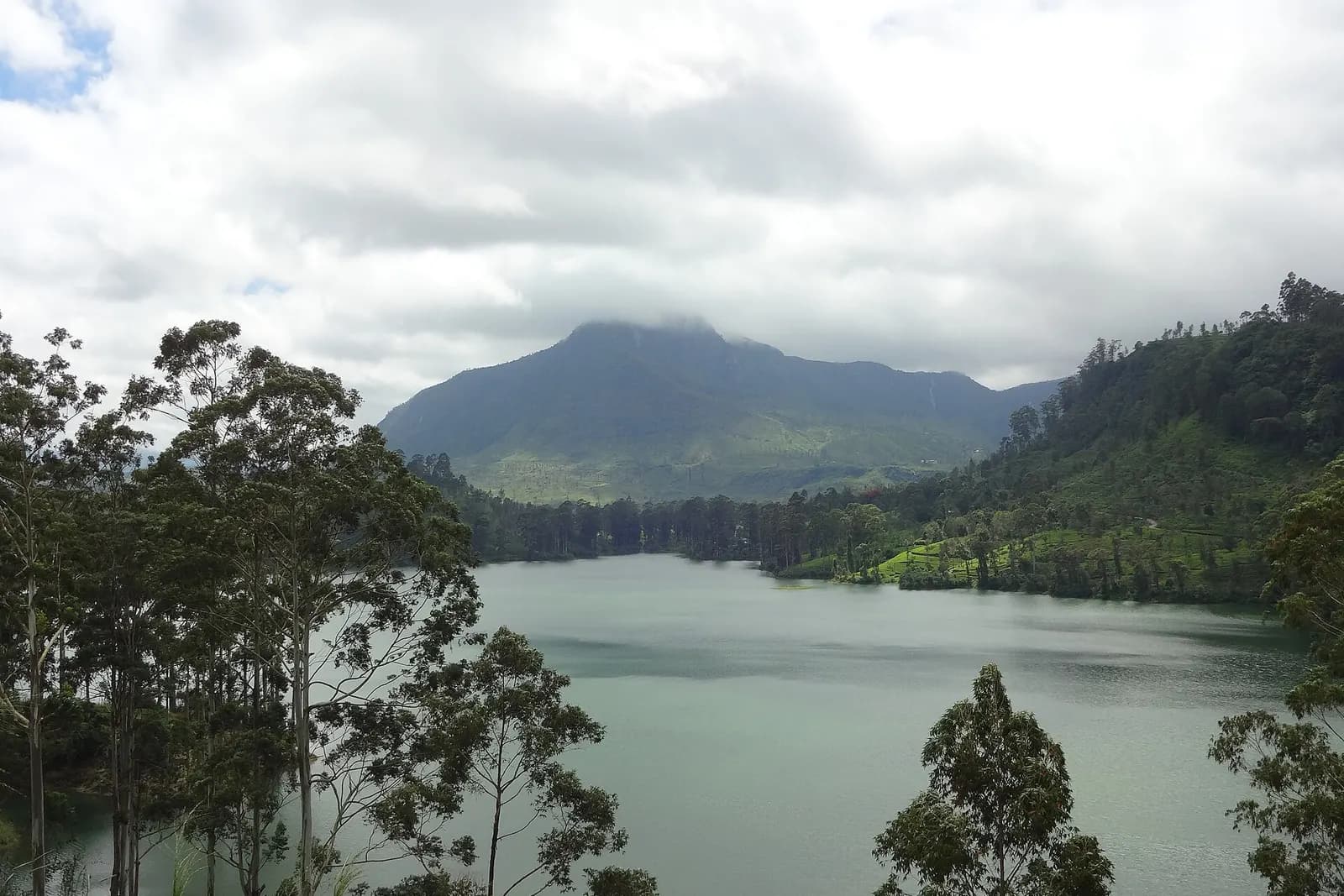
The heart of tea country around Hatton and the Castlereagh reservoir, laced with estate paths and colonial planters’ bungalows. A peaceful base for tea walks and the climb to Adam’s Peak.
Best: January to April
 nature
Kandy & the Hill Country
Ramboda Falls & Tea Country
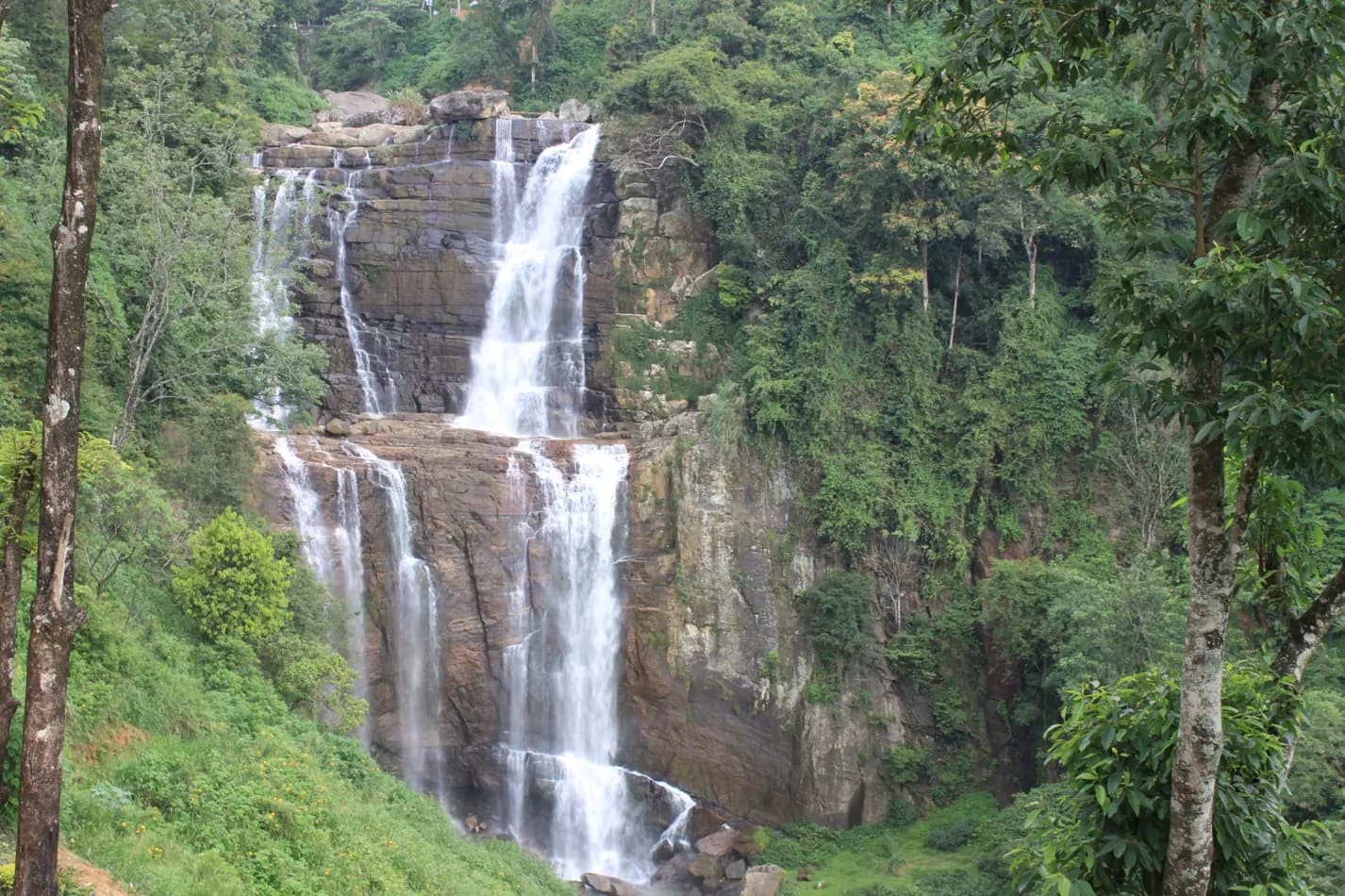
A tall, multi-tiered waterfall beside the winding road from Kandy to Nuwara Eliya, with tea estates and viewpoints along the pass. An easy, scenic stop on the drive into the hills.
Best: Year-round
Last updated November 2026. January to April for the clearest views; Adam’s Peak pilgrimage season runs December to May.