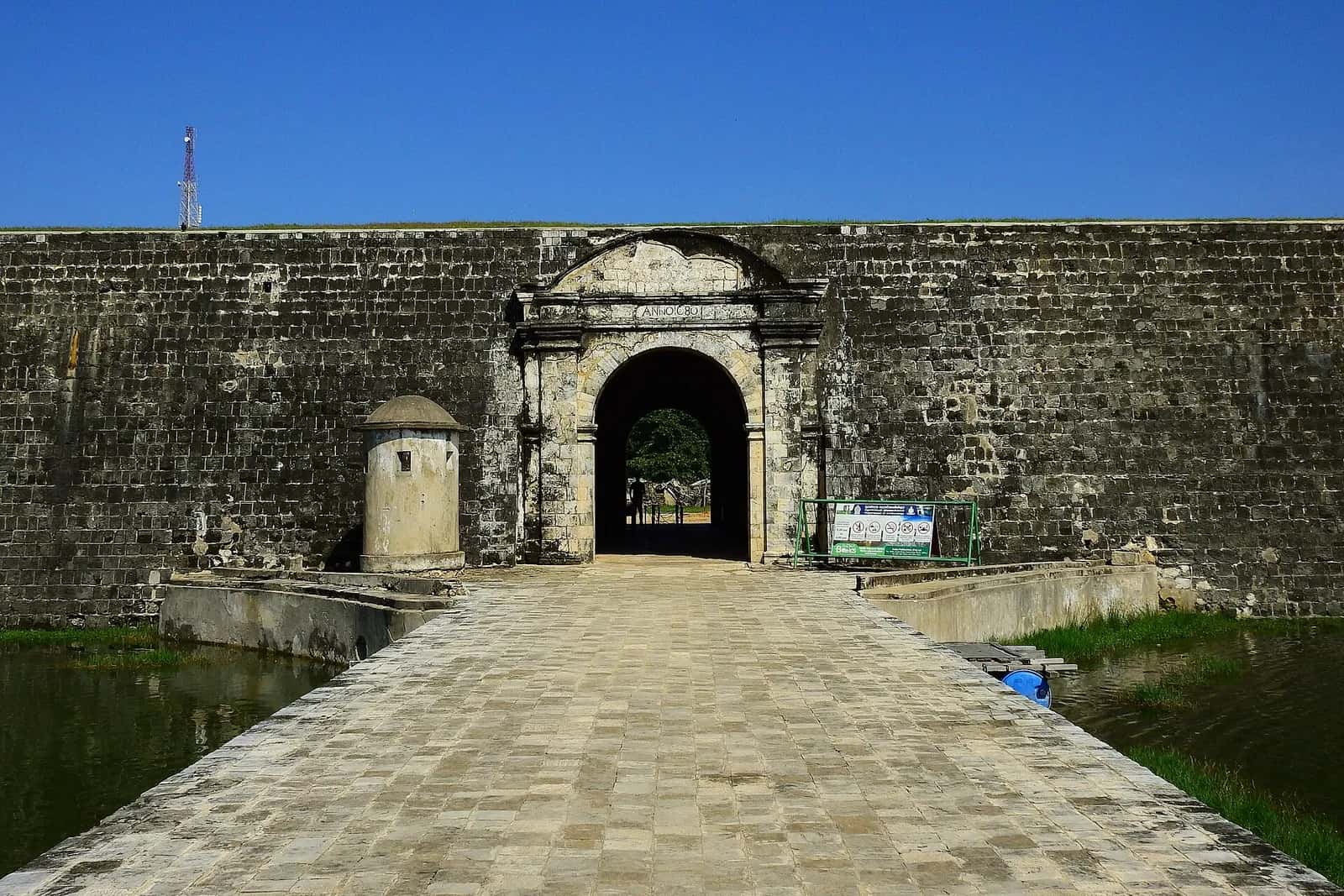
Jaffna Fort, Sri Lanka
A huge star-shaped Dutch fort beside the Jaffna lagoon, begun by the Portuguese and partly restored after war damage. Its ramparts are a favourite sunset walk.
Region
Jaffna & the North
Best time
January to September
Time needed
1–1.5 hours
From the airport
≈ 10.5 h by road
Jaffna Fort is one of the largest colonial forts in Asia, set beside the lagoon in Jaffna. The Portuguese first built a fort here in the early 17th century. The Dutch captured it in 1658 and rebuilt it as the massive star-shaped fortress you see today. It was badly damaged during Sri Lanka's civil war and has since been partly restored.
What to see
- The ramparts — walk along the top for views across the lagoon and the town. They're wide and open.
- The moat and gates — a stone causeway leads across the moat to the main gate.
- Inside the fort — mostly open ground now, with restored buildings and ruins of what stood here, including a destroyed Dutch church.
- Sunset — the lagoon glows at the end of the day, and it's a popular walk with local families.
Visiting tips
- Parts of the fort may be closed for restoration or used by the authorities. Follow any signs.
- There's little shade, so go in the early morning or late afternoon, and bring water.
- Allow 1 to 1.5 hours.
- The site saw real suffering during the war, so please visit with respect.
When to visit
January to September is the best time for the north. Heavy rains usually come in October to December. See our Jaffna itinerary.
Getting there
The fort is on the edge of central Jaffna, a short tuk-tuk ride from the town centre and Nallur Kandaswamy Temple. You can also walk from the town centre and the Public Library in about 15 minutes.
Jaffna Fort: frequently asked questions
Who built Jaffna Fort?
The Portuguese built the first fort, and the Dutch rebuilt it in its present star shape after capturing it in 1658.
Is Jaffna Fort free to visit?
Entry rules can change, so check locally. Much of it has been open to visitors without a ticket.
Map and getting there
Approximate road times (Sri Lanka’s roads are slow — allow extra time for traffic and stops): Colombo airport (CMB) ≈ 10.5 h · Kandy ≈ 10 h · Galle ≈ 15 h. For flexible door-to-door travel, consider a local driver.
Related travel guides
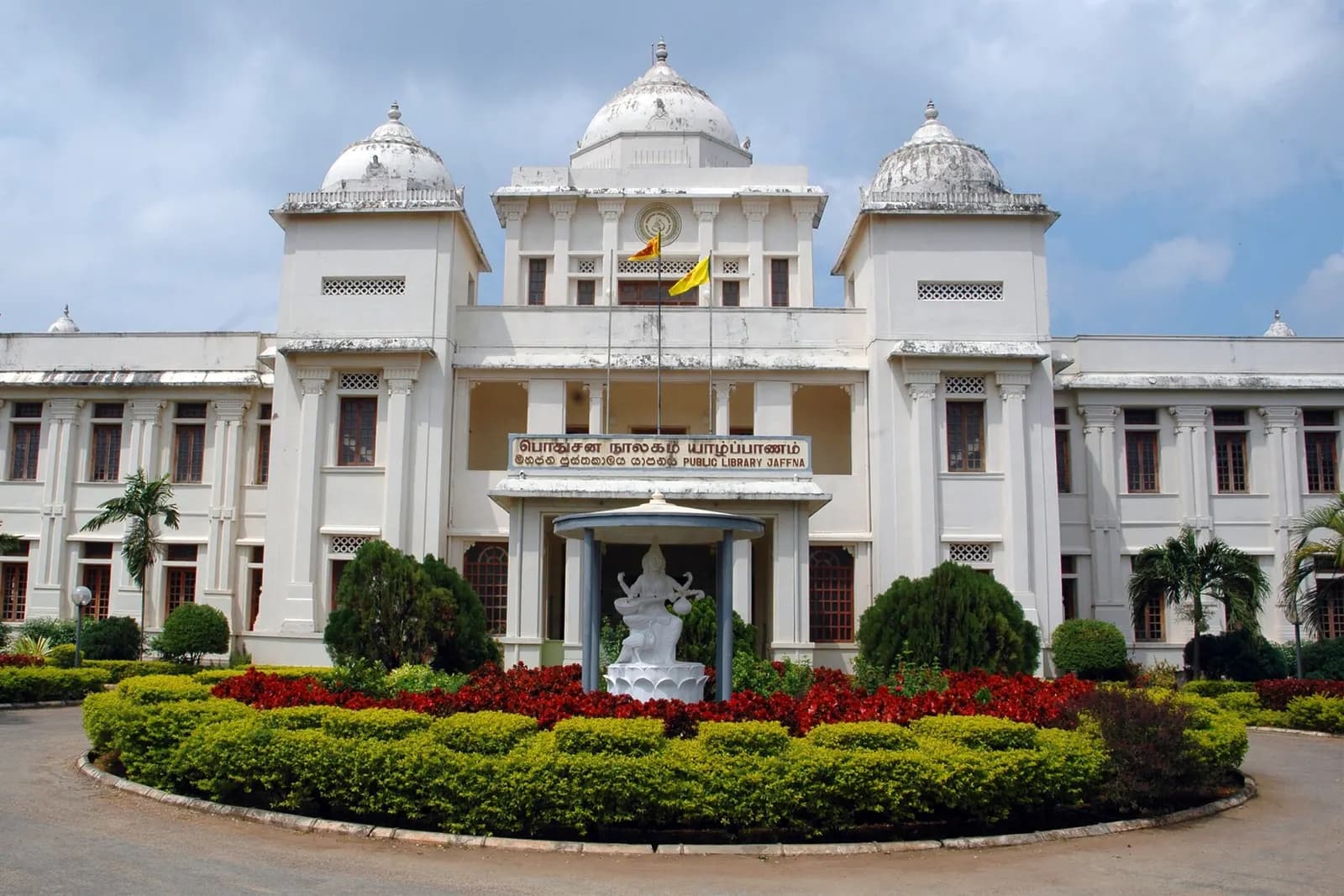
Colombo to Jaffna: Train, Bus, Flight or Car?
Jaffna is about 400 km north of Colombo. You can take the train, an overnight bus, a short flight or the long drive up the A9. Here's how to choose.
12 Nov 2026· 3 min read
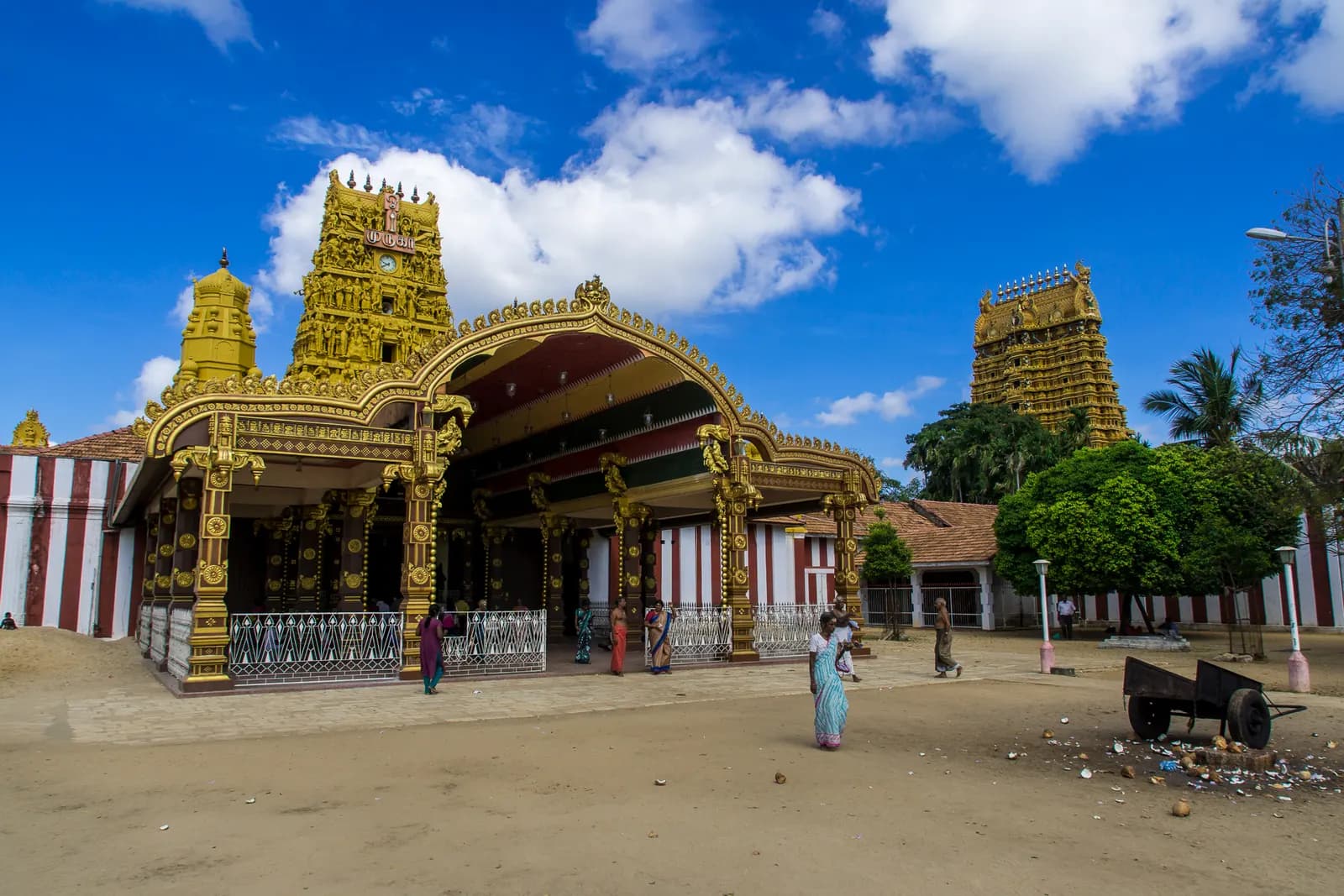
Jaffna Food Guide: Crab Curry, Odiyal Kool and Northern Tamil Cooking
Northern Sri Lankan food is spicier, bolder and different from anything in the south. Here are the Jaffna dishes you have to try.
5 Nov 2026· 2 min read
Jaffna and Northern Sri Lanka: A 3–4 Day Itinerary
Jaffna feels like a different country — Tamil temples, palmyra palms, island ferries and fiery crab curry. Here's how to spend three or four days in Sri Lanka's far north.
12 Nov 2026· 2 min read
More places near Jaffna Fort
 heritage
Jaffna & the North
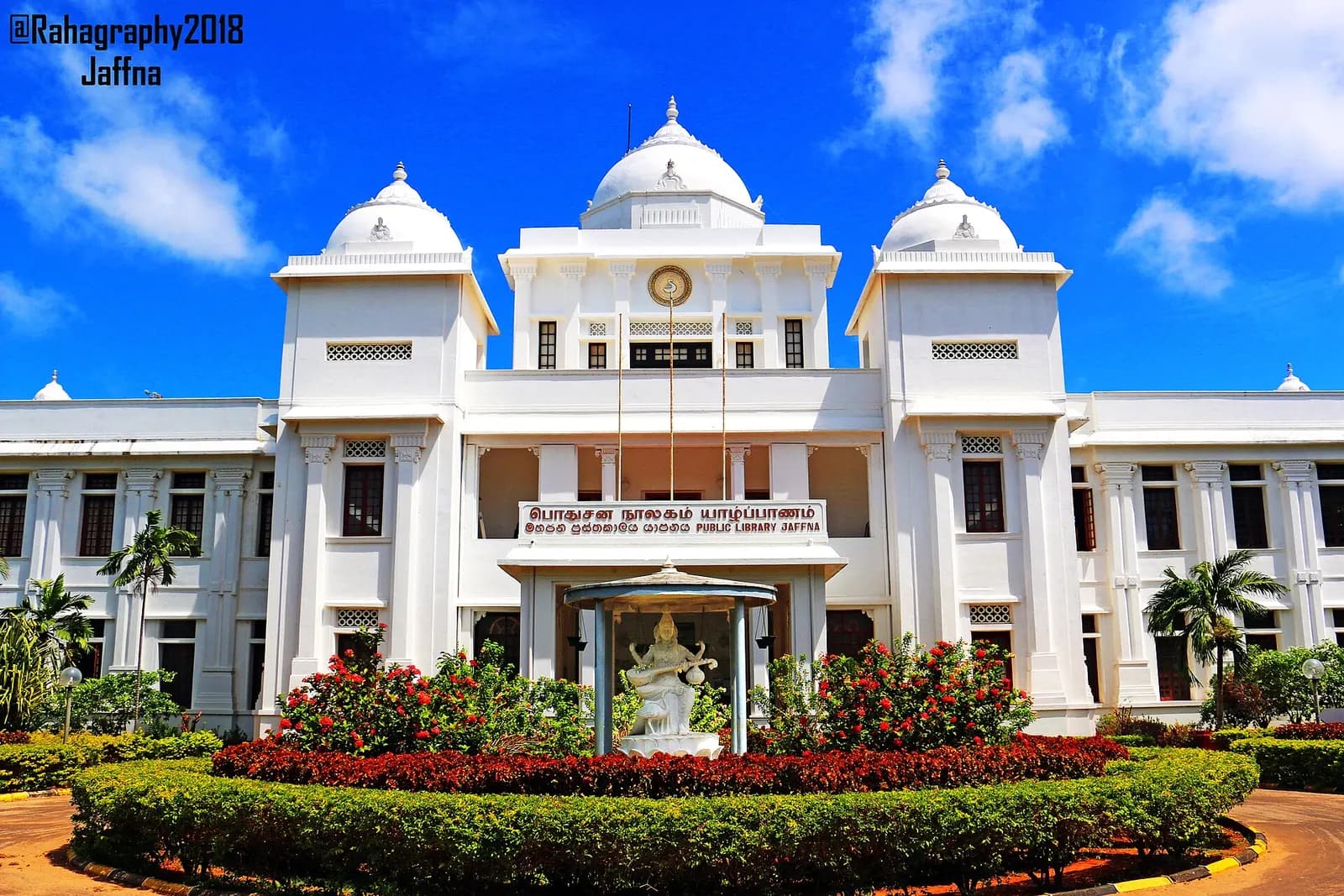
Jaffna Public Library
The white, domed library in the centre of Jaffna, rebuilt after it was burned in 1981 with the loss of tens of thousands of books. A symbol of the city and of Tamil learning.
Best: January to September
cityJaffna & the North
Jaffna
The capital of Tamil culture in Sri Lanka, with grand Hindu kovils, a Dutch fort, a rebuilt public library and a distinctive spicy cuisine. Reachable by train or the A9 highway from Colombo.
Best: January to September
religiousJaffna & the North
Nallur Kandaswamy Temple
Jaffna's most important Hindu temple, dedicated to Lord Murugan, with a golden gopuram. Men remove shirts to enter; the 25-day festival in August–September is spectacular.
Best: August–September (festival)
Last updated November 2026. January to September; October to December brings the north-east monsoon rains.