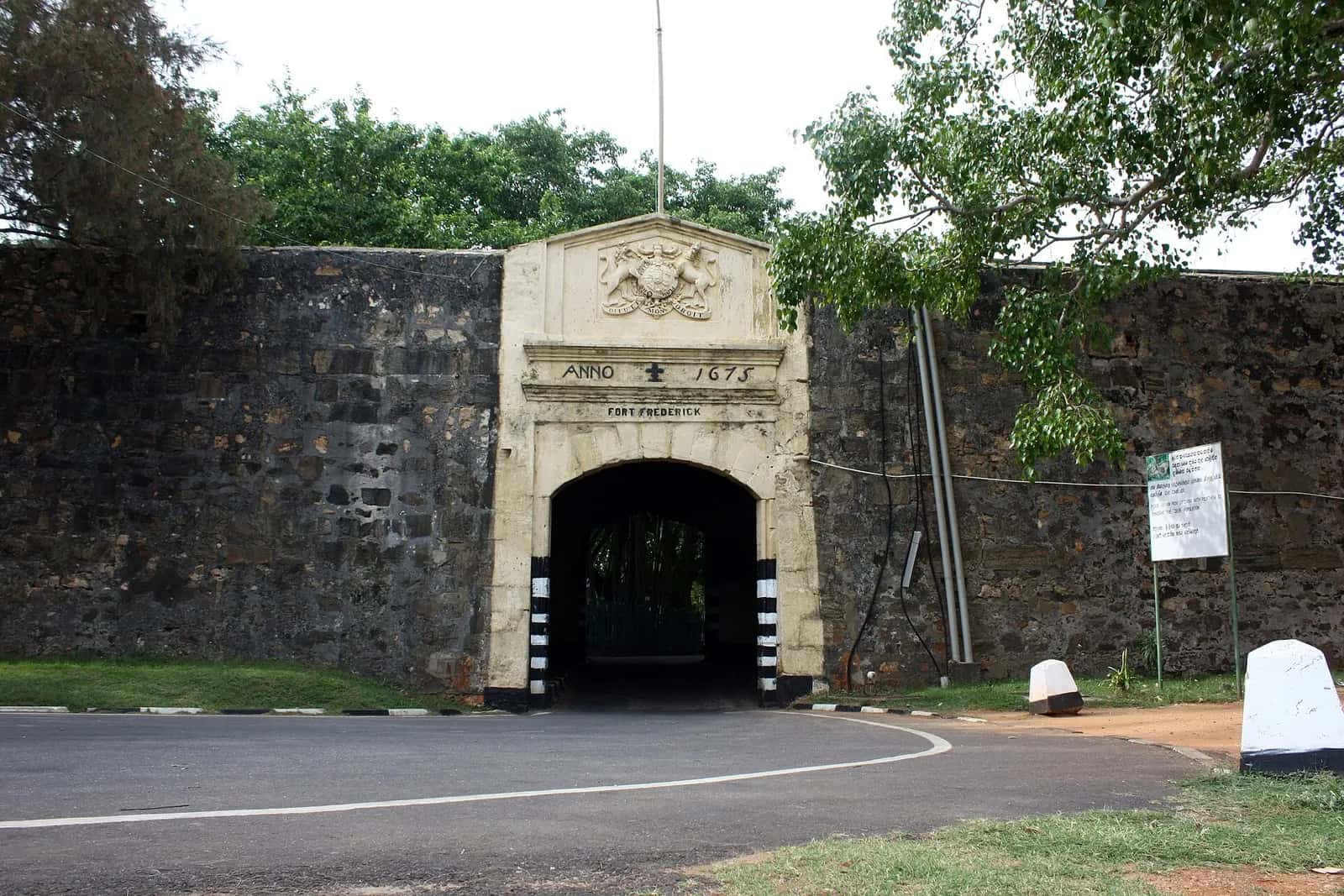
Fort Frederick (Trincomalee), Sri Lanka
A fort on the Trincomalee headland, built by the Portuguese in the 1620s and rebuilt by the Dutch and British. Still partly a garrison, with spotted deer grazing on the road up to Koneswaram.
Region
The East Coast
Best time
May to September
Time needed
1 hour
From the airport
≈ 8 h by road
Fort Frederick occupies the narrow rocky peninsula that juts into the sea on the east side of Trincomalee. Every visitor to Koneswaram Temple passes through it, because the temple stands at the far end, on Swami Rock. The fort deserves a little time of its own. Four hundred years of the town's history, under three colonial powers, are packed into this small headland.
History
The Portuguese built the first fort here in 1624, using stones from the great Hindu temple that they had torn down on the headland. The Dutch captured it in 1639 and later rebuilt and enlarged it. Trincomalee's superb natural harbour made it a prize for every naval power, and the fort changed hands several times, briefly falling to the French in the 18th century. The British took it in 1795, and they named it after Frederick, Duke of York.
During the Second World War, Trincomalee was a major base for the British Eastern Fleet, and Japanese aircraft attacked the harbour in April 1942. The fort has remained in military use ever since, and part of it is still occupied by the Sri Lanka Army.
What to see
- The gateway. The main entrance is a massive stone arch bearing the date 1675 and a carved pair of fish, the emblem of the Pandyan kings of South India, taken from the old temple.
- The spotted deer. A herd of deer lives inside the fort, and they wander freely along the road and under the banyan trees. Please don't feed them plastic-wrapped snacks.
- Wellesley Lodge. Arthur Wellesley, later the Duke of Wellington, stayed in this bungalow in 1800. The story goes that illness kept him from sailing on a ship that was later lost at sea, with all on board. The building is in army use, so view it from outside.
- Old cannons and ramparts, with views over Back Bay and Dutch Bay.
- A Buddhist temple with a large standing Buddha, partway up the hill.
Visiting
Entry to the fort is free. Because it's an active military area, stay on the main road, follow any instructions from soldiers, and don't photograph military buildings, vehicles or personnel.
The walk from the gate to Koneswaram takes about 15 to 20 minutes, gently uphill and partly shaded. Tuk-tuks can drive most of the way. Late afternoon is the most pleasant time, with cooler air and good light, and it suits the evening puja at the temple. Allow about an hour for the fort alone.
Getting there
The gate is at the end of Fort Frederick Road, a few minutes from Trincomalee's town centre and bus station, and 15 to 20 minutes by tuk-tuk from Uppuveli. After your visit, the town's Dutch Bay beach is close by, and Marble Beach is across the bay. See our east coast itinerary and short history of Sri Lanka.
Fort Frederick (Trincomalee): frequently asked questions
Is there an entrance fee for Fort Frederick?
No, entry is free.
Why are there deer in Fort Frederick?
A herd of spotted deer has long lived inside the fort, and they have become one of its attractions.
Can you walk through Fort Frederick to Koneswaram Temple?
Yes. The road through the fort leads to the temple in about 15 to 20 minutes on foot.
Map and getting there
Approximate road times (Sri Lanka’s roads are slow — allow extra time for traffic and stops): Colombo airport (CMB) ≈ 8 h · Kandy ≈ 6 h · Galle ≈ 11.5 h. For flexible door-to-door travel, consider a local driver.
Related travel guides
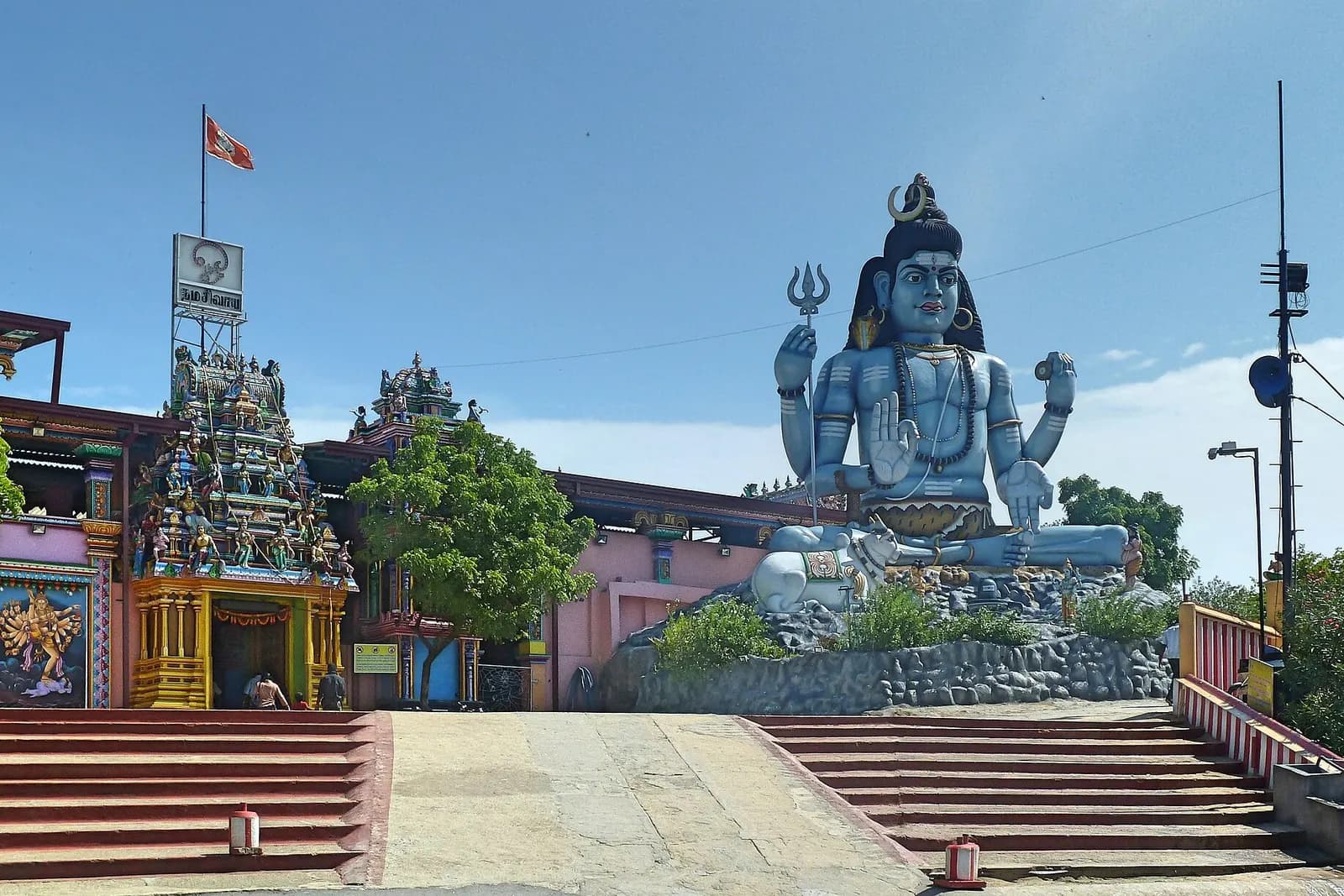
The Pancha Ishwarams: Sri Lanka's Five Ancient Shiva Temples
Five ancient temples to Lord Shiva once guarded the coasts of Sri Lanka. Four still draw pilgrims today. Here is their story, and how to visit all of them.
12 Nov 2026· 4 min read
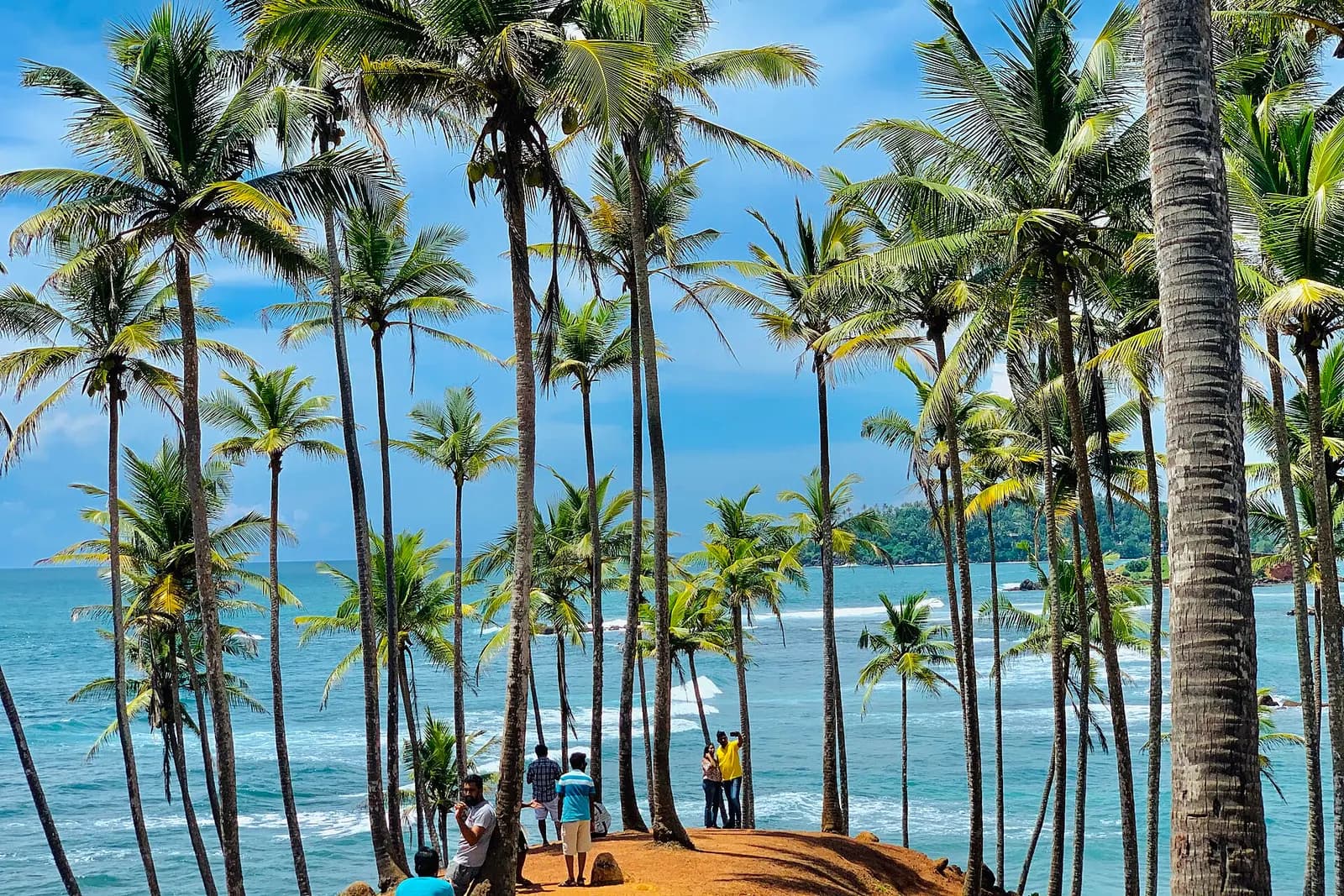
Whale Watching in Sri Lanka: Mirissa vs Trincomalee and How to Choose a Boat
Sri Lanka is one of the best places in the world to see blue whales. Here's when to go, which coast to choose and how to make sure your trip doesn't harm the animals.
12 Nov 2026· 2 min read
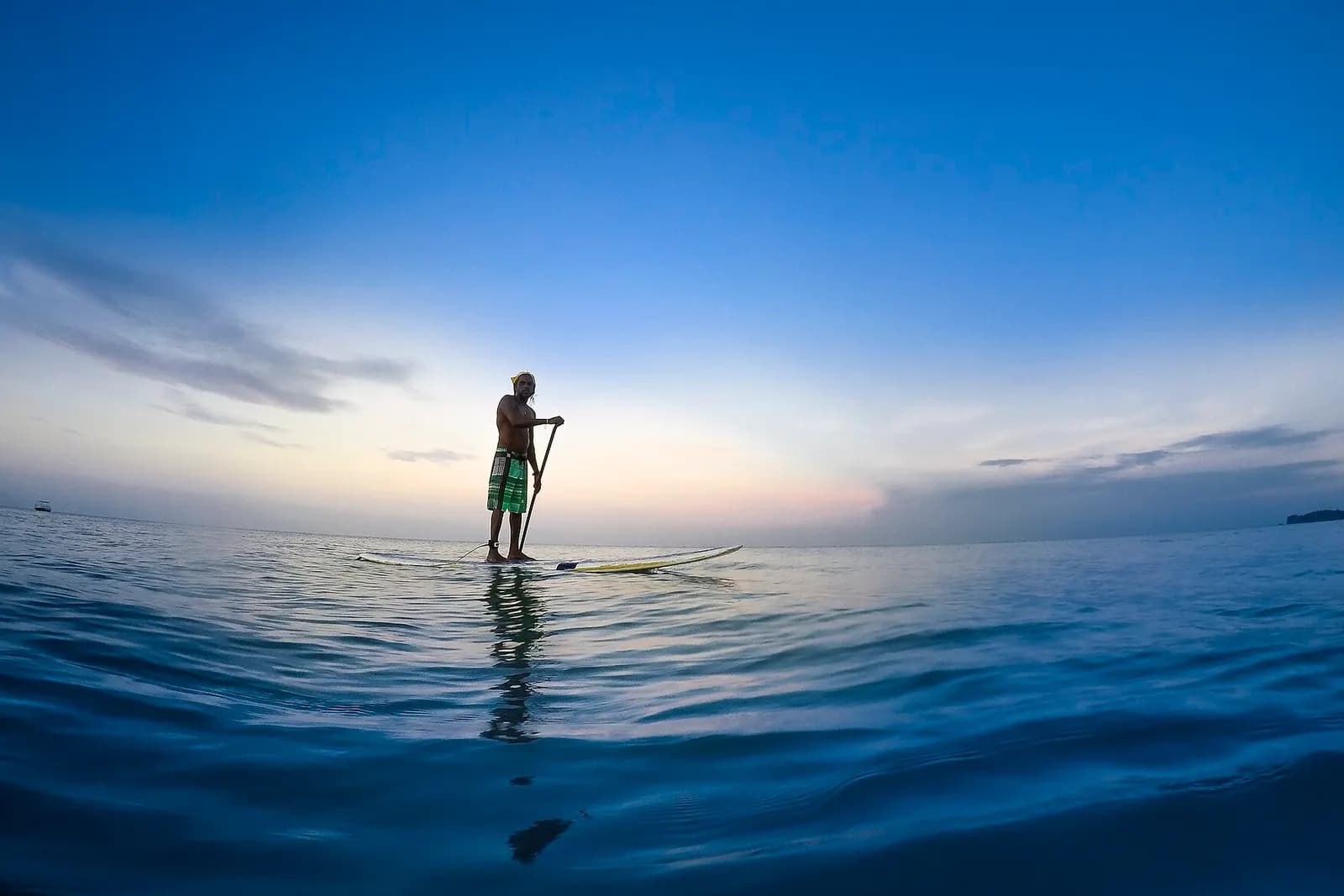
Sri Lanka East Coast Itinerary: Trincomalee, Pasikudah and Arugam Bay
When monsoon rain hits the south-west, the east coast is at its best — calm turquoise water, coral reefs and some of Asia's best surf. Here's how to plan a summer trip.
12 Nov 2026· 2 min read
More places near Fort Frederick (Trincomalee)
religiousThe East Coast
Koneswaram Temple
A revered Hindu temple to Shiva on Swami Rock, a cliff above the sea in Trincomalee's Fort Frederick. Visit around a puja and look out for whales and dolphins from the cliffs in season.
Best: Year-round
beachThe East Coast
Trincomalee
A historic port with one of the finest natural harbours in the world, the cliff-top Koneswaram Temple and nearby beaches at Uppuveli and Nilaveli. The best beach base on the east coast from May to September.
Best: May to September
 beach
The East Coast
Uppuveli Beach
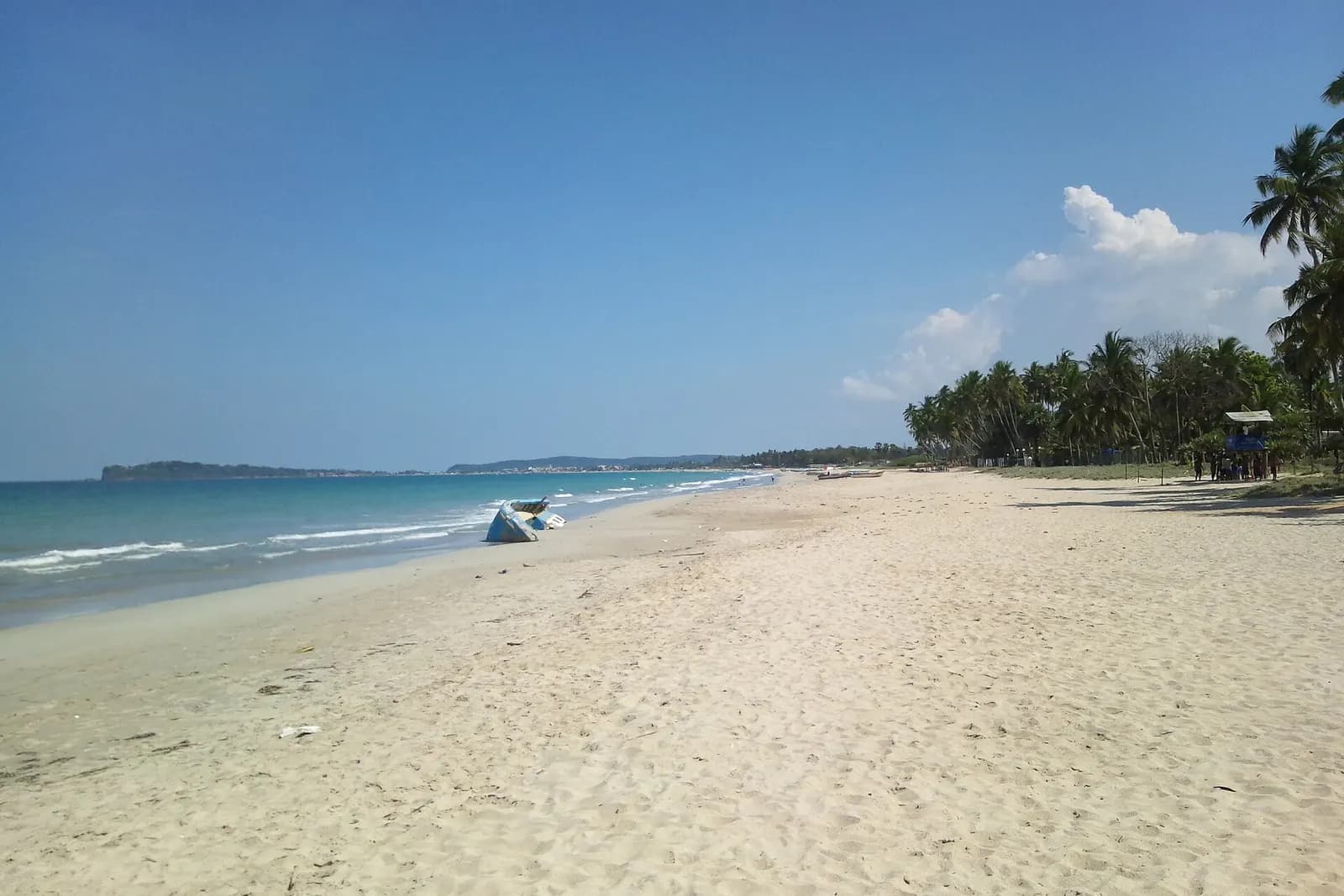
A relaxed beach village just north of Trincomalee town with guesthouses, beach restaurants and easy access to dive and whale-watching trips.
Best: May to September
Last updated November 2026. May to September (the opposite season to the south and west coasts).