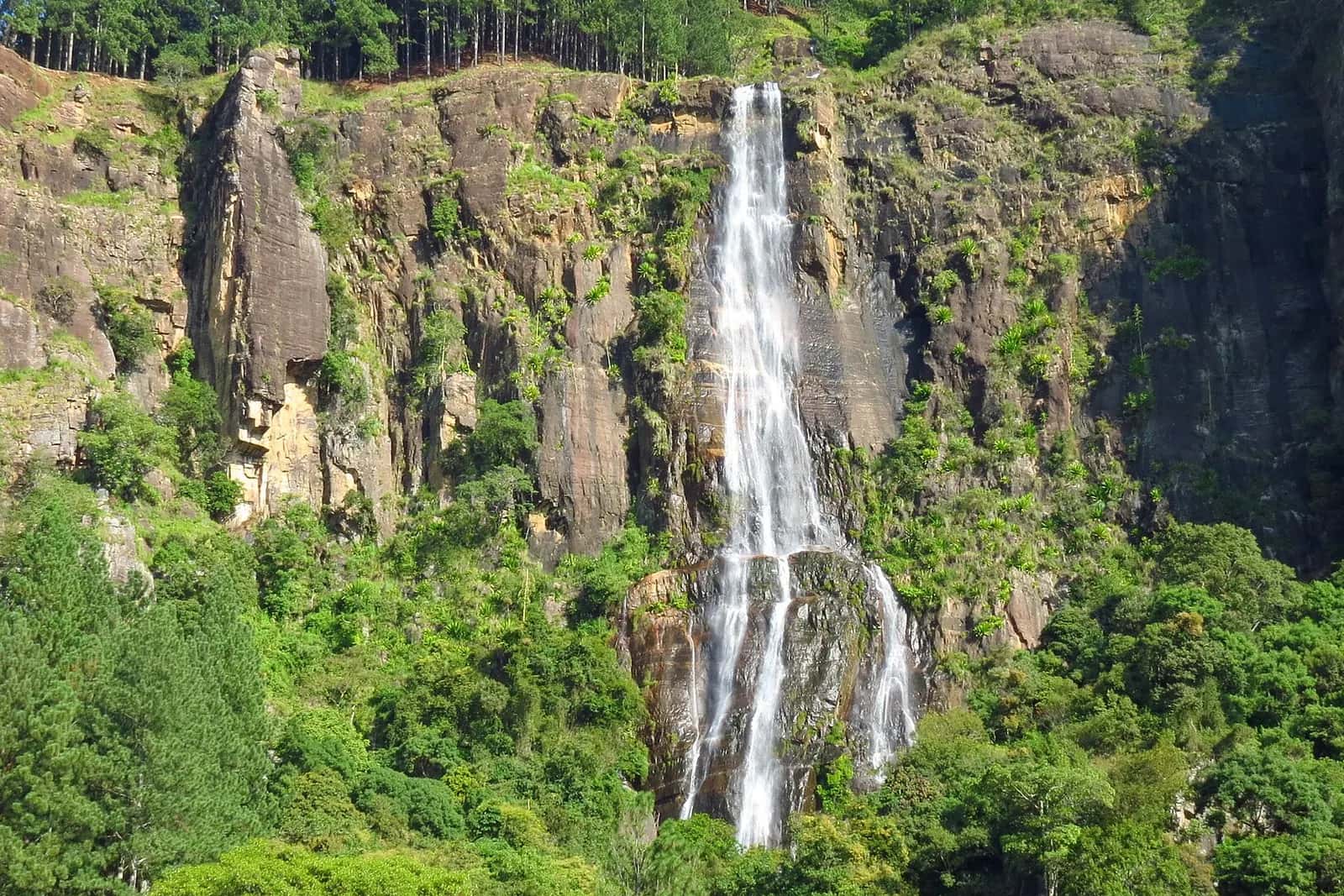
Bambarakanda Falls, Sri Lanka
At 263 metres, the tallest waterfall in Sri Lanka, falling through pine forest near Kalupahana. It can thin to a trickle in the driest months.
Region
Kandy & the Hill Country
Best time
Year-round (fullest after rain)
Time needed
2 hours
From the airport
≈ 4 h by road
At 263 metres, Bambarakanda is the tallest waterfall in Sri Lanka, and one of the most impressive. A narrow ribbon of water drops over a rock face, surrounded by pine forest and misty hills, just below the southern edge of the hill country. Despite the record, it sees far fewer visitors than the falls around Ella, since it's not quite on the usual tourist route.
Getting to the falls
The falls lie close to Kalupahana, on the A4 highway between Colombo and Haputale.
- Turn off the A4 at Kalupahana and follow the smaller road uphill for about 5 km. It's narrow and winding, but it can be managed in a car or a tuk-tuk.
- Park near the end of the road, where there are some small shops and a ticket booth, where a small fee is normally charged.
- Walk 15 to 30 minutes along a path to the viewpoint and the base of the falls. It's a little rough and it has some rocks and uneven sections, but it isn't hard.
Haputale is about an hour away, and Belihuloya is about 30 minutes from Kalupahana. From Ella, allow around 1.5 hours. It's also a natural stop on the way between the hills and the coast, or on the way to Udawalawe.
When to go
The water depends on the rain.
- November to May usually brings a decent flow, with rain in the late months of the year. April and May are often recommended.
- The driest periods, often around June to August at this location, can reduce the falls to a thin thread, particularly when there hasn't been much rain.
Mornings tend to offer clearer skies, while mist often rolls in during the afternoon. A local driver or guesthouse owner can tell you how the falls are running at the time.
What to expect at the base
You can reach a pool close to the base and enjoy the spray, and some people do swim here. Be very careful, though. Rocks are extremely slippery, and water levels can rise suddenly after rain upstream. Rocks may also fall from the cliff, so don't go near the foot of the falls. It's much safer to stay back and enjoy the view from a distance.
Leeches can appear on wet paths in the forest, so if you're visiting after rain, wear long socks and bring some salt or leech repellent. Bring water too, as the shops are basic and may be shut.
Things to do nearby
- Hiking: several trails run through the pine forest above the falls, and they lead to viewpoints such as Lanka Ella, but go with a local guide, as paths aren't marked.
- Belihuloya: this quiet town has rivers, rock pools and small guesthouses.
- Haputale: the base for Lipton's Seat, and for the Diyaluma Falls.
Where to stay
Some simple lodges and eco-camps close to the falls can be a peaceful choice for one night, as they get you in early, before other visitors. Otherwise, it's easiest to do this as a stop on the road, or as a half-day trip from Haputale. Our waterfalls guide compares this with Sri Lanka's other great falls.
Bambarakanda Falls: frequently asked questions
Is Bambarakanda Falls the highest in Sri Lanka?
Yes, it's the tallest waterfall in the country at 263 metres, and it's one of the tallest in South Asia.
How long is the walk to Bambarakanda Falls?
About 15 to 30 minutes each way from the end of the road, along a simple path.
Can you swim at Bambarakanda Falls?
Some people do, but we don't recommend it. The rocks are slippery, and water levels and falling rocks are both risks.
Map and getting there
Approximate road times (Sri Lanka’s roads are slow — allow extra time for traffic and stops): Colombo airport (CMB) ≈ 4 h · Kandy ≈ 2.5 h · Galle ≈ 4 h. For flexible door-to-door travel, consider a local driver.
Related travel guides
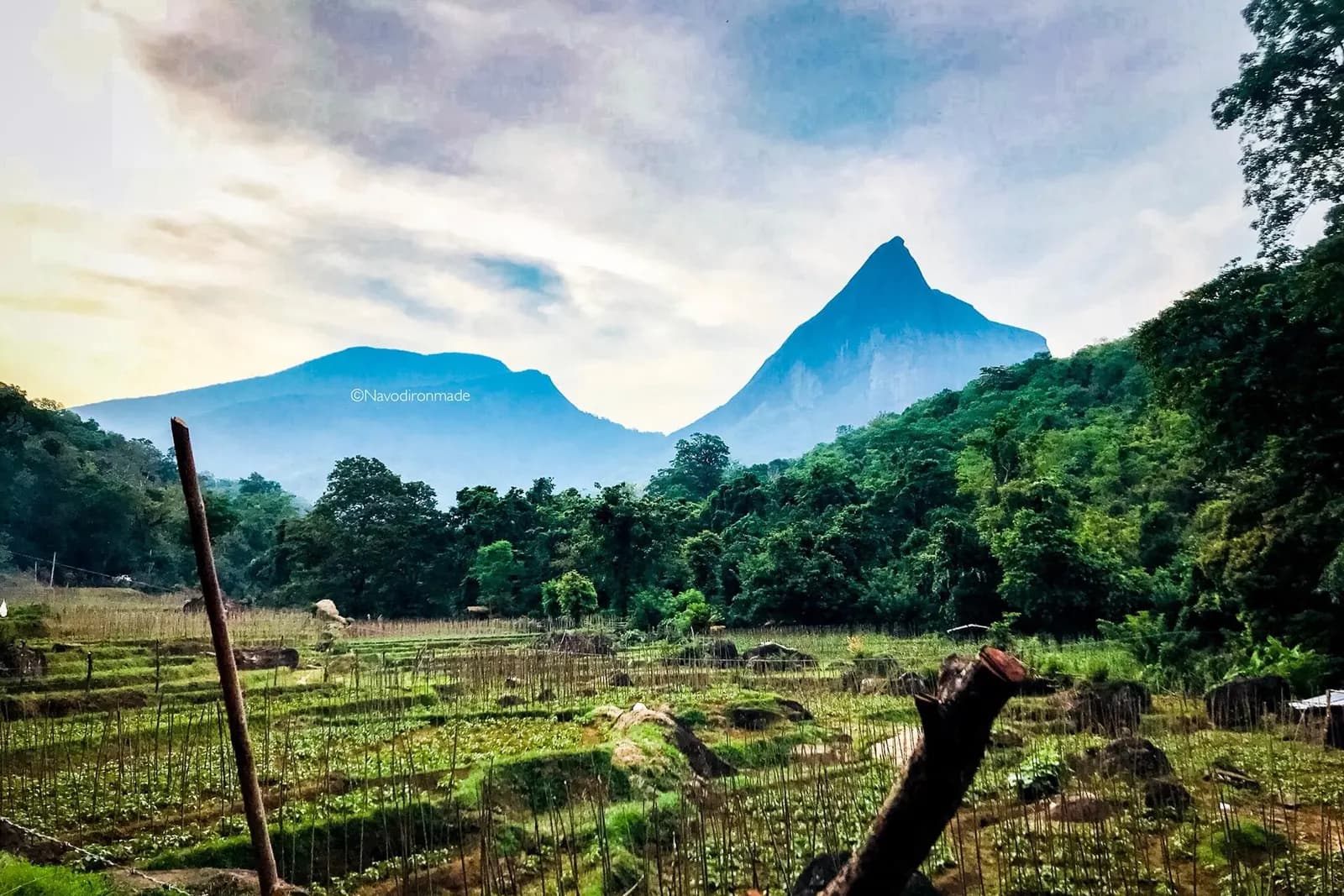
Sri Lanka's Hidden Gems: 15 Places Most Tourists Miss
Beyond Sigiriya, Ella and Mirissa lies a quieter Sri Lanka of remote villages, forest monasteries and empty islands. Here are 15 places worth the detour.
5 Nov 2026· 3 min read
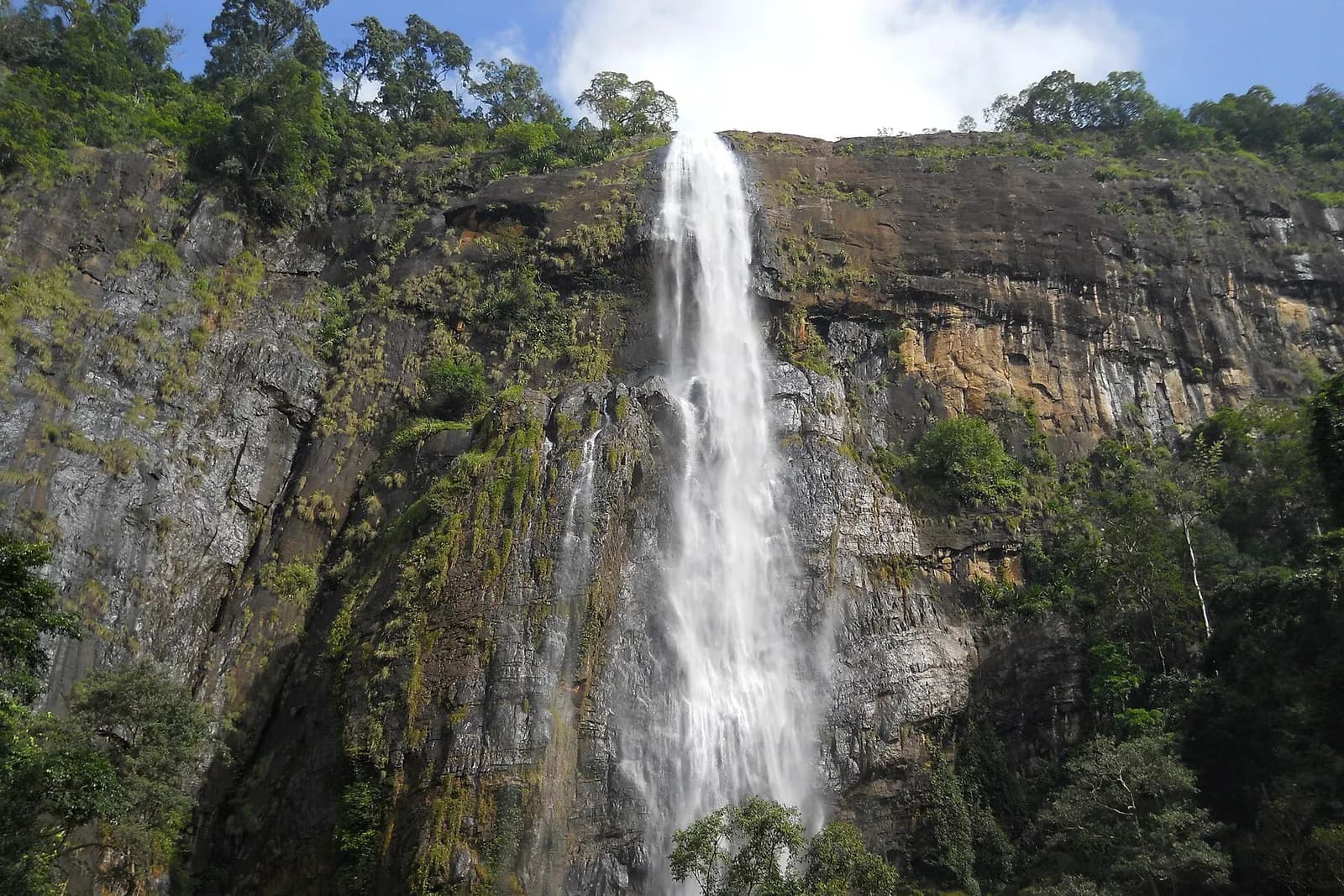
The Most Beautiful Waterfalls in Sri Lanka
The hill country is full of waterfalls — from roadside cascades to the island's tallest drop and natural infinity pools. Here are the best, and how to see them.
12 Nov 2026· 2 min read
More places near Bambarakanda Falls
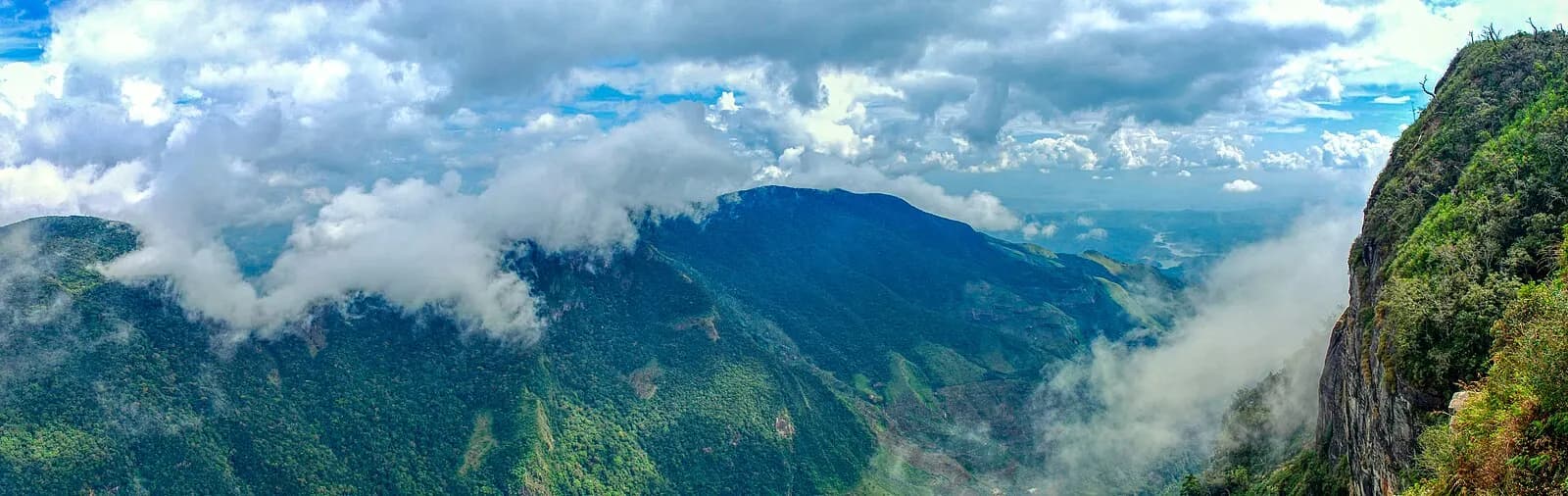 nature
Kandy & the Hill Country
Horton Plains & World's End
A high plateau national park with a roughly 9 km loop walk to World's End, an 870-metre escarpment, and Baker's Falls. Start at dawn: mist usually covers the view by mid-morning.
Best: January to April
 heritage
Kandy & the Hill Country
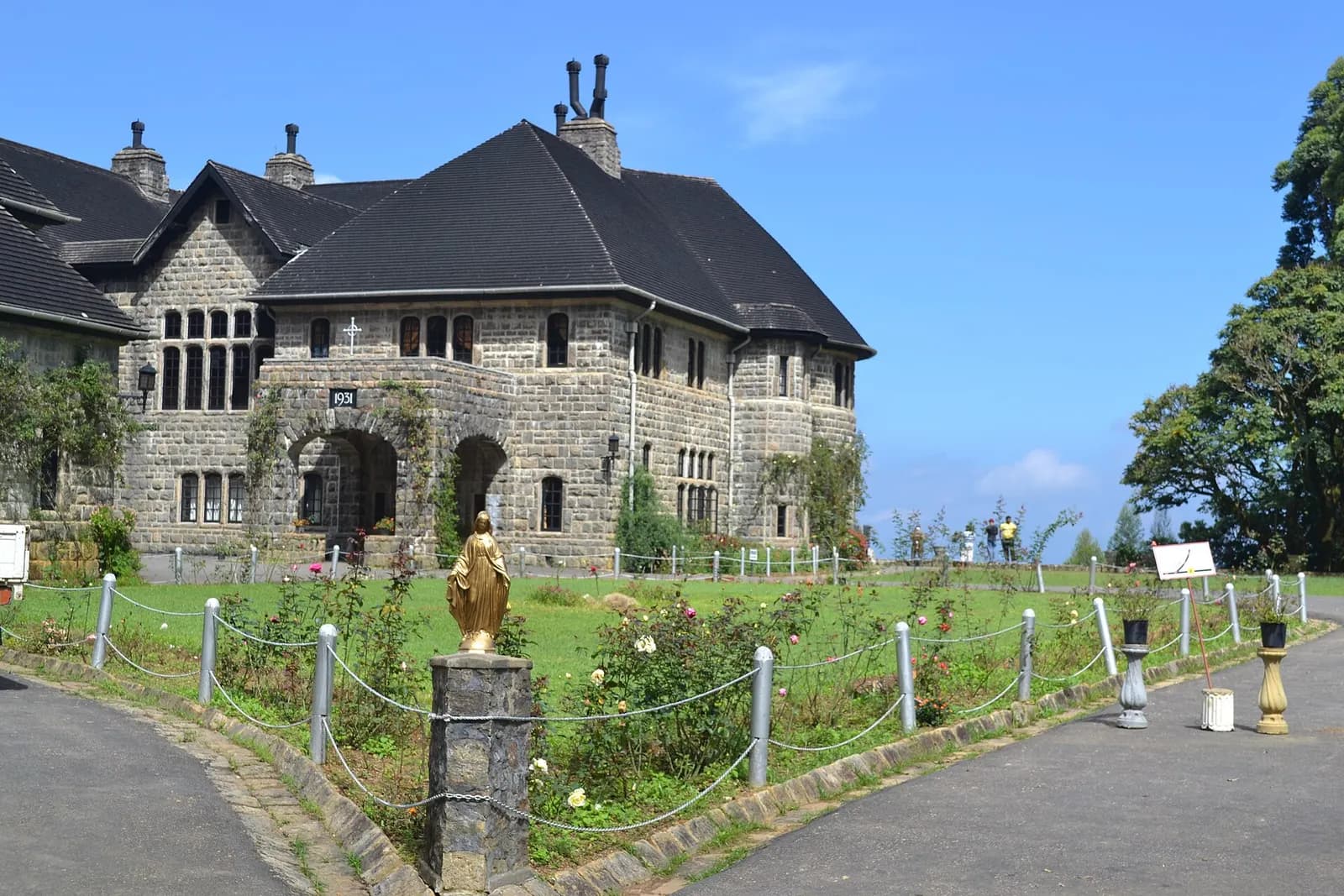
Adisham Bungalow
An English-style country house built by a British planter in 1931 near Haputale, now a Benedictine monastery, with limited opening days, gardens and a shop selling its own jams.
Best: January to April
 nature
Kandy & the Hill Country
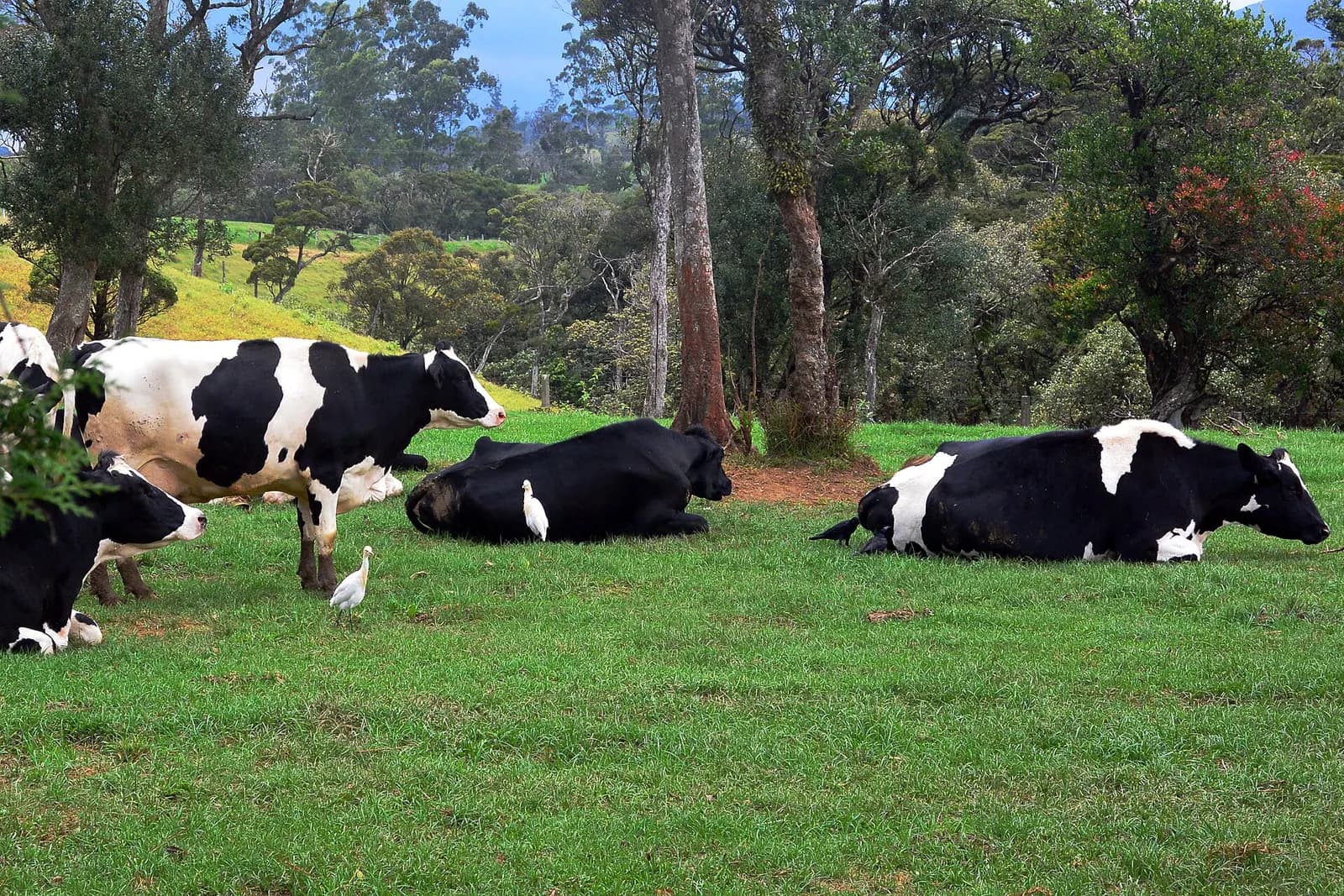
Ambewela Farm
High-altitude dairy farms on the road to Horton Plains, nicknamed 'Little New Zealand' for their green pastures, with cattle sheds to visit and fresh milk and cheese on sale.
Best: January to April
Last updated November 2026. January to April for the clearest views; Adam’s Peak pilgrimage season runs December to May.